Sign In
 Free Newsletter

EDA draws fire for slow-walking tax break payments
Daniel J. Munoz//July 29, 2019//


The state’s Economic Development Authority is slowing down the payout of incentives to businesses for the taxes they paid in 2018, a move that drew the ire of lawmakers who say the new approach could sow confusion and anxiety among businesses dependent on the payments.
None of the money from the Grow New Jersey program had formally been put on hold or “frozen,” EDA Chief Executive Officer Tim Sullivan said at the first meeting of Senate economic incentive task force.
Rather, the recipients have been subject to a more stringent recertification process.
Under Grow New Jersey, companies are awarded the incentives over a 10-year period, during which they certify each year that they’ve met agreed-upon job creation and economic activity goals. That process has essentially been drawn out, though lawmakers called for the EDA to quicken the pace of its reviews.
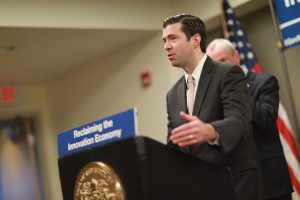
“You really need to focus on this,” Sen. Bob Smith, D-17th District, told Sullivan. “Because any other companies that are thinking of coming to New Jersey because of an incentive are saying ‘well sometimes they pay and sometimes they don’t.’” Smith chairs the task force.
“Companies that have been able to present us the data that we need to verify that they’ve done what they said they were going to do will get their credits,” Sullivan said.
“It’s challenges that are sometimes as mundane but important as I might be listed on the payroll as Timothy Sullivan, but on some list it comes in as Tim Sullivan or Timmy Sullivan,” according to Sullivan. “But if you do a match, you’ll say ‘well that doesn’t match’ and it’s resolving things like that.”
In more serious cases, a company that vowed to create 300 jobs might only create 200, at which point the state would undertake the lengthy review and public meeting process to cut the incentive.
Lawmakers as well as business and industry advocates argued that the practice could upend operations for companies that run on tight profit margins and have calculated annual tax break payments into their cash flow leaving them little room for error.
“We’ve heard from specific companies … who’ve invested big dollars … who said they built, the assumption they were going to receive these credits in their cash flow projections. It’s a problem for some of these folks,” said Sen. Declan O’Scanlon, R-13th District.

But lawmakers acknowledged that some degree of oversight is warranted.
“Deficiencies have recently been brought to light, specifically with a lack of proper oversight and compliance monitoring by the [EDA],” Smith said in his opening remarks.
The tax breaks are often used by businesses to defray the costs of expanding their New Jersey headquarters, building a larger one elsewhere in the state or sold for a profit.
Grow NJ expired on June 30 after Gov. Phil Murphy declined to sign a bill extending the program for seven months, along with the Economic Redevelopment and Growth gap financing program for residential projects. It is not clear how many businesses submitted applications in time for the June 30 deadline.
A task force Murphy put together in January has shed light on how businesses with close ties to South Jersey political powerbroker George Norcross may have unfairly won hundreds of millions of dollars in tax breaks.
In many cases, the EDA approved awards for these companies – despite information easily verifiable via a Google search – that would have justified much smaller tax breaks, or none at all, according to the task force.