Sign In
 Free Newsletter

Food forward
The pandemic changed people’s eating habits, prompting restaurants and grocery stores to adjust
Gabrielle Saulsbery//January 4, 2021//
Food forward
The pandemic changed people’s eating habits, prompting restaurants and grocery stores to adjust
Gabrielle Saulsbery//January 4, 2021//


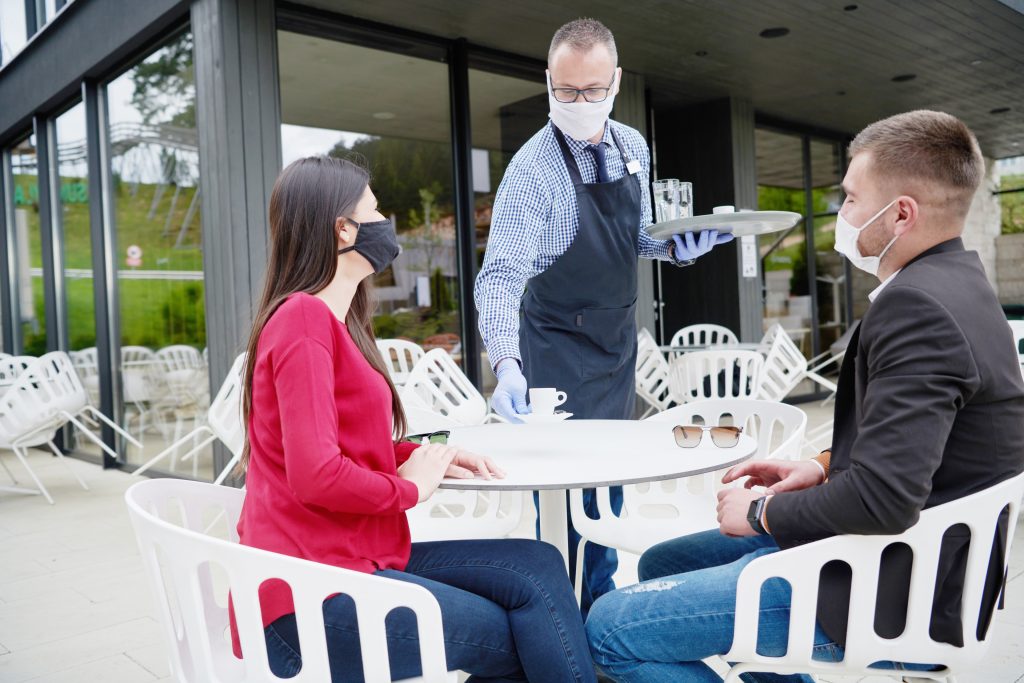
Industry tracker Black Box Intelligence found that New York-New Jersey had one of the steepest declines in restaurant sales in 2020, right beside California, New England, and the Western U.S. According to data from global strategy and marketing consulting firm Simon-Kucher & Partners, this falloff was largely due to a shift to at-home cooking, which dominated the earlier days of the pandemic and continues to affect restaurant attendance due to social distancing strictures and 25% occupancy limitations.
Before the pandemic, 67% of meals were consumed away from home, but that shifted to 45% from March through May, according to the firm. Six to 12 months after the pandemic, the percentage is projected to shift to 37% home-cooked and 63% away from home. Industry publication QSR Magazine notes that while four percentage points seems fairly inconsequential, based on the National Restaurant Association’s pre-COVID projection of $898 billion sales for 2020, that 4% means roughly a $50 billion annual sales opportunity gone for restaurants nationwide.
Imagine it: one day in the future, post-pandemic, no remaining restrictions. It’ll happen. David Burke, who owns multiple restaurants in the state and several others around the world, expects that by the fourth quarter of 2021, celebrations and the industry that supports them (food and beverage) will be strong. Still, changes will remain—mask-wearing when people are sick, temperature checks of waitstaff, strong sanitation protocols. And the Hail Mary that saved restaurants earlier in the pandemic, takeout and delivery, will remain strong and continue at a higher rate than previous years.

“Brick-and-mortar sit-down restaurants will have built in takeout components. I would be very interested in taking over a rundown Burger King and having takeout,” Burke said. “A gourmet celebrity chef restaurant that has a pull up window … with the apps now, you can tell people exactly when to pull up. [I also] think you’ll see open-minded fine dining chefs willing to package and deliver a little bit.”
Prices will go up in 2020, Burke projects, in part due to the increase in minimum wage and in part because “restaurateurs now know they need a nest egg. They can’t run month-to-month, and customers will be willing to pay for the service of eating in the good restaurant.”
With the increasing cost of running a restaurant, Burke projects many restaurants will be open five days a week instead of seven. Owners will save money where they can, like keeping menus digital as they’ve been across the state since in-person dining reopened.
“From an economic standpoint, it’s a big cost savings and it saves time. I happen to like holding the menu, but certain restaurants will hold onto [QR code menus]. And silverware wrapped up, that saves time,” Burke said.
Burke projects the continuation of this year’s trends, including dry aging and plant-based foods. Plant-based foods showed real growth in 2020, including Oatly oat milk, which opened its $15 million U.S. manufacturing plant in Millville and posted a 212% growth in sales year over year through Oct. 3, according to Nielsen. Meat alternatives recorded 129% year-over-year growth, Nielsen found, including Redwood, Calif.-based Impossible Foods, created originally at the Rutgers Food Innovation Center in Bridgeton, which nabbed the Innovator of the Year award from industry website Food Dive. To say 2020 retail expansion of the Impossible Burger exceeded expectations feels like a half truth: it went from freezer presence in 150 stores nationwide in January to more than 11,000 stores by September. Its retail footprint increased 77-fold. Impossible products are also available in 30,000-plus restaurants nationwide, including both fancy sit-downs and fast-fooderies.
Good food will penetrate further into the suburbs in 2021 with the exodus from New York and other big cities, as new residents of suburbia crave the food they’d gotten used to in the city and restaurant owners seek to open restaurants in more affordable areas.
“Not only are people exiting NYC, so are some of the great chefs. I’m one of them,” Burke said. “I likely got a jump start three years ago and I’ve always wanted to open restaurants in Jersey. If we can get a restaurant company built in New Jersey where you can bring the company from the north to the central to south, why would you ever cross the bridge? It used to be you had to be in New York, that was where you got your bones, but not with COVID.”
Burke has multiple openings planned for 2021, including a stateside location in Belmar and his first Saudi Arabian location in the capital of Riyadh. His restaurants that are currently open are either losing money or breaking even, but he’s hopeful for the future.
“I’ve worked very hard this year even with the turn-down; with video production, home cooking, pots and pans business, virtual cooking demo business. We’re marching forward,” Burke said. “We’re planting seeds, not getting the fruit yet but planting seeds in the event that when we get through this we’ll be … prepared.”

In the home kitchen, pandemic pastimes like baking bread and pickling will remain part of the broader American experience for some time after a year during which people found out they could and actually enjoyed doing for themselves. This dynamic will keep homesteader products like Ball jars steadily moving off the shelves into shopping carts, said food industry veteran and foodservice consultant Elohi Strategic Advisors CEO Dimitra Rizzi, who also projects the growth of symbiotic partnerships between grocery and restaurants.
“You know how PF Chang’s has something in the [grocer’s] freezer? You’ll see more and more chefs of restaurants creating meal kits where you can bring them home and make whatever the chef was making. It’s not Blue Apron where it’s a monthly thing. It’s more like ‘I wish I had the chicken from so-and-so,’ and you’re able to pick up that meal kit at the grocery store. Some people are still going to be afraid to dine in,” Rizzi said. “They might not go into the restaurant as often, but they want that food.”
With the growth of grocery delivery — the online grocery delivery services market boomed during the pandemic and will grow by $631.84 billion worldwide from 2020 to 2024, according to technology research company Technavio — Rizzi suggests that grocers will move away from Instacart and Shipt because they’re tired of paying fees and create their own delivery programs. Packages will come with tamper-evident seals so consumers know no one besides the packer was fiddling with their food out of a concern for cleanliness, which will also create a market for customer-facing ultraviolet light sanitization devices when facilities like the Whole Foods buffet finally reopen.
Pandemic-inspired health awareness will contribute to a growth in better-for-you foods, “because what [people have] learned is if you’re healthier, you don’t get as sick from things like COVID,” Rizzi said. Finally, she said, stress hangovers from the last 10 months will cause a lull in energy drink sales and an uptick in foods that minimize angst and enhance sleep, like Pepsi Co.’s functional beverage Driftwell, just released in September.