Sign In
Upcoming Event
 Free Newsletter

New Jersey releases 2024 energy master plan (updated)
State leaders debate costs, policy
Matthew Fazelpoor//November 25, 2025//

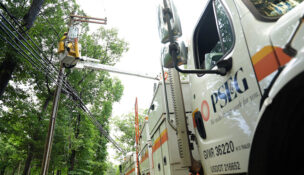
PHOTO: DEPOSIT PHOTOS
PHOTO: DEPOSIT PHOTOS
New Jersey releases 2024 energy master plan (updated)
State leaders debate costs, policy
Matthew Fazelpoor//November 25, 2025//


)

The basics:
- Murphy administration releases final 2024 Energy Master Plan after 22 months of development
- EMP outlines ‘no-regrets’ strategies for clean energy, grid reliability & emissions targets
- Plan includes major pushes on solar, wind, nuclear, EV adoption, energy affordability programs
- Critics question costs, timing and electrification mandates as transition to new administration nears
As his administration enters its final stretch, Gov. Phil Murphy announced Nov. 24 the release of New Jersey’s 2024 Energy Master Plan.
As NJBIZ has reported extensively, the energy issue is front and center in the state. During the recent gubernatorial election between Gov.-elect Mikie Sherrill and her Republican opponent, Jack Ciattarelli, the issue emerged at the heart of campaign ads, attacks, the debate and on the trail. This past June, New Jerseyans were hit with a nearly 20% bill increase. Sherrill has pledged a day one state of emergency on energy costs and a utility rate hike freeze as part of her energy policy.
The Murphy administration says the EMP, available here, provides a roadmap designed to guide future energy policy in the state.
Building on the 2019 EMP, the latest took nearly 22 months to develop. Consulting teams from Energy and Environmental Economics (E3), ILLUME Advising and BW Research prepared the report, incorporating the latest technologies, regulatory and market advancements.
“This report is the culmination of our no-regrets strategy to tackling the challenges of energy affordability, supply and demand, and climate change,” said Murphy. “I am proud of all that we’ve been able to achieve to make our energy sector cleaner and more efficient over the past eight years. This report’s recommendations will help guide energy policy to new heights in the future.”
‘No regrets’
At the core of the EMP is a “no-regrets” framework. The administration says these strategies provide immediate benefits while keeping future flexibility, ensuring New Jersey can adapt to technological innovations, market shifts or federal policy changes.
These strategies aim to advance the state’s statutory climate targets. Those include an 80% reduction in greenhouse gas emissions by 2050 under the Global Warming Response Act and 100% clean electricity sales by 2035.
Key strategies and initiatives include:
- Emphasis on expanding solar, wind, advanced nuclear, green hydrogen and battery storage toward reducing electricity imports, increasing in-state generation, growing clean energy jobs, increasing resource diversity and supporting long-term cost stability
- Expanding decarbonization and efficiency programs. The administration says these are essential for reducing emissions and electricity demand
- Ensuring a reliable and modern grid to serve increasing loads and demand. The New Jersey Board of Public Utilities has implemented regulatory changes to speed up interconnection of distributed energy resources, improve transparency and support a more flexible, interactive grid
- Continue to make strides in transportation electrification across multiple sectors. The administration points to progress made through various programs, such as Charge Up NJ and others. New Jersey is nearing its statutory goal of 330,000 light-duty electric vehicles by 2025, with over 260,000 EVs currently on the road. Additionally, more than 5,000 charging stations are deployed statewide
- Calls for expanded bill assistance, time-of-use rate pilots and lowering upfront costs of energy efficiency, heat pumps and EVs for low- and moderate-income customers to expand affordability and environmental fairness
- Continued engagement and coordination with PJM Interconnection and neighboring states to ensure grid reliability, affordability and accelerate clean energy integration
- Major focus on innovation and workforce development. Current workforce initiatives – which the EMP says should continue – include:
- Clean energy training hubs, apprenticeships and funding for overburdened communities, preparing for an estimated 14,300 to 42,400 net new workers needed in the state’s broader energy economy, primarily in the green economy, between 2022 and 2035

Timing
Of course, critics of the Murphy administration’s energy policy have regularly voiced their displeasure with 2019 EMP. They site its all-in bets on renewables as well as lofty, mandated electrification goals, which detractors don’t believe the state had the infrastructure and capacity for.

Senate Republican Leader Anthony Bucco, R-25th District, released a statement about the plan, particularly questioning the timing.
“Timing is everything, and it’s concerning that Gov. Murphy has chosen to officially release his 2024 Energy Master Plan less than 60 days before the end of his administration,” said Bucco. “Major policy decisions of this magnitude will shape New Jersey’s future for decades, and the next administration and incoming Legislature deserve a real voice in determining the direction of our state’s energy strategy.”
‘Unrealistic mandates’
Bucco says what continues to be missing from the plan is transparency.
“We still don’t have a clear picture of what this will cost New Jersey families, businesses and government entities,” said Bucco. “Utility customers have already endured steep rate increases, and they deserve to know how much more they will be asked to pay. Doubling down on full electrification by 2035 will only make the state’s energy challenges worse and push our utility rates even higher.

“These unrealistic mandates will only serve to further strain our grid, increase costs, and undermine reliability.”
Bucco recommended that Murphy and Sherrill follow Pennsylvania Gov. Josh Shapiro’s lead and withdraw from Regional Greenhouse Gas Initiative. Ciattarelli had also supported exiting RGGI on the trail. Additionally, Bucco pushed consideration of Republican’s Senate Bill 4765. The legislation would suspends sales and use tax and societal benefits charges on electric and gas bills for one year from, Jan. 1, 2026 to Dec. 31, 2026.
“New Jersey should be pursuing commonsense, balanced energy solutions that protect both our environment and household budgets – not doubling down on policies that make life more expensive,” said Bucco. “As we prepare for a new administration, I look forward to pursuing these common sense solutions that lower electricity cost, strengthen our energy reliability, and make New Jersey affordable for families, seniors, and small businesses.”
Senate Democrats had no comment about the new EMP. Sherrill transition did not immediately respond to a request for comment.
‘Fatal flaw’
Ray Cantor, deputy chief government affairs officer of the New Jersey Business & Industry Association (NJBIA), released a statement on behalf of the organization.

“We appreciate the Murphy administration providing a status report of its energy policies before we close the book on the last eight years,” said Cantor. “While we support ‘no regrets’ policies, we note that this version of the Energy Master Plan contains the same fatal flaw as its predecessors. It establishes artificial deadlines for decarbonization that has led to the policy choices that have contributed to driving up the price of energy.”
Cantor said that merely repeating the term – affordability, which he points out the report does 60 times – does not make it more affordable.
“We look forward to working with the incoming Sherill administration to implement energy policies that truly focus on affordability, reliability, and technological advancement. Working together, we can achieve both our energy and decarbonization goals in a way that works for all the citizens and business in New Jersey.”
Editor’s note: This story was updated at 9:21 a.m. Nov. 25, 2025, to include a statement from NJBIA.