Sign In
 Free Newsletter

Sweeney, NJEA teacher’s union strike deal on health care cuts (updated)
Daniel J. Munoz//March 9, 2020//
Sweeney, NJEA teacher’s union strike deal on health care cuts (updated)
Daniel J. Munoz//March 9, 2020//


)

The often-rivaling state’s most powerful teacher’s union and the state Legislature’s top elected official struck a tentative deal on cuts to teacher and school district health costs, which is projected to save at least $1 billion annually.
Senate President Stephen Sweeney, D-3rd District, and the New Jersey Education Association jointly unveiled the rare alliance Monday morning at a press conference in the Trenton Statehouse building. It calls for the creation of two lower-cost health plan alternatives for teachers, called the New Jersey Educators Health Plan and the Garden State Health Plan.
The proposals come as state officials and lawmakers eye how to cut down on the ballooning costs of public worker retirement and health care, which together are unfunded by at least $100 billion.
The new plans would essentially offer “Chapter 78 relief,” a proposal long-backed by the NJEA ever since the creation of the Christie-era policy in 2011, requiring members to pay anywhere between 3 to 35 percent of their health insurance premiums, depending on their salary and plan.
“This agreement is a win-win,” Sweeney told reporters Wednesday. “This is a pretty huge announcement today that we’re coming up with over a billion dollars in savings. This has been a long, long journey.”
The NJEA and Sweeney have been bitter rivals for years; the union backed a Republican to unseat the Senate President during his 2017 reelection campaign, in what became the most expensive state legislative race in United States history. But the two appeared to mend fences Monday.
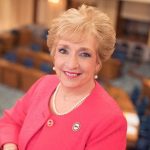
“We are standing side by side and we’re both smiling,” NJEA President Marie Blistan said Monday, standing next to Sweeney.
The hope now is that the measure can make it through the state Assembly and past Gov. Phil Murphy’s desk.
While Murphy has supported Chapter 78 relief in the past, his office did not indicate whether he would sign the measure.
“The Murphy Administration and Assembly Speaker Coughlin long ago adopted this approach by encouraging collaboration with our union partners to save taxpayers dollars and ease the health care cost burden on our workers,” Alyana Alfaro, a spokesperson for the governor’s office, said in a statement. “The governor looks forward to reviewing the proposal put forward today and working together to finally give our educators the long-overdue Chapter 78 relief they deserve,” she added.
Assembly Speaker Craig Coughlin, D-19th District, likewise said that his own house would review the proposals.
“After urging the Senate president and NJEA leadership to meet last year, I am pleased that Senate President Sweeney has followed through on the work I began in negotiating an agreement that appears to have accomplished the goals I set out one year ago,” he said in a statement.
“I am confident that today marks yet another important step in my efforts to create long-term fiscal savings for New Jersey’s taxpayers,” the speaker added.
The NJEA has put millions of dollars into both campaigns.
“This has been the culmination with a very long process. It wasn’t easy, but the work we’ve done has been a major victory,” Blistan added. “With this agreement, we are restoring economic stability to this great profession.”
Both Blistan and Sweeney said they hope that teachers would be motivated to switch to the plan, which would cost less and take fewer dollars out of their paychecks.

Savings under the new proposal would clock in at just over $1 billion a year—$670 million that local school districts would save and $403 million that the NJEA members would save. Most of the savings would come from the NJEHP, Sweeney said.
With the GSHP, plan members would be restricted to using medical services only in New Jersey. The GSHP and NJEHP would be the only two health care options for new hires. Older hires could stay in their existing plans, though it is not clear which plans would be available if the plan is implemented.
Most NJEA members use the NJ DIRECT 10 or the NJ DIRECT 15, which requires them to pay either $10 or $15 copays.
Coughlin put forward a plan last year, which Sweeney then derailed as a non-starter, that would have let school employees pay their health premiums as a percentage of their salary, dropping costs to between 2 percent and 8 percent of their pay.
Murphy has argued that health care savings could be founded by negotiating contracts with unions, such as the NJEA and Communications Workers of America.
The Senate president told Murphy he would agree to a millionaire’s tax if the governor could find $1 billion of pension cuts in his $40.9 billion budget for the coming fiscal year, which starts on July 1.
With the Murphy and Sweeney camps frequently butting heads, Sweeney previously entertained putting the proposed health care cuts before voters as a ballot question in the 2020 election.
Another proposal that could still go before the voters in the 2020 presidential election calls for cutting the defined pension benefit plan public workers currently have, and replacing it with a hybrid of a pension and 401k-style retirement plan.
Editor’s note: This story was updated at 4:11 p.m. EST on March 9, 2020 to include comments from New Jersey Assembly Speaker Craig Coughlin.