Sign In
Upcoming Event
 Free Newsletter

Tuition-free initiative aims to alleviate primary care doc shortage
Hackensack Meridian School of Medicine joins other elite schools on experiment
Kimberly Redmond//April 14, 2025//

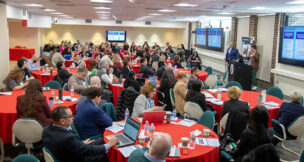
In July 2024, Hackensack Meridian School of Medicine welcomed its newest class of 168 students with a White Coat Ceremony at the New Jersey Performing Arts Center in Newark. - PROVIDED BY HACKENSACK MERIDIAN HEALTH
In July 2024, Hackensack Meridian School of Medicine welcomed its newest class of 168 students with a White Coat Ceremony at the New Jersey Performing Arts Center in Newark. - PROVIDED BY HACKENSACK MERIDIAN HEALTH
Tuition-free initiative aims to alleviate primary care doc shortage
Hackensack Meridian School of Medicine joins other elite schools on experiment
Kimberly Redmond//April 14, 2025//


 Listen to this article
As the U.S. grapples with an ongoing shortage of primary care physicians, the health care industry is searching for innovative ways to attract and retain the talent needed to fill those gaps.
Fueled by the growth and graying of the country’s population – and exacerbated by older physicians who will soon retire – the Association of American Medical Colleges projects a shortfall of 20,200 to 40,400 primary care doctors by 2036. Studies have also shown that primary care physicians tend to have higher burnout rates compared to doctors in other specialties. Contributing factors include rising administrative burdens, heavy workloads, and shortage of clinical and support staff, the American Medical Association found.
That means many Americans will not have the benefits of primary care, which research shows improves overall health and leads to fewer hospital visits and less chronic illness.
It’s not just a future problem, either. Many communities across the U.S. currently face a shortage of health care providers and struggle to access adequate health care. A report by the American Board of Family Medicine and the New Jersey Health Care Quality Institute last year found New Jersey had about 5,300 primary care doctors and about half worked part-time.
New Jersey is tied with Connecticut has having one of the lowest concentrations of family physicians in the U.S. – about 17 per 100,000 of population. A main driver for the persisting shortage in New Jersey is that low reimbursement rates are leading to much lower pay for primary care doctors, the study said. As a result, many providers trained here move to other states.
For those who work in medicine, it’s very likely they’ve heard from relatives, friends and acquaintances who are frustrated that a primary care physician is not accepting new patients or because it takes longer to secure an appointment, Dr. Jeffrey Boscamp, president and dean of Hackensack Meridian School of Medicine, noted.
“We just don’t have enough primary care doctors. At all hospitals and health systems, there’s been a real focus on developing specialists. And I think people have come to the realization that there’s this incredible need for primary care that’s just not being addressed, and nobody really knows how to deal with it,” he said.
The continuing dearth comes as medical school debt has greatly outpaced inflation over the past several decades. In the U.S., the average medical student graduate carries more than $250,000 in undergrad and postgrad student debt, according to Education Data Initiative.
A survey of 2023 graduating medical students by the AAMC found that about 60% of respondents had some sort of non-student loan funding to aid their education. Those sources – which generally amounted to $25,000 or less – included scholarships, grants and stipends, the analysis found.
Many medical students start out expressing an interest in primary care. Then, they wind up at schools based in academic medical centers, where they witness little primary care and become enthralled by complex cases.
Paying off debt
Money can be a driving force, too. According to Medscape, the average primary care provider salary in 2023 was $277,000 compared to $394,000 for specialists. New Jersey is considered one of the top 10 earning states for doctors, with an annual take home pay of $360,000, the WebMD-owned platform’s survey found.
The highest-paid specialties are orthopedics ($558,000), plastic surgery ($536,000), cardiology ($525,000), urology ($515,000) and gastroenterology ($512,000). Meanwhile, the lowest-paid areas are family medicine ($272,000), public health & preventative medicine ($263,000), infectious diseases ($261,000), pediatrics ($260,000) and diabetes & endocrinology ($256,000), Medscape reported.

Boscamp said, “If you come out with a half million dollars in debt … that seems daunting and almost impossible to pay off. So, there’s this leaning toward, ‘Well, maybe I shouldn’t look at pediatrics because it’s one of the lowest paid specialties, by far. And maybe I shouldn’t look at general internal medicine, but rather should do cardiology because I’m never going to pay off my debt with the kind of money that I would make as a general pediatrician … And we need those people desperately.”
In an effort to funnel more doctors into the primary care pipeline, a handful of elite medical schools – including Johns Hopkins University School of Medicine and Albert Einstein College of Medicine – have been able to eliminate tuition thanks to the generosity of wealthy donors. The hope is that debt-free students will base their career choice on passion instead of paycheck.
Last year, Hackensack Meridian School of Medicine became the latest to roll out a tuition-free experiment. As part of the Primary Care Scholars program, the Edison-based health care network offers fully covered tuition to the most promising students who have agreed to pursue family medicine, pediatrics or internal medicine on the school’s accelerated three-year degree track.
If they complete their M.D. and finish their residency at one of the 18 hospitals across Hackensack Meridian’s network, tuition will be totally covered and all debt forgiven. The program also includes a monthly award of $2,500 to assist students with living expenses so they can focus more fully on their studies.
By the numbers:
- The Association of American Medical Colleges projects a shortfall of 20,200 to 40,400 primary care doctors by 2036.
- In the U.S., the average medical student graduate carries more than $250,000 in undergrad and postgrad student debt, according to Education Data Initiative.
- According to Medscape, the average primary care provider salary in 2023 was $277,000 compared to $394,000 for specialists.
At its launch, the program selected five aspiring doctors from the 2024 cohort of more than 160 students enrolled. This year, the initiative will grow to include 10 students scheduled to begin their medical school journey in early July, according to Hackensack Meridian.
Boscamp said the concept was inspired by a program that began in 2019 at Geisinger Health System, a regional health care provider in Pennsylvania. In addition to waiving tuition and fees to 40 students at Geisinger Commonwealth School of Medicine, the network grants a $2,000 monthly living stipend during those four years. All told, it’s a $350,000 investment per student in exchange for a commitment that they’ll work within primary care at the health system after graduating.
Since the initiative is still new, there isn’t data measuring its success. The first group of Abigail Geisinger Scholars – which make up more than one-third of the Class of 2025 – are set to graduate in May.
Boscamp said, “It’s a pretty novel idea and I have to give some credit to the Geisinger School of Medicine … They kind of pioneered it and they’ve been incredibly helpful to us in launching this program … It’s complicated to actually roll out in terms of debt forgiveness and a number of technical things. But we put it together, we’re excited and we want to continue to grow this thing.
“The idea is that the network needs primary care docs, New Jersey needs primary care docs and the network is willing to make an investment … and help make a significant impact on primary care in the state,” he said. “Right now, the health network is really bearing all the costs, but we’re exploring other ways that we can really expand it.”
“I’ll grow it as long and as big as I possibly can. As I said, it’s very expensive to the network and the network is being really generous looking at it and saying, ‘Let’s launch it and let’s see how it works. And, if it’s really doing what we want it to do, we’ll continue to support it,’” Boscamp said. “ … This is a seed we’re planting that we hope is going to be a great tree at some point. But it’s going to be awhile. We’re spending all this money and we’re not going to see any potential benefit until year seven.”
‘The calling to care’

Naomi Szabo-Wexler, one of first five students selected to participate in the Primary Care Scholars initiative, said, “There are already barriers in place for people to become doctors — sometimes even if they hear the call, the financial barriers are too great for them to pursue it. But a program like this makes it possible; and incentivizes doctors to pursue the calling to care for patients.”
The Massachusetts native described her first year of medical school as “intense” but said she feels privileged “to be able to learn from so many wonderful physicians every day.” She’s also grateful for the possibilities with the Primary Care Scholars program.
“For me, I like the certainty – where I’m going, and what I’m doing,” she said. “I really feel cared for by Hackensack in that sense, where we’re building a supportive network for clinicians-in-training, and that really matters to me.
“One of the things that you see in medical education is that people have to go so far all over the place. They move for medical school, they move again probably for residency and sometimes even once you finish residency, you’re moving again wherever you get your final position as an attending,” she said. “When you sign up to become a physician, you’re kind of signing yourself up for a lot of personal life disruption. That’s inevitable no matter what. We’re in an intense program – you want to make sure that the physicians who come out on the other side are ready for the rigors of being a physician and able to treat patients. So, some stresses are par for the course.

“The Primary Care Scholars program is a great opportunity to be less disruptive in that way and hopefully be a better provider for the patients you’re serving because you’re connecting with the community and really getting to know your team,” she said.
Going into medicine “was something that I knew I wanted to do for myself,” she said. “I’ve always had a protective personality – always standing up for the underdog. And I really feel like patients, particularly in the U.S., are the ultimate underdog that need physician support to guide them through whatever medical condition they’re facing and also navigating the many different systems where there are all these resources available but don’t know where they are or just need help.”
Szabo-Wexler’s career choice is also a nod to her grandfather, who once aspired to be a doctor but was discouraged due to his lack of means.
“My grandfather wanted to have a career in medicine. He was born in New Jersey but grew up in what he described as rural Florida. When he went to his high school advisor, he was laughed out of the office because they said he was too poor to be a doctor,” she said. “So, he did a lot of other things, serving in the army during World War II and going to college on the GI Bill. He went on to have a wonderful, varied career in engineering and then sales. But that initial rejection was never forgotten by him or by his family.”
Boscamp’s favorite part of the program is that it allows students to pursue their passion “without having to worry about the fact that they’re going to have this enormous debt.”
The Roundup
Significant developments in health care education from around the state
- Bristal assisted living, Cornell launch paid internship
- Georgian Court partners to launch accelerated MD program
- RWJBarnabas researchers awarded $2.4M grant for heart study
“And, have them just decide based on their heartfelt need to go back and serve the community they came from in a really significant way and not really be focused on some of the financial aspects. I think that’s an incredible gift. And for me, that’s what excites me about this,” he said.
Since Hackensack Meridian School of Medicine welcomed its first students in 2018, Boscamp said the school has sought to have a “very diverse class.” Of the 610 students enrolled for Fall 2024 semester, 9.18% are Hispanic/Latino, 34.43% are Asian and 5.57% are Black/African American, according to data from Hackensack Meridian. Additionally, 47.21% of students are female.
Boscamp noted that the population includes a number of students who are the first ones in their family to pursue higher education.
“They are incredibly brilliant but come from little to no resources. Their families can’t really afford to put the students through, and they often come to us with really significant undergraduate debt, as well. And medical school’s expensive, and so we do as much as we can to grant scholarships,” he said.
“As dean, I spent a whole lot of time working with our foundation and working with generous people who are looking to kind of give back in a way. And so, I have a lot of scholarships at the school that are sponsored by donors to try to take the very best and brightest students and help them go through school with partial or full scholarships. But, with 165 students, it’s very hard,” he said. “What I would ideally like to do is find somebody who’s going to give us a really huge, groundbreaking, game changing gift that would allow me to put a much higher percentage of my students on scholarship.”
According to Hackensack Meridian, the average tuition for its medical school is about $70,000 per year. Overall, the average cost of medical school in the U.S. is $59,605 annually, Education Data Initiative reported. Yearly tuition averages range from $53,845 at a public medical school to $67,950 at a private medical school.
Boscamp said, “Primary Care Scholars is one of those programs I’m excited to talk about because I think this is why we opened the school – to do interesting and impactful things like this.”
When the Nutley-Clifton campus launched, it was the first private medical school to open in New Jersey in more than 50 years. In addition to hoping to address a looming physician shortage, Hackensack Meridian wanted to try and keep the state’s best students from leaving for schools elsewhere.
The school has since graduated four classes and is in the midst of filling its eighth cohort.
What I would ideally like to do is find somebody who’s going to give us a really huge, groundbreaking, game changing gift that would allow me to put a much higher percentage of my students on scholarship.
– Dr. Jeffrey Boscamp, president and dean, Hackensack Meridian School of Medicine
“Our track record so far has been that we’ve heavily recruited students from New Jersey,” Boscamp said. “More than half of our entering classes are from New Jersey and more than half of our graduates are staying in New Jersey for the next level of training. So, we’re pretty proud about that in terms of contributing in terms of numbers.”
A 38-year veteran of the network, Boscamp has played a crucial role in the development of Hackensack Meridian’s medical school since the idea was initially considered more than a decade ago. In 2022, he was named dean after serving as interim following the death of the school’s founding dean, Dr. Bonita Stanton. Before that, Boscamp was vice dean.
“We had some pretty aspirational reasons for wanting to start the school,” he said. “We’re very different than other medical schools – whether it’s the fact that we’re one of only 25 schools out of the 150 that can graduate in three years. Also, our community engagement through our human dimension is a national model.
“This is a very unique experience that we’ve designed and we’re very proud of it. And I think our applicants see it and that there’s a lot of interest, not just among potential applicants, but with the whole medical education community’s interest in what we’re doing,” he said. “That’s the beauty of starting a brand-new medical school. It’s a blank slate. And we said, ‘Let’s do something really interesting and very different.’
“I have to shout out our CEO Bob Garrett, who’s got a real full plate with 18 hospitals. But he has very clearly stated to everybody in our network and our 36,000 employees that of any of the hospital mergers and all the important things we’re doing in delivering health care to the state of New Jersey, that the legacy item he’s most proud of was starting the School of Medicine. He thinks this will be something that’ll impact in a way we are proud of,” Boscamp said. “His support of whatever I’ve tried to cook up has been unwavering and that’s allowed us to be creative and to do these interesting, innovative things.”