Sign In
Upcoming Event
 Free Newsletter

University Hospital announces innovative community health program


 Listen to this article
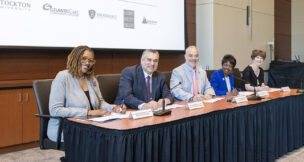
University Hospital announced on Wednesday, the launch of a groundbreaking community-based care coordination program.

The Community Health Program run by the hospital is intended to leverage and expand existing partnerships with the Greater Newark Healthcare Coalition, the Healthy Greater Newark Accountable Care Organization, Rutgers New Jersey Medical School, and Rutgers University Behavioral Healthcare, among others.
In a press release, the hospital said that the new initiative would seek to improve health outcomes for Newark residents, lessen dependency on emergency services as a primary resource for medical attention, and improve access to primary care services.
In a statement, Gov. Phil Murphy said: “New Jersey is committed to building healthy, thriving communities. I applaud University Hospital for taking this step forward to improve the health and quality of life for the people of Newark and for recognizing that our health is largely impacted by life’s challenges that occur outside the four walls of a hospital or doctor’s office.”
“Through this comprehensive approach we are making a commitment to not only acknowledge and address the medical needs of an individual but the complicating social factors in their lives, to ultimately improve both health and quality of life,” Murphy continued.
Shereef Elnahal, commissioner, New Jersey Department of Health, said in a statement: “I commend University Hospital for engaging the city’s health care partners and trained chaplains to work together to improve residents’ access to primary care and social services. This new pilot encompasses the core tenets of quality improvement in health care – evidence-based, collaborative, data-driven and considerate of the community and cultural environment that surrounds our patients.”
The Community Health Program is part of University Hospital’s strategy to create a “whole person,” relationship-based approach to health education and treatment in the Newark community. The first phase of this program will focus on the hospital’s high utilizers of emergency services and will kick off with a pilot to implement the relationship-based “Familiar Faces” model.
As part of the program, two recently hired University Hospital chaplains will act as health and spiritual coaches, healthy lifestyle mentors, and liaisons between patients and the hospital. The chaplains will function in a non-denominational spiritual role, not restricted to any specific religion. They will work to establish a mutual rapport and trust with patients in order to identify the unique concerns and needs of each individual patient and establish better communication with their healthcare professionals. This will allow for better access to personalized high-quality care, social services, behavioral health care, and other resources.
“Newark residents who now depend on the emergency room for ordinary health services will benefit from a program that will reduce their dependence on emergency rooms while promoting preventative care. The involvement of clergy as liaisons between residents and doctors will help ensure that the voices are heard and their medical needs met,” said Ras Baraka, mayor of Newark.
The new Community Health Program will utilize the latest technology to provide real-time care for these patients to link and match community services throughout Newark to client social needs, exchange data across providers in the city, and facilitate effective patient transport to and from appointments.