Sign In
Upcoming Event
 Free Newsletter

A dream realized
Triple Five did what other developers could not: open a massive retail and entertainment center in the Meadowlands
Gabrielle Saulsbery//January 6, 2020//
A dream realized
Triple Five did what other developers could not: open a massive retail and entertainment center in the Meadowlands
Gabrielle Saulsbery//January 6, 2020//


Until the Ghermezian family took control of the property formerly known as Xanadu and rechristened it American Dream, the project really was just that: a dream. Not all dreams are good dreams. For the previous developers – Mills Corp., Mack-Cali Realty Corp. and Colony Capital Inc. – the East Rutherford property certainly wasn’t.
The project, which proceeded in fits and starts from its groundbreaking in 2004, will finally come to fruition in 2020 when all elements are scheduled to be live. While nearly all of its retail offerings won’t open for several months, 2019 was the year that something — a few somethings — finally saw the light of day and the feet of consumers.
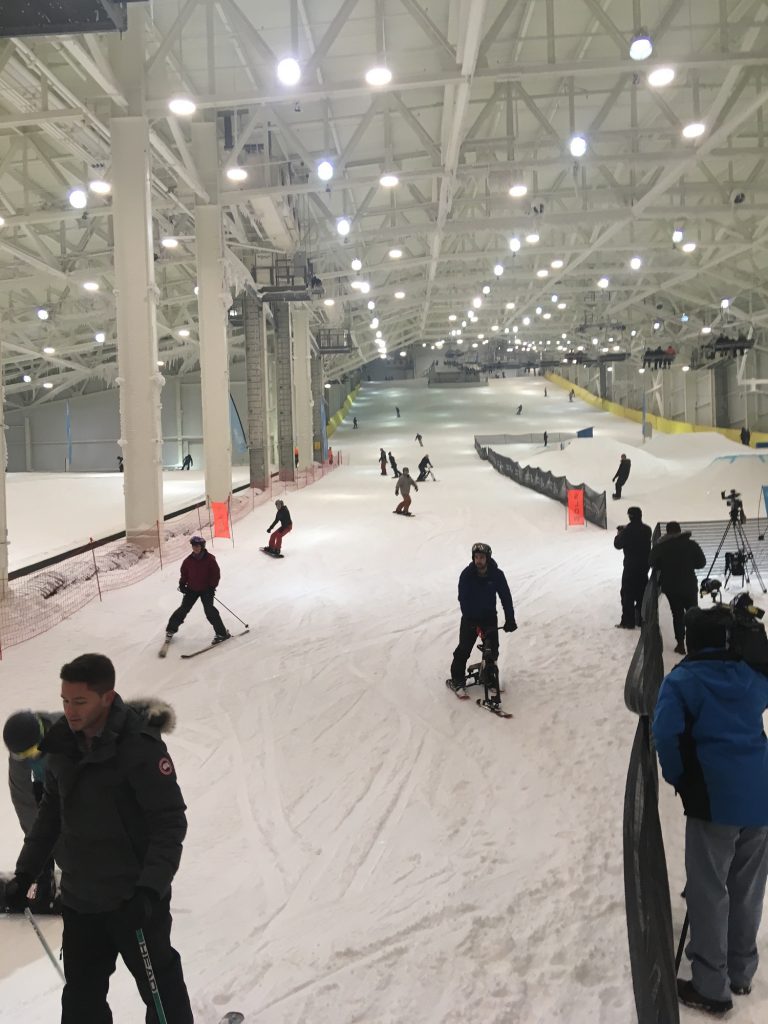
Nickelodeon Universe opened in October, and America’s first indoor ski hill Big SNOW in December.
The response to Big SNOW has been amazing so far, according to Hugh Reynolds, Big SNOW’s vice president of marketing and sales. Visitation is expected to be highest in both winter and fall as that’s the case for other international indoor ski hills, though Reynolds said the feature “should attract pretty well year round.”
Luxury stores like Dolce & Gabbana and Mulberry have leases in the mall, and Primark, Lululemon and Foot Locker will open flagship specialty stores. More than 450 retail and dining establishments will open, taking up a sizeable chunk of American Dream’s more than 3 million square feet.
At the opening of Big SNOW, Don Ghermezian insisted American Dream wasn’t a mall, but an experience. That’s the industry now, retail strategy and design firm Lionesque Group Chief Executive Officer Melissa Gonzalez explained, which is more about experience than shopping.
“They don’t like to use that word as much anymore, ‘mall.’ Even Hudson Yards is ‘a vertical urban experience.’ People are trying to reposition what those developments are,” she said. “It’s developed a connotation, so people are leaning into other ways to describe it from a more experiential standpoint. I noticed it more and more at conferences as of last year.”
They don’t like to use that word as much anymore, ‘mall.’ Even Hudson Yards is ‘a vertical urban experience.
– Melissa Gonzalez, CEO, Lionesque Group
With American Dream’s focus on experience – A theme park! A ski hill! An ice rink! A water park! – Gonzalez is most interested to watch one metric: will those who seek American Dream for the experience be converted into shoppers at stores like Century 21, ALAND and Saks Fifth Avenue?
“Suburban families, they’re always looking for things to do. From the experiential side they’ll see traffic but I’m curious how much of that will translate to retail. If I take my daughter, will we also go shopping?” Gonzalez said.
This could depend on how Triple Five strategized American Dream’s layout.
“If you go to Grand Central Station, it’s a transportation hub, but you’re literally hit in the face with all the retail in a fluid way so it’s easy to get impulsive,” she said. “But if you walk down the Oculus [the transportation hub in New York’s Financial District] a lot of the holiday pop-ups are getting the eyeballs, but it’s harder to get people to where the stores are. It’ll be interesting to see how that translates from experience to retail.”
Triple Five has done this before, though. Mall of America and the West Edmonton Mall are both in large part experiential hubs, and neither has the population density that American Dream has (21 million people within a 50 mile radius, according to Ghermezian, compared to 1 million within 50 miles of West Edmonton).
“Triple Five Group was the first to merge retail and entertainment 40 years ago at West Edmonton Mall, and it has always been a part of our DNA to surprise and delight consumers with exclusive and unique experiences and evolving with them to ensure our centers meet their every needs,” a spokesperson said.

If Ghermezian has any worry about the mall’s success, he’s tight lipped about it — and when asked how he knows when to step away from something that’s just not working, he said, “We have so much experience now, I don’t remember the last time we did something that didn’t work.
“We spend a lot of time thinking about it before we implement it, and once we decide we’re doing it, we’re full force, we go after it, and we make sure we do it as first class as it could possibly be done anywhere in the world,” he said.
Most of the time, what they do doesn’t exist anywhere in the world, he said, so his family has had to create it, and has gotten good at it.
Still, there will likely be bumps in the road. “Each property is different and faces its own challenges. It is difficult to predict [w]hat issues may face American Dream,” said Stephanie Cegielski, vice president of public relations for the International Council of Shopping Centers.
To John Holub, president of New Jersey Retail Merchants Association, the main issue is obvious: Bergen County’s blue laws.
“It’s unfortunate that they have to fight with one hand behind their back, for lack of a better phrase, because there are 52 Sundays where the retail portion won’t be able to open. [Patrons] will be riding rollercoasters and swimming in the wave tank, but they can’t go buy a swimsuit. It’s things like that that get to the absurdity of the law,” Holub said, noting that American Dream is at a further disadvantage due to its proximity to the county border, closer to places that will be open Sundays than many other malls in Bergen County.
Ghermezian expressed little worry about the blue laws, however, noting that some of the most successful shopping centers in North America are subject to the blue laws of Bergen County. With over half of the center (the entertainment components) open on Sundays, the 21 million residents in a 50-mile radius and 70 million annual New York City tourists will still find their ways there then, too, according to him.
And Holub’s faith in the project is strong.
“Look at what they’ve done in Minnesota. They clearly have a record of success. If anybody was able to pull that out of the ashes–how many starts and stops did we have with that project? From all appearances, it looks like the right people at the right time, and I wish them all the success,” Holub said.
“The fact that you can go skiing and on a roller coaster and go shopping in the same day is pretty unique. I don’t mean to sound like a commercial for them; I really think it’ll pique everyone’s interests.”