Sign In
 Free Newsletter

Murphy, officials look toward quicker vaccine rollout under Biden
Daniel J. Munoz//January 11, 2021//
Murphy, officials look toward quicker vaccine rollout under Biden
Daniel J. Munoz//January 11, 2021//


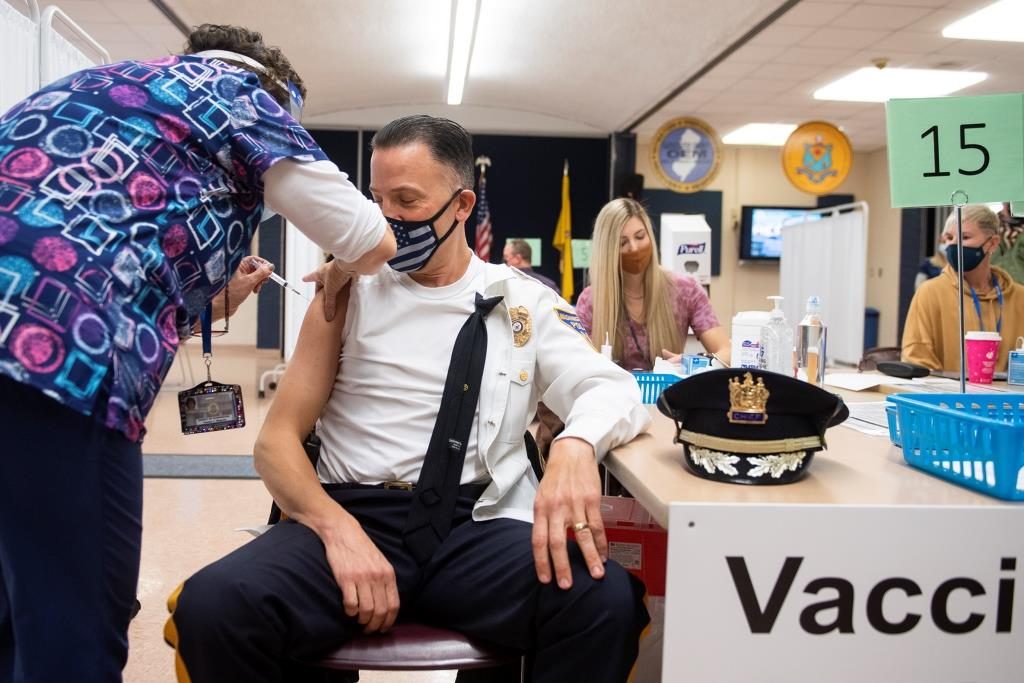
New Jersey officials have set their sites on an adequate vaccine rollout kicking off only once President-elect Joe Biden takes the helm on Jan. 20.
The vaccination process is a key component of getting the COVID-19 pandemic under control and lifting the myriad of business restrictions put in place to halt the spread of the virus, which has entered the second wave both in New Jersey and across the nation.
Under goals set out by the Murphy administration, the state would vaccinate 70% of the eligible 4.7 million adults within a six-month window, as soon as April or May.
But that goal risks getting pushed back amid supply shortages from the federal government, according to Gov. Phil Murphy and New Jersey Health Commissioner Judith Persichilli.
The health commissioner told NJTV during a weekend appearance that the six-month window could only truly start “when vaccines become available.”
“One of our biggest constraining points right now is we do not have a lot of vaccine availability,” she added.
That was a point echoed by her and Murphy following a Jan. 11 morning tour at one of the six COVID-19 vaccine “mega-sites” at Rowan College of South Jersey in Gloucester County.
“No states, whether New Jersey or another, should be left out in the cold to handle this tremendous, complex task alone,” Murphy said following a tour of the Rowan site.
That facility, as well as another at Rockaway Townsquare in Morris County, would be able to provide up to 2,400 vaccine doses a day, but that ability has been handicapped from “insufficient supply” from the Trump administration.
“Next week, Prescient-elect Joe Biden takes his oath and becomes our president, and I know he is bringing with him a strong team committed to getting our nation’s pandemic response and vaccine distribution networks running properly,” the governor said Jan. 11.
Biden has pledged to dramatically ramp up the distribution of the Pfizer and Moderna COVID-19 vaccines, an announcement which drew the skepticism of Health and Human Services Secretary Alex Azar.
“We have product that is going through QC right now — quality control — for sterility, identity check — that — we have tens and tens of millions of product. We always will. But batches fail. Sterility fails… And then you don’t have a product for that second dose,” Azar told the American Hospital Association, according to a CNN report.
“And frankly, talking about that or encouraging that can really undermine a critical public health need, which is that people come back for their second vaccine.”
As of Jan. 11, the state has administered over 214,000 Pfizer or Moderna COVID-19 doses over 199,000 of them the first dose and nearly 15,000 of them the second dose, according to state health data, ever since a University Hospital nurse was the first in New Jersey to receive a dose on Dec. 15.
Residents and staff at long-term care facilities, as well as medical personnel, police and firefighters, are the only ones currently receiving the COVID-19 vaccine, those with a high risk of exposure to the virus, according to Persichilli at a press conference in Trenton Jan. 11.
“We’re still in the context of a big supply-demand imbalance, thanks to the lack of distribution out of the feds,” Murphy said at Rowan.
More than 1 million people who live or work in New Jersey signed up via a state-run online portal to eventually be scheduled to receive their vaccines. The first day saw 450,000 registrants, overloading the website.
Of those 1 million, 7% are frontline health workers categorized into “Phase 1A,” 31% are essential workers, senior citizens and those with preexisting conditions, that make up “Phase 1B,” and 43% are other essential workers that make up “Phase 1C.”
The remaining 20% were categorized in the general public that make up “Phase 2.”