Sign In
Upcoming Event
 Free Newsletter

Safe spaces
Office tenants are demanding that buildings protect workers’ health
Linda Lindner//June 21, 2021//
Safe spaces
Office tenants are demanding that buildings protect workers’ health
Linda Lindner//June 21, 2021//


The COVID-19 pandemic focused attention on the need to provide healthy buildings for companies and employees. Many workers who never thought about ventilation in the office are now asking what adjustments or modifications have been made before they are expected back at their desks. Employers face decisions about renovations or where to lease new space and are leaning toward buildings that already meet the elevated standards.
In a recent Center for Active Design survey of institutional investors, 89% of respondents described current demand for healthy buildings as either moderate or strong, and 87% said demand for healthy buildings has increased in the past two years. Healthy building certification entity Fitwell reports a nearly 140% increase in certifications for 2020, with multi-tenant commercial properties comprising 44% of all activity.
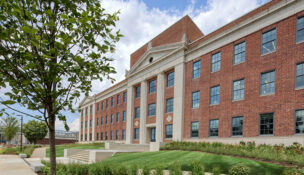
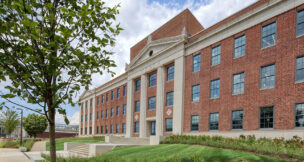
Onyx Equities recently completed a comprehensive health-focused repositioning of of 340 Mt. Kemble Avenue in downtown Morristown. The space receives 100% fresh air and provides tenants individual control of their HVAC systems. In addition, Onyx has teamed up with a local health care system to validate the healthy operations.
Buildings like 340 Mount Kemble, with clean air, plenty of natural sunlight and other characteristics that promote good health have become increasingly important for companies bidding to pull people back into the office. The extra cost is considered worthwhile.
Effective rents at healthy buildings are between 4.4% and 7.7% higher per square foot than nearby properties that are not certified, according to research by MIT’s Real Estate Innovation Lab, which analyzed public databases and rents in 10 major American cities. While health and wellness in commercial buildings are increasingly important to help employees feel at ease with coming back to the office, they also drive value to building owners’ bottom lines.

Tim Greiner, executive managing director at JLL, said many clients have been confused about they should be doing because the conditions continue to evolve. Tenants are now making demands from landlords. “When the tenants will start demanding different things then the landlords have to respond, or they’re going to be left with an empty building,” he said.
“We looked at the leases that were signed over the past 12 months, and eight out of 10 new went into a newer building — ones that have been built in the last 10 years or have been completely renovated in the last 10 years. That’s going to trend now.”
Greiner said filtration is probably the first thing landlords of the older buildings consider because redesigning older systems can be difficult. For that reason, newer buildings are more desirable – they have a better fresh air intake system and more modern and powerful HVAC motors.
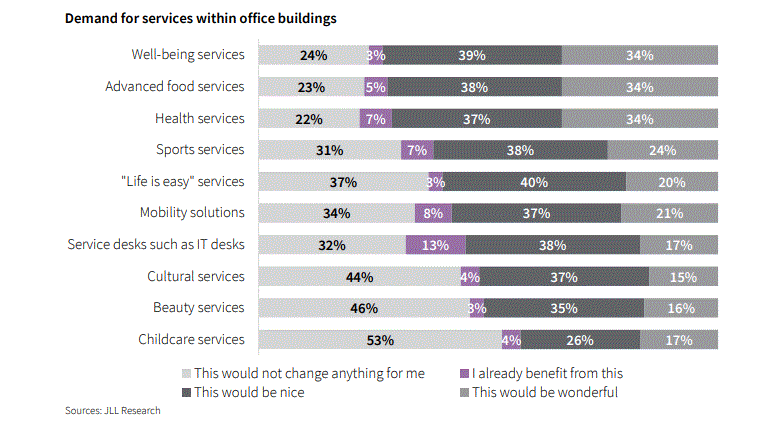
Tenants are also seeking clean touchpoints. “I’ve got an owner who put this device that automatically opens the bathroom doors when you wave an ID card in front of it,” Greiner said. He added that many older properties still have manual faucets, paper towel dispensers and soap dispensers. If tenants have a choice, they will opt for buildings with touchless devices.
Some real estate companies worked with an environmental hygienists and other health care professionals to create COVID-19 protocols for commercial properties. Onyx rolled its protocols out last July across its office portfolio. “Experience Ambassadors” are responsible for monitoring and enforcing adherence to social distancing, personal protective equipment use and reduced capacity on elevators.

Alfred Sanzari Enterprises engaged its operation and engineering teams early in the pandemic to improve sanitization and cleaning protocols on its properties, apply self-sanitizing film on high-touch surfaces and reorient common areas to promote social distancing. HVAC and mechanical protocols were updated to exceed standards set by the Centers for Disease Control and elevator capacity was limited. On-site security staff were coached on the new building procedures. Food and beverage areas were fitted with Plexiglas barriers and hand sanitizers were installed in many areas.
Sanzari also collaborated with tenant engagement service Better Spaces to promote employees’ personal and professional wellness through full suite of experiential amenities and programming at its Glenpointe 50-acre campus with more than 650,000 square feet of premier Class A office space in Teaneck. A real estate tech company, Better Spaces uses an app to communicate with the tenant population, which acts as a “key” for tenants to access the amenity space, sign up for classes and programs and book available private rooms. As a leader in tenant amenities and insights, the platform also provides measurable data to landlords and community managers that enables them to tailor programming and amenities in line with demand from each tenant population.
Greiner said building owners with sufficient capital immediately implemented the biggest changes and spent money to make their customers feel safe. He added that companies adapting to the COVID-19 world could be rewarded with a more productive and engaged workforce. With the right focus and investment in 2021, they can enhance opportunities to work in better buildings, in more accessible locations, with better results.