Sign In
Upcoming Event
 Free Newsletter

Oishii launches high-tech, solar-powered strawberry farm in Phillipsburg
Kimberly Redmond//June 4, 2024//

Oishii's new Amatelas Farm in Phillipsburg features 250 moving racks of Koyo berries stacked with eight growing levels that seamlessly move from daytime warmth to nighttime coolness on a 24-hour cycle. - PROVIDED BY OISHII
Oishii's new Amatelas Farm in Phillipsburg features 250 moving racks of Koyo berries stacked with eight growing levels that seamlessly move from daytime warmth to nighttime coolness on a 24-hour cycle. - PROVIDED BY OISHII
Oishii launches high-tech, solar-powered strawberry farm in Phillipsburg
Kimberly Redmond//June 4, 2024//


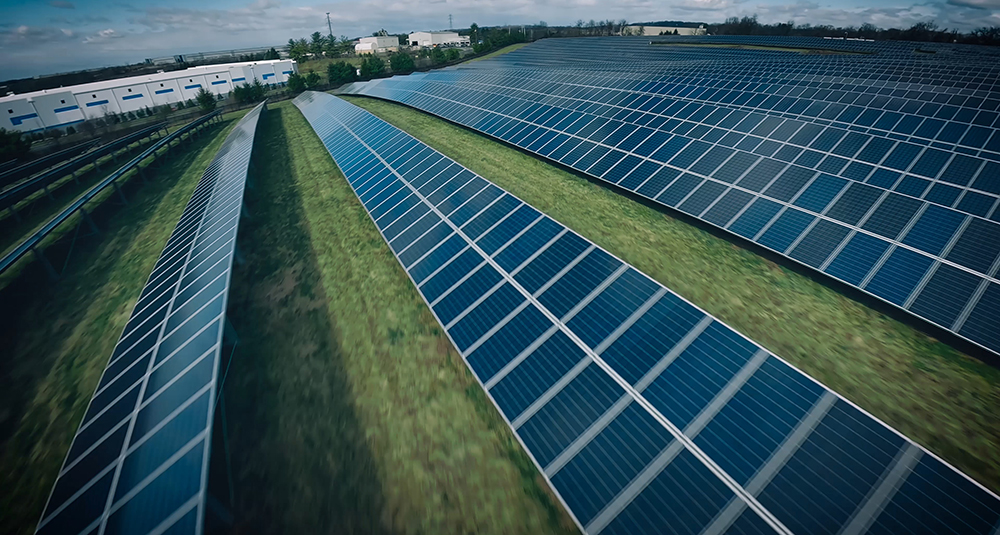
Jersey City-based sustainable strawberry grower Oishii recently opened a massive solar-powered indoor vertical strawberry farm in Phillipsburg.
Named for the Japanese goddess of the sun, Amatelas Farm is designed to increase the efficiency and output of the company’s coveted berries by more than 20 times over its previous facility.
Built in a repurposed plastics manufacturing plant, the farm occupies a 240,000-square-foot facility. It features 250 moving racks of Koyo berries stacked with eight growing levels that seamlessly move from daytime warmth to nighttime coolness on a 24-hour cycle.
While most vertical farms grow their produce on static, immobile racks, Oishii said its moving architecture automates the process. According to the company, that enables bees, robots and farmers to work together to grow more berries in the same footprint.
Amatelas Farm also features next-generation LED lights that use 14% less energy per plant. Additionally, the water purification system has eight times more capacity than the older Oishii farms. That update allows it to recycle the majority of water it uses.

Fifty state-of-the-art robots also work around-the-clock at the farm ensuring berries are picked at peak ripeness and to optimize operations over time. The proprietary technology captures more than 60 billion data points annually. The information is then used to monitor and adjust environmental variables to deliver the best tasting fruit.
The company said it has already made more than 100 hires in the Lehigh Valley region for Amatelas Farm. Positions include engineers, operators and facility managers.
Better for people – and the planet

In a June 3 press release, CEO and co-founder Hiroki Koga said, “At Oishii, we run towards problems once thought to be impossible to solve. In just two years, we’ve developed technological breakthroughs now in use at Amatelas Farm that make our growing process significantly more efficient, yet just as delicious.”
“Our desire to maintain this exponential rate of innovation is driven by a deeply human need: we see vertical farming as a critical part of the solution to our failing agriculture system. Our new farm represents a huge step forward in our mission to grow food that’s better for people and the planet,” Koga said.
Amatelas Farm will now serve as the primary production site for Koyo berries. Meanwhile, Oishii’s 72,000-square-foot Jersey City site, Mugen Farm, will continue growing Omakase berries. The facility will also add more space to grow the Rubī Tomato. Additionally, Oishii will continue to operate a farm in Kearny, where most of its plants are propagated, according to the release.
Amatelas Farm was among 700 clean-energy projects across the country to receive a collective $194 million in funding through the United States Department of Agriculture.
Largely funded by the Inflation Reduction Act, the investments aim to advance President Joe Biden’s “Investing in America” agenda by creating jobs and spurring economic growth in rural areas.

Oishii secured a $15 million loan for Amatelas Farm. The facility expects to create 45 new jobs and reduce operating costs by $150,000 annually.
New Jersey Rural Development State Director Jane Asselta said, “Knowing this $15 million investment will help Oishii … expand its footprint and increase production while offsetting energy costs and creating jobs is a testament to the impact of President Biden’s economic agenda to strengthen our economy and invest in rural businesses.”
Coming up
The opening comes about three months after Oishii raised $134 million in Series B funding round led by Japanese telecommunications firm Nippon Telegraph and Telephone (NTT). Other investors included food tech, sustainable agriculture and automation.
At the time, the company said it planned to use the resources on several initiatives, including a solar-powered facility, expanded distribution and advanced robotics investments.
Alongside this week’s Amatelas Farm announcement, Oishii said it expects to launch another type of berry later this year. It also plans to enter new markets along the East Coast, as well as grow its relationship with retail partners like Whole Foods Market and FreshDirect.

Oishii launched in 2016. It relies on advanced robotics combined with traditional farming methods to operate three indoor farm facilities.
Among the company’s major breakthroughs are its state-of-the-art harvesting robots developed in partnership with Yaskawa, as well as optimizing AI models that power bee pollination, environmental controls and farm output to grow more with less energy and water.
Oishii – which translates to “delicious” in Japanese – introduced its first strawberry in 2018. The Omakase Berry quickly caught the attention of Michelin-starred chefs, tastemakers and consumers for its sweetness, aroma and creamy texture.
In February 2023, the company unveiled its second strawberry. The Koyo Berry is known for its refreshing sweetness and balanced acidity. Just two months ago, Oishii changed the game again by revealing the jewel-like Rubī Tomato as the third varietal grown in its state-of-the-art indoor commercial farms.