Sign In
Upcoming Event
 Free Newsletter

Auction prices spike — what does it mean for NJ energy bills? (updated)
Matthew Fazelpoor//July 23, 2025//

PHOTO: DEPOSIT PHOTOS
PHOTO: DEPOSIT PHOTOS
Auction prices spike — what does it mean for NJ energy bills? (updated)
Matthew Fazelpoor//July 23, 2025//


)

The basics:
- PJM Interconnection announces results of latest auction
- NJ, other states had advocated for new auction price cap to manage costs
- Utilities say NJ electric bills should rise just 1.5% to 5%
- Leaders call for PJM market reform to protect ratepayers
As higher energy costs continue to be a top-of-mind issue, regional grid operator PJM Interconnection announced the results July 22 of the 2026/2027 Base Residual Auction.
PJM operates the grid that serves more than 67 million users across 13 states and the District of Columbia. Last year’s auction led to a major spike in capacity price (from $29.92/MW-day cost to $269.92/MW-day), which began affecting ratepayers’ bills June 1 – with New Jerseyans facing up to 20% increases.
This year’s auction produced another increase in capacity prices – coming in at $329.17/MW-day, at the FERC-approved cap, which had been sought by New Jersey, Pennsylvania and other states after last year’s massive increase.
Key things to know about the auction:
- 134,311 MW of unforced capacity generation (UCAP) procured – with an additional 11,933 MW in UCAP acquired for regions under the Fixed Resource Requirement for a total of 146,244 MW available to serve peak demand, along with a reserve margin
- 2,669 MW of new generation and generation updates – the first increase in new generation and updates in the last four auctions
- Since last year’s auction results were posted, 17 generating units (totaling 1,100 MW worth of Capacity Interconnection Rights) have withdrawn their retirements
- Cleared resource mix includes:
- 45% natural gas
- 21% nuclear
- 22% coal
- 4% hydro
- 3% wind
- 1% solar
- Cleared volume was just over the projected reliability requirement, which PJM said underscores the region’s tightening supply-demand balance
- PJM said demand is growing rapidly, forecasting peak load for the 26/27 delivery year increasing by more than 5,400 MW (citing data center expansion, electrification and economic growth)
- PJM said the auction also reflected several market rule changes:
- the price cap and floor ($177.24/MW-day);
- expanded capacity must-offer requirements for all resource types;
- PJM’s submission of $0 offers for specific Reliability Must-Run units;
- retirement of the energy efficiency product category
Not alone
PJM said in each BRA, it aims to procure a target capacity level for the Regional Transmission Organization (RTO), with a reserve, in a least-cost manner.
“I think this is a continuation of trends that we’ve been seeing – the tightening of the supply and demand conditions,” said Stu Bresler, executive vice president, market services and strategy for PJM, during a call with reporters Tuesday afternoon.
“What I can say is that we were pleased to see the new resources and the upgrades that came in. We’re pleased to see the reversal of retirements – because that’s the kind of thing we need; and the kind of thing that one would expect from the collection of information that’s out there, including the results of the last capacity auction and a lot of the other analysis that’s out there,” Bresler added.
“We’re not the only region of the country that’s in this situation.”
Bresler said markets are tightening everywhere.
“I think this auction, just like the last one, kind of served its purpose – and very transparently reflected the supply-demand condition we’re in in the results.”
How will it affect consumers?
All of these developments led to the question, which Bresler was asked – how will the more than 20% increase in capacity price impact consumers in places like New Jersey?
“Remember that wholesale capacity prices are a relatively small part of retail bills – and it also varies throughout the region, and for all I know, even within a state. How wholesale prices or wholesale costs are translated into retail rates – and therefore, retail bills,” said Bresler.
He said PJM ran a hypothetical analysis about how the typical retail customer would be affected in the different states in the region.
“Our estimation is that the maximum change you would see is between 1.5% and 5% in a retail customers bill,” said Bresler. “So, again, the 22% – that’s the increase in the clearing price in this capacity auction. But, like I said, given the relatively small component of a retail bill that wholesale capacity amounts to, that’s basically what it translates to. And it depends on the jurisdiction and the existing rates and all that sort of thing – and that’s why we have a range in there of 1.5% to 5%.”
Our estimation is that the maximum change you would see is between 1.5% and 5% in a retail customers bill.
– Stu Bresler, EVP, market services and strategy, PJM
‘Flawed market design’
“While it will take some to analyze today’s results stemming from PJMs BRA, New Jersey families are already living with the consequences of PJM’s broken market,” said New Jersey Board of Public Utilities President Christine Guhl-Sadovy. “While the PJM-auction results reach new highs and reflects PJMs flawed market design, due to some changes that NJBPU advocated for, we don’t anticipate a comparable bill impact as we did this summer at this time.”
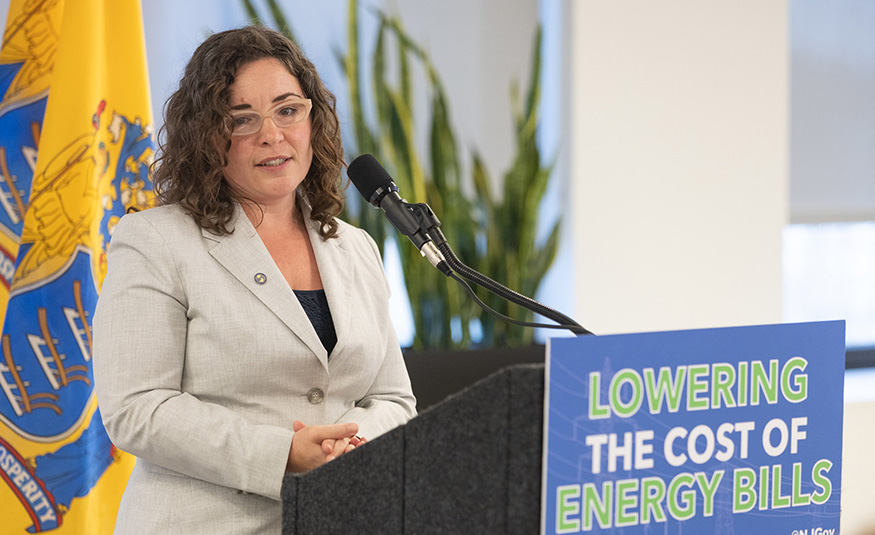
Guhl-Sadovy pointed to that price cap that New Jersey and others advocated for – as well as the letter Gov. Phil Murphy and other governors wrote to PJM this week calling for leadership and governance structure reforms. NJBPU said it will release more information on the BRA in the coming weeks.
PSE&G noted that these costs are not profited from and merely passed on to the customer directly with no mark-up – but the utility does not anticipate an impact to customers.
“Despite this increase in the PJM BRA price, if other supply-related costs remain roughly the same, such as the cost of energy, we anticipate a near flat impact on customers’ electric bills effective June 1, 2026,” PSE&G said in a statement, noting several factors that offset the higher capacity price, including a high Basic Generation Service effective price form three years ago rolling off; as well as this year’s BRA reconciliation adjustment not anticipated to be as significant as last year’s, which PSE&G says had an outsized impact on capacity prices – and ultimately customers’ electric bills.
“This year’s auction came in at the top of the mandated price cap, suggesting that the real demand for capacity could potentially be even higher,” said PSE&G.
Increased demand
Atlantic City Electric said it remains committed to keeping energy affordable and planning for a more reliable future.
“And we recognize that rising electricity costs are challenging for families across South Jersey,” the utility said in a statement. “The latest PJM auction reflects broader market challenges, like increasing demand and fewer available generation resource.
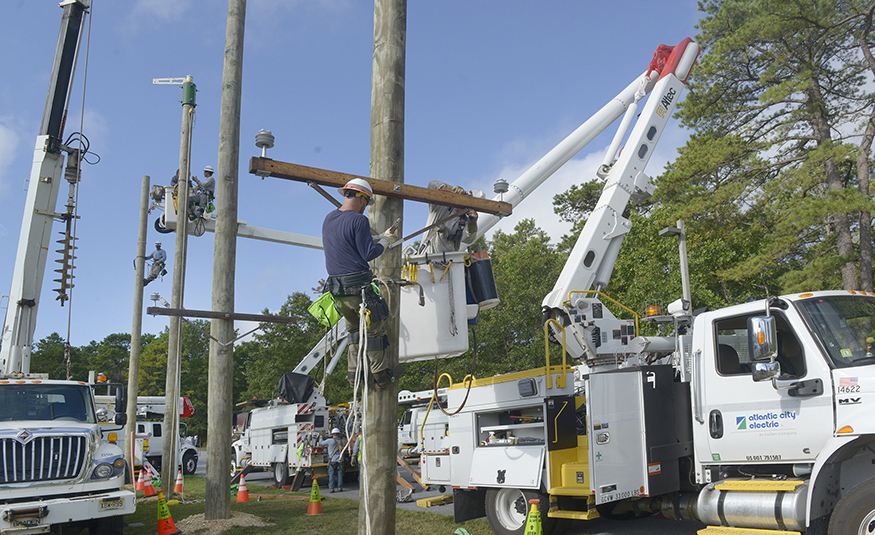
“While Atlantic City Electric doesn’t profit from these prices, we’re acting now to support our customers with bill assistance, flexible payment options, and energy efficiency programs, and we remain committed to working together with other utilities, elected and regulatory officials, PJM, and generators to be part of a path forward that supports the area’s growing energy needs and manages bill impacts.”
JCP&L spokesman Chris Hoenig said, “We are reviewing the capacity auction results and assessing the impact they may have on supply prices. The effect won’t be fully known until the BGS auction early next year, so it’s premature to speculate what that may be.”
Pointing fingers
Political leaders are weighing in as well.

“Today’s PJM auction results confirm what we’ve been warning about for years: Trenton Democrats’ failed energy agenda is directly driving up costs and putting the stability of our grid at risk,” said Senate Republican Leader Anthony Bucco, R-25th District. “Instead of pursuing a balanced, affordable, and reliable energy strategy, Trenton Democrats catered to the far-left wing of their party with unrealistic mandates and politically driven policies that ignore basic energy economics.
“Now, ratepayers will see no relief for the 2026-2027 delivery year.”
‘Here we go again’
Democrats blamed PJM.

“Here we go again. Another failed energy auction that will result in another increase in utility bills for New Jersey residents,” said Sen. John Burzichelli, D-3rd District. “We can’t afford auctions that repeat the same mistakes with a system that shortchanges ratepayers. This is more evidence of the need for reforms that bring transparency to the process, accountability for their decisions, and a system that makes ratepayer affordability.
“Until these reforms are made, we will continue to be held hostage to a failed system.”
And there was reaction from the campaign trail.

“New Jerseyans across our state have been appalled looking at their utility bills this summer because of PJM’s mismanagement of our energy grid and the subsequent spike in utility costs,” said U.S. Rep. Mikie Sherrill, D-11th District, Democrat gubernatorial candidate in a statement.
“Today, they added insult to injury as they announced another surge in auction prices, which will increase New Jerseyans’ utility prices once again at the end of 2025. PJM has refused to plug clean, cheap power like solar into the grid while giving preference to coal and oil, and I strongly oppose their actions that are making New Jerseyans pay the price once again.
‘Clear sign of structural issues at PJM’
More reaction is coming in from state leaders about the PJM auction results.
Gov. Phil Murphy put out a July 23 statement, along with Senate President Nick Scutari, D-22nd District, and Assembly Speaker Craig Coughlin, D-19th District, saying New Jersey cannot and will not accept a system that puts profits for out-of-state generation ahead of affordability for our residents.

“Our clean energy goals have always been rooted in lowering costs, increasing reliability, and building energy right here at home,” the leaders said in a statement. “But those efforts have been consistently undermined by the regional grid operator, PJM Interconnection, which has stalled critical projects that would create more energy here in New Jersey.”
The Democrat leaders noted that the results of this auction – and the price cap that Jersey and other states fought for – prevented a historic spike in energy prices.
“However, the results of this auction show energy capacity prices continue to rise – and the fact that energy prices have already reached the cap is a clear sign of structural issues at PJM,” said Murphy, Scutari and Coughlin. “As Gov. Murphy and nine other bipartisan governors recently stated in a letter to PJM Board of Manager, we demand that PJM be composed of leaders that take seriously state concerns around affordability and resource adequacy and that the states have a formal say in PJM governance.”
Small increase still too much
Assembly Republican Leader John DiMaio, R-23rd District, said even a modest increase is too much when working families are already getting crushed by electric bills.

“We need to build more in-state energy sources that are reliable, affordable, and actually lower costs for New Jerseyans,” DiMaio said in a July 23 statement. “The Murphy administration has turned a blind eye to affordability. It keeps pushing mandates that drive up costs while ignoring the need for reliable baseload power like natural gas and nuclear right here in New Jersey.”
DiMaio says this should be a wake-up call.
“We can’t keep relying on out-of-state imports and hoping prices don’t spike. New Jersey needs to make energy affordability a priority and get serious about building power plants and pipelines again.”
Editor’s note: This story was updated at 4:48 p.m. EST July 23, 2025, to include more reaction from state leaders.