Sign In
Upcoming Event
 Free Newsletter

3 key moments in PSEG history that shaped New Jersey infrastructure
Paul Toscarelli//August 3, 2026//
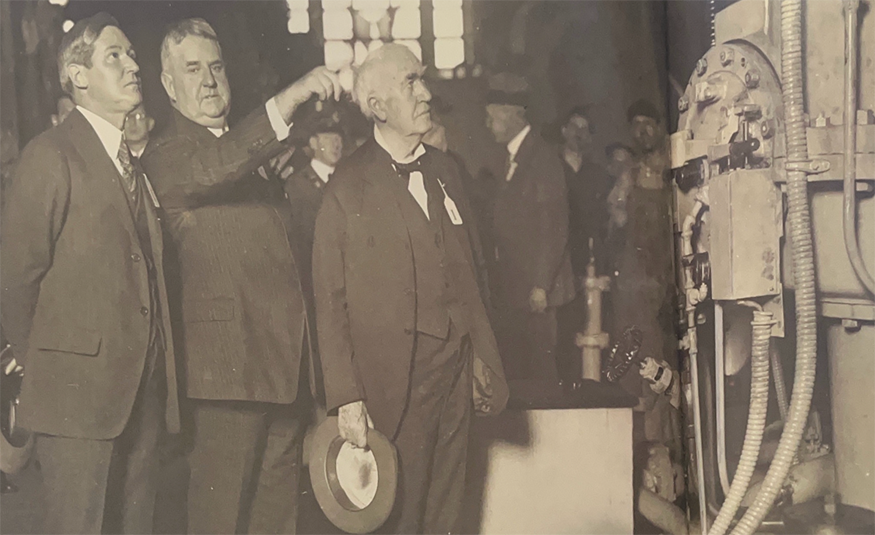
Public Service founder Thomas McCarter, center, hosts New Jersey Democratic Gov. A. Harry Moore, left, and inventor Thomas Edison, right, at the 1926 dedication of Kearny Generating Station. - PROVIDED BY PSEG
Public Service founder Thomas McCarter, center, hosts New Jersey Democratic Gov. A. Harry Moore, left, and inventor Thomas Edison, right, at the 1926 dedication of Kearny Generating Station. - PROVIDED BY PSEG
3 key moments in PSEG history that shaped New Jersey infrastructure
Paul Toscarelli//August 3, 2026//


The basics:
- PSEG traces its impact through three pivotal moments in New Jersey history
- Utility consolidation in 1903 helped modernize statewide infrastructure
- PSEG powered New Jersey’s defense manufacturing in World War II
- Grid upgrades after Superstorm Sandy cut outages by about 22%
As the country celebrates 250 years of American independence, it’s worth looking beyond the monuments and the textbooks to the infrastructure underneath.

The roads, the rails, the wires, and the companies responsible for them.
Here in New Jersey, that story runs directly through PSEG and three inflection points that didn’t just define our company but helped define the state.
No. 1 | The consolidation, 1903
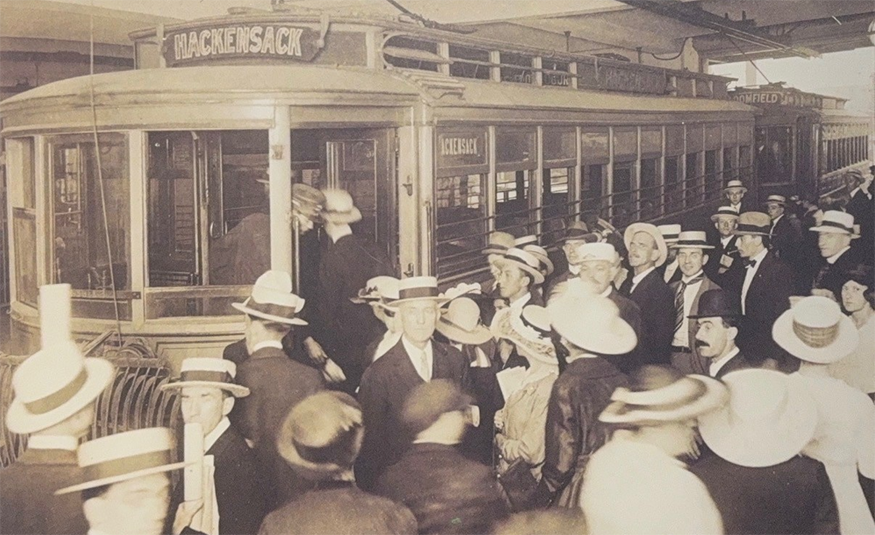
In 1903, the same year the Wright Brothers flew at Kitty Hawk, a businessman named Thomas McCarter did something that helped New Jersey take flight. More than 400 fragmented gas, electric and trolley companies were operating across the state. They were each too small to finance modern infrastructure and too local to build reliable service at scale.
McCarter’s answer was to roll them into one: the Public Service Corp. of New Jersey, predecessor to PSEG. It was a bet that integration, not fragmentation, was the path to a modern state. He was right. Within just a few years of the consolidation, utility rates dropped significantly across most of the state, and trolley fares fell too — concrete proof that scale could deliver what 400 scattered operators never could.
Soon, PSEG’s trolley network was moving millions of riders annually. Its power plants were fueling New Jersey’s emerging industrial districts. The state that would become one of America’s great manufacturing and transit corridors was, in part, wired and connected by this early decision to build at scale.
No. 2 | The war economy, 1941–1945
When the United States entered World War II, the country needed its industrial base to perform at a level it never had before. Factories had to run multiple shifts. Shipyards had to build thousands of vessels. Munitions, steel, chemicals, and refined fuel had to flow without interruption.
New Jersey was a central node in that mobilization. And PSEG was the backbone that held it together.

PSEG’s generating stations supplied power to the shipyards, munitions plants, refineries, and steel and chemical works that made New Jersey one of the nation’s leading defense manufacturing centers. Its electric streetcars and bus lines – including the diesel-electric buses its engineers helped co-develop in 1937 – moved workers to factories and naval facilities around the clock, keeping plants running at full capacity.
If it hadn’t been able to scale, the company could have been a liability in a war economy that needed to run on all cylinders. PSEG wasn’t; it was a force multiplier.

No. 3 | Superstorm Sandy and the modern grid, 2012–present
In October 2012, Superstorm Sandy made landfall and exposed something the country had been quietly avoiding: America’s critical infrastructure was not built for the climate future it was already living in.
For PSEG, Sandy wasn’t just a storm. It was a call to action.
The company launched one of the largest restoration efforts in American history. But rather than simply rebuild what had existed, PSEG chose to go several steps further.
Substations were raised and hardened. Vulnerable gas infrastructure was replaced. More than 1,500 smart switching devices were deployed across the grid, allowing operators to automatically reroute power around damaged equipment rather than waiting for crews to manually locate and fix faults. The result: outages have been reduced by approximately 22%.
In the decade since, the national conversation has caught up to what PSEG was already doing. Climate resilience. Grid modernization. Energy security. These have moved from obscure trade journals to the front pages of business publications.
PSEG was ahead of that curve.

Staying power
The through-line across all three moments is the same: PSEG has consistently treated disruption as a mandate to build better, not just rebuild the same.
That’s a blueprint for success.
As the country marks 250 years and looks toward the next chapter of its infrastructure story, including electric vehicles, decarbonization, resilience against a more volatile climate, the companies that will matter most are the ones that already know how to turn a challenge into a solution that makes the world a better place.
Paul Toscarelli is vice president of electric operations at PSE&G.