Sign In
Upcoming Event
 Free Newsletter

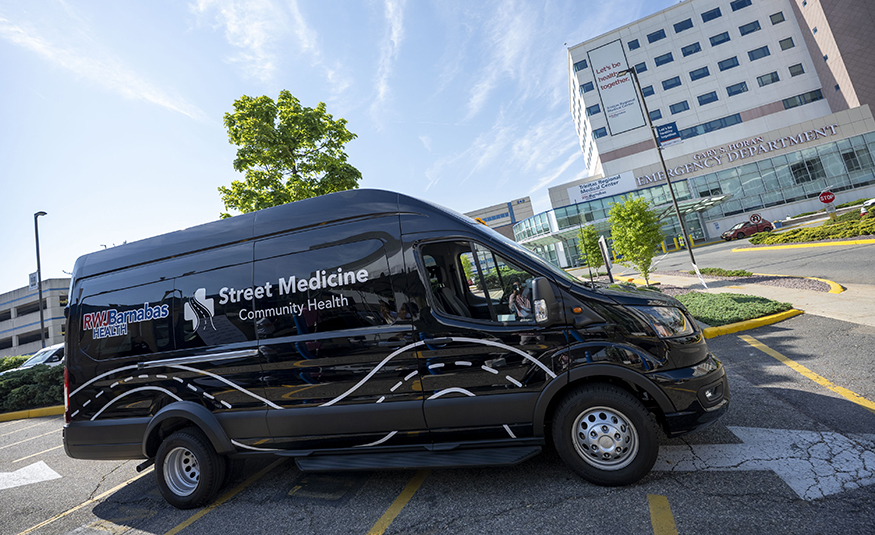
On May 19, 2026, RWJBarnabas Health launched New Jersey’s first Street Medicine Program at Trinitas Regional Medical Center in Elizabeth. The initiative will bring care and services to unhoused individuals across Elizabeth with the goal of expanding to other areas in the state. - PROVIDED BY RWJBARNABAS HEALTH
On May 19, 2026, RWJBarnabas Health launched New Jersey’s first Street Medicine Program at Trinitas Regional Medical Center in Elizabeth. The initiative will bring care and services to unhoused individuals across Elizabeth with the goal of expanding to other areas in the state. - PROVIDED BY RWJBARNABAS HEALTH
RWJBarnabas launches NJ’s first street medicine program
Matthew Fazelpoor//May 19, 2026//


 Listen to this article
The basics:
- RWJBarnabas launches NJ’s first mobile care program in Elizabeth
- Initiative serves unhoused residents directly
- Program based at Trinitas Regional Medical Center
- RWJBarnabas plans expansion across New Jersey
RWJBarnabas Health launched New Jersey’s first Street Medicine Program in Elizabeth. Unveiled May 19, the mobile health initiative will bring clinical care directly to people experiencing homelessness. It will also serve as a model for expansion across the state.
Officials noted the concept has gained broader cultural visibility in recent years. For example, the HBO Max series “The Pitt” depicts a fictional hospital-based street medicine team delivering care to unhoused individuals in public spaces.
Supported through state funding, the effort is part of RWJBarnabas’ broader Our Healthy Communities initiative. That program focuses on addressing social drivers of health including housing, food access and economic stability.
RWJBarnabas has reinvested more than $151 million in community health initiatives beyond traditional medical care. That also includes initiatives aimed at supporting unhoused populations as well as expanding access to care outside hospital settings.
On the move
The Street Medicine Program is based at Trinitas Regional Medical Center. The initiative sends a mobile medical team in a clearly marked van to shelters, transitional housing sites and other locations where unhoused individuals live and gather.
The goal is to reduce barriers to care by meeting patients where they are. It also connects them to physical, mental and behavioral health services, along with longer-term supports such as transportation and clinic access.
Beyond coordinated care planning designed to keep patients engaged in treatment, the initiative delivers a broad range of services on the ground, such as:
- Acute and preventive care
- Chronic disease management
- Mental health and street psychiatry
- Substance use support and harm reduction
New Jersey’s unhoused population has reached nearly 14,000 people, according to the latest statewide count. The figure underscores the need for expanded access to care outside traditional clinical settings.
Caring for all
RWJBH President and CEO Mark Manigan said the program reflects a core commitment to expanding access for vulnerable populations.
“Our Street Medicine Program is born from a culture that recognizes everyone, regardless of circumstance, is deserving of compassion and access to the world-class healthcare we provide,” said Manigan. “Being the first in New Jersey to put such a focus on the immediate healthcare needs of some of our most vulnerable residents is something in which RWJBarnabas Health takes tremendous pride.”

At Trinitas Regional Medical Center, leaders said the program is designed to intervene earlier and reduce avoidable emergency care.
“We are proud to launch the Street Medicine Program here at Trinitas Regional Medical Center and support the Elizabeth community,” said Nancy DiLiegro, president and CEO of Trinitas Regional Medical Center. “Every single day we see first-hand the impacts of homelessness on one’s physical, mental, and emotional health. This initiative strategically delivers care to those who need it most, helping intervene and prevent a health crisis that would require emergency care.”
This initiative strategically delivers care to those who need it most, helping intervene and prevent a health crisis that would require emergency care.
– Nancy DiLiegro, president and CEO, Trinitas Regional Medical Center
‘Life-changing’ for Elizabeth
Balpreet Grewal-Virk is senior vice president of community health at RWJBarnabas. She said the initiative is intended to improve outcomes for patients who often face barriers to traditional care.
“The Street Medicine Program advances RWJBarnabas Health’s mission of providing quality, compassionate and accessible care to the communities we serve. Sending our team out into Elizabeth will be transformative, driving down mortality rates and improving health outcomes for patients in need,” said Grewal-Virk. “This impactful work would not be possible without the support of the State of New Jersey, and we are deeply grateful for that partnership.”
Elizabeth Mayor J. Christian Bollwage called the initiative a major step forward for the city’s most vulnerable residents, saying, “This initiative will be life-changing…”
Following the Elizabeth rollout, the system said it plans a broader effort to expand the program across New Jersey.
In the driver’s seat
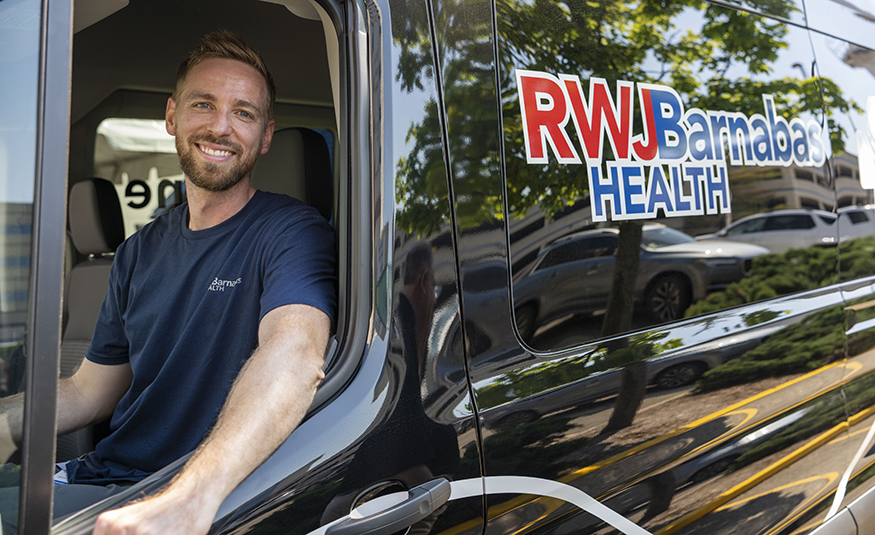
Dr. Edward Egan, medical director of RWJBarnabas Health’s Street Medicine Program, leads the program. He will oversee care delivery from the mobile unit.
“I’m excited that we are officially launching the Street Medicine Program and I look forward to helping lead this team,” said Egan. “We know the unhoused population face disproportionate barriers to receiving the care they need.
“This program will make a meaningful difference in our patients’ lives and help prevent hospitalizations.”