Sign In
Upcoming Event
 Free Newsletter

The apprentice comes to health care Systems are increasingly finding it’s great way to bring needed people into the workforce
Anjalee Khemlani//December 13, 2016//
The apprentice comes to health care Systems are increasingly finding it’s great way to bring needed people into the workforce
Anjalee Khemlani//December 13, 2016//


Stephanie Ramirez was used to handling cash registers and working in customer service, but after the single mother of two from New Brunswick found herself out of a job and not qualified for unemployment, she didn’t know what to do.
After signing up for welfare and visiting job centers, she heard about the apprenticeship program for community health workers at Rutgers University and decided to apply.
After passing a background check, Ramirez completed her classes at Rutgers and is doing her on-the-job training at Saint Peter’s Healthcare System.
Ramirez is learning how to be a community health worker. The role serves as a liaison between the health care providers and community members — particularly those who need extra time or education about health benefits of certain services and programs, or advice on which types of health care services are needed.
Health care workers like these have been implemented in places such as Trinitas Regional Medical Center, which has used funding from the Nicholson Foundation to train a limited number of paramedics as community workers. The goal is to be able to enter the homes of high-risk patients or potential patients and assess their needs for healthier living.
Though the on-the-job training is paying Ramirez about $10 per hour, less than the $12 per hour she made at her previous job, the potential to earn $18 to $22 after completing the training is worth the wait and temporary pay cut, Ramirez said.
If it weren’t for this nontraditional option, which also offers her college credits if she wants to pursue a higher degree, Ramirez would have been stuck looking for register jobs.
“Honestly, I would just get a job for income. I wouldn’t go back to school because I wouldn’t be able to afford it. So I would just get another job,” she said. “I’m a single mother, so the chance they are giving me and the benefits and paying for my education.
“I couldn’t be able to get a certificate because, when you have kids, you can’t afford it. I’m really proud of myself.”
Ramirez is just one of many who are being helped, and helping the health industry, through the growing trend of apprenticeships.
Since 2011, the concept of apprenticeships has seen a comeback in the United States, to the point that it is even supported through grants from the Department of Labor.
Padma Arvind, director of the Health Care Talent Network at Rutgers, helped secure federal and state grants for the university to implement the program, now in its third year.
Arvind said the White House was looking at ways to implement apprenticeships in manufacturing and construction jobs, and looked to examples from Switzerland and Germany.
Now, the DOL has supported the program for health, energy and pharmaceuticals, by partnering with some of the largest employers in the country, Arvind said.
But New Jersey took the lead on implementing it in health care.
With Arvind’s help, Rutgers developed a curriculum and job-training guidelines that were approved by the DOL and are now being used by other states. And major hospital systems in the state, such as RWJBarnabas Health and Hackensack Meridian Health, have shown interest, Arvind said.
The concept is not new, though, it’s just that the U.S. is playing catch-up.
Kiameesha Evans, an instructor in the community health worker apprenticeship program at Rutgers, said it has been used in many Latin American countries for years, and the U.S. is just catching on to the trend.
“I believe in the community health worker model. Health care is very expensive and a doctor can only do so much,” Evans said. “And nurses and nurse practitioners can only do so much in a clinical visit.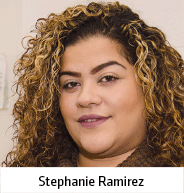
“Public health is one of those things people don’t know what it is until you tell them … and then they realize they are surrounded by it every day.”
Ramirez said the courses weren’t difficult, and because there is such a quick turnover time from learning to applying skills on the job, it was much easier to understand.
Arvind and Evans believe this model is here to stay, and will continue to grow in the realm of health care in the country.
Arvind recently published a study, along with Jennifer Velez of RWJBarnabas, and other experts from the health field around the country, in conjunction with the Icahn School of Medicine at Mount Sinai and the United Nations, which focused on applying the community health care worker model.
In the study, published this month, the task force looked at the various state and national level models.
They concluded that not only was the program beneficial to the health care industry, it also helped reduce costs to the overall industry.
“Experience in the U.S. and abroad shows that the health outcomes achieved by well-designed CHW (community health worker) programs can create a return on investment upwards of $2 for every dollar invested,” the study said. “CHW programs have the potential to both improve health outcomes and reduce the cost of care for communities across the country.”
E-mail to: [email protected]