Sign In
Upcoming Event
 Free Newsletter

Training the next generation of business leaders
Dean Oya Tukel discusses NJIT's approach to preparing young people to succeed
Jeffrey Kanige//April 3, 2023//

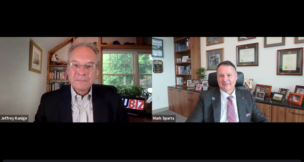
Dr. Oya Tukel, dean of the Martin Tuchman School of Management at NJIT, speaks with NJBIZ Editor Jeff Kanige on March 28, 2023.
Dr. Oya Tukel, dean of the Martin Tuchman School of Management at NJIT, speaks with NJBIZ Editor Jeff Kanige on March 28, 2023.
Training the next generation of business leaders
Dean Oya Tukel discusses NJIT's approach to preparing young people to succeed
Jeffrey Kanige//April 3, 2023//


Oya Tukel has achieved a great deal. After spending nearly three decades at Cleveland State University researching supply chain issues and other management subjects, Tukel was appointed dean of the Martin Tuchman School of Management at the New Jersey Institute of Technology in 2019. The story of how she got there is instructive.
“I wanted to try the dean position before I retired,” she said. “I had 10 years of being a department head, and then I became an associate dean and I wanted to see what opportunities were out there for me to actually have a say in how the school will move forward.”
So, she moved to Newark and took up the post at NJIT. Now, she runs a school training a new generation of business leaders, including young women seeking the same opportunities Tukel had.
Tukel recently spoke with NJBIZ about her career and academic interests, what drew her to New Jersey and how NJIT approaches the task of preparing young people – especially young women – to succeed in their chosen fields. What follows is an abridged version of that discussion. The questions and answers have been edited for length and clarity. A video of the full interview is available at NJBIZ.com/njbizconversations.
NJBIZ: I wanted to start with a little background on you, and how you got to where you are. Correct me if I’m wrong on any of this, but my understanding is you were appointed dean in 2019. Before that you spent about 27 years at Cleveland State University. You were involved in education and public policy issues in Ohio over that time, as you would expect of an established academic. So, I’m curious, after all that time. What brought you to NJIT, to Newark, to New Jersey?
OYA TUKEL: I was at this stage, where after many years of being an academia as an instructor and moving on to administrative roles, I thought retirement is ahead of me. Is this all I want to do, or what I want to do next? Higher education has changed considerably since 1980, and you probably relate to it, being in business, and always reporting about higher education, the schools and what they are going through. Ohio is significantly different than New Jersey. New Jersey is very dynamic. …
So, I had a really well-defined vision at that time, and a mission—what I wanted to do. And I wanted to find the right place that matched my interests. My background is in engineering, industrial engineering, and I graduated from a technical university. So, when this opportunity came I said, it’s actually what all of us have to do as administrators—to understand the technology and integrate it into higher education.
The gap is amazing. The perception of higher education, the deficiencies, and what we think we are doing is great. So, I just want to make sure that we do [is] what we say we do and tell our story to the parents, to students, to the state properly.
So that was my interest in 2019. A year later, we had COVID, but it’s technology, right? We did amazing work with the help of technology in the classrooms, in our communications. Although as humans, we resist change and worry about AI, and all of that really moved us, and we kept our jobs, and we educated students, graduated students.
That’s where I really do truly believe that technology plays a very significant role in business, and students need to be well educated in technology. And we put the business knowledge around technology. That’s the big differentiator here at NJIT and in this school, the Martin Tutman School of Management. And I really, truly, believe it, and I see it.
So that’s a gamechanger for this school. The last four years we improved the curriculum, significantly integrating technology into everything we teach. And that makes a huge difference in terms of meeting the workforce requirements in this region.
Q: Well, you anticipated the next question. I was going to ask you about how it was going for you, because, as you said, you started in July of 2019. You really haven’t had a full non-COVID year on the job. But it sounds like you and your colleagues have been able to cope with all of those challenges.
A: Absolutely. Yes. It seems like these days we learn to pivot in life. We change careers. Layoffs come and go. Financial institutions go through all these difficulties. And we become resilient. And that’s what we did at NJIT. We had the infrastructure for using technology to stabilize us and keep moving.
Q: OK, so what are your priorities at this point? Your students are back in-person. I think the expectation is that at least for the rest of the year, and then starting again in the fall that that will be the case. What are you planning for?
A: Our priority is, of course, placing our students in the right jobs. Not any job, but the job where their background relates to the requirements. So, the quality of the job matters and the quality of the student background matters. That match is very critical for us. That’s the big thing right now – the perception [of] higher education.
If you look at all these writings about technology, CEOs saying that they don’t need somebody with a higher education degree. But if you look at the economy, the highest number of workers hired after COVID … [earned] a Bachelor’s degree. So just a small segment doesn’t believe in higher education, which might create not only knowledge, but the person, the personality, the ethics, the soft skills. They’re all here. They’re all in higher education. We are shaping the workforce not only with technical knowledge. …
You know, Chronicle of Higher Education recently had a survey showing that only 11% of businesses believe that higher education is providing the best skilled workforce. Only 11% believe in that. That’s a bad perception out there – 90% still need to be convinced. If you ask the same question of higher education professionals like myself, 95% of us say, yeah, we do the job. …

Q: Let me ask about your role in the educational firmament here. We do several programs every year on women in business, and we hear the same things over and over again. Women have a much harder time getting access to capital. They have a much harder time working their way up the corporate ladder, if that’s what they choose to do. I’m wondering. Do you see a role for either yourself or the School of Management or NJIT as an entity in trying to assist, or encourage, women in their pursuing whatever form of business career they like?
A: Absolutely. You know, those have been issues all along. Being a woman in the technology field is many times very lonely. And at my campus, the statistics – 30% female, 70% male. This is not intentional, obviously, you know, we do not encourage girls when they are growing up – 5 or 6 years old – that that kind of a job and interest would be fine. We have to start that early. By the time they get to us, it’s a little too late, you know, and women do not have self confidence that they can do well in that.
It’s not that they’re not capable, it’s just self-confidence. And it has to be early on, not higher education. You’re 18. So at that point in time changing the statistics is a little late. This has to be taken through to – well, it has to be parents, mothers encouraging girls to get more Legos. …
Q: Is that something that the School of Management can help young women with? Your students, can you say to them: Listen, you’re going to get a great education here, and you’re going to get a good start. When you when you make it there, remember who’s coming from behind you. Is that an appropriate role for NJIT?
A: Absolutely, absolutely. In the technology area, you have to have this more than ever before. Soft skills need to be wrapping around the technical skills. Business knowledge is wrapped around the technology. So we have to make sure; what we started doing is, instead of having a linear course, after course, after course and 120 credits, you’re done, we created competencies. With these courses you have to develop your digital competency. With these courses you have to develop your competencies in soft skills because business needs soft skills.
Business is not only technology. Business has art in it. Business has communications. So we broke down our curriculum into set of competencies that the students need to get before they graduate, not passing a class with a “C,” but making sure that that competency is developed. It’s a much harder way of managing the curriculum. But we’re not a mass production school with 50,000 students. We are a smaller school, so we manage it because we have one-on-one time with our students.