Sign In
Upcoming Event
 Free Newsletter

A longer road
Minority-owned businesses were hit hard by the pandemic. Will they fare better in the recovery?
Daniel J. Munoz//June 14, 2021//
A longer road
Minority-owned businesses were hit hard by the pandemic. Will they fare better in the recovery?
Daniel J. Munoz//June 14, 2021//



Studies have shown that pandemic-related restrictions had more profound effects on establishments owned by Hispanics and African Americans, and many shut their doors at a higher rate than those with white owners. In addition, federal relief loans were slower or more difficult to get into the hands of minority business owners.
“Obviously there were already a lot of disparities and inequalities in the economy prior to” the COVID-19 recession, “which were just further exacerbated by the crisis,” said Brandon McKoy, who heads the progressive think tank New Jersey Policy Perspective. “Hopefully, people will take the opportunity to say … ‘as we recover from these issues, let’s not double down on an economy that has so many disparities.’”
Minority workers were often employed at more dangerous front-line jobs, meaning higher rates of COVID-19, higher hospitalization and fatality rates. In the early stages of the pandemic, many undocumented residents working those jobs – supermarkets or restaurant delivery – avoided going to the hospital due to lack of insurance, driving higher fatality rates, said Lilia Rios, co-founder of the wholesale distributor Grupo La Providencia.
“So they were waiting at home, thinking that they will be better,” Rios said in an interview. Once they finally got to the hospital, “they realized that it was too late.
“As soon as those hospitals realized that they were undocumented or Latino, they were not even passing the first floor, so they were not getting anyone,” she continued. “They were left behind. They wouldn’t even do a test on them, so they were left behind to die.”
An August 2020 study from the Federal Reserve found that fewer than 20% of businesses in majority Black and Brown counties received loans under the federal the Paycheck Protection Program. The loans are forgivable if businesses use the funds for keeping their staff on payroll during the pandemic. In New Jersey, more than 291,000 businesses were awarded nearly $26 billion in loans since the program’s inception in March 2020.
A study from the National Bureau for Economic Research found that the number of Black-owned businesses in 2020 fell 41% and Latinx-owned businesses decreased by 32%. The number of White-owned businesses fell by 17%.
“Millions of underserved businesses, particularly our smallest businesses and those owned by women and people of color, were left out of early rounds of COVID relief,” Isabella Casillas Guzman, head of the federal Small Business Administration, which oversees the PPP program, said in a statement.
Monica Martinez-Milan, who sits on the board for the Statewide Hispanic Chamber of Commerce of New Jersey, lamented the difficulties that Hispanic business owners had in getting access to capital, such as the PPP loans. “A lot of them are immigrants themselves … and didn’t really have a lot of awareness” of the PPP loans, she continued.
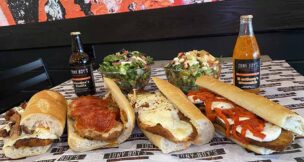
Her own establishment, a Stumpy’s Hatchet House in Somerset County, fared well once the reopenings were underway. But “lack of awareness of how to even access the PPP” loans and “what was required throughout the process” meant that many business owners were left out.

The “doom and gloom” depiction of how Hispanic-owned businesses have fared during the pandemic is counterproductive, suggested Carlos Medina, the SHCCNJ’s president. “That’s the Hispanic story, ‘the sky is falling’,” he said. “It certainly doesn’t help.
“We’re used to running through quicksand and being battle-tested,” he continued. “It’s tough, I’m not going to say it’s not a tough journey. But there’s an optimism that people are coming back.”
Medina also acknowledged that some Hispanic business owners may have been left out of assistance programs.
Inclusive funding
Guzman highlighted the carve-outs for minority-owned businesses included in later rounds of funding. And at the state level, the New Jersey Economic Development Authority set aside money for women, minority and veteran-owned businesses, and for establishments based in some of the state’s poorest communities.
The NJEDA estimates that since the onset of the pandemic 15 months ago, it’s approved over $300 million in grants, loans and other pandemic-relief to 65,000 businesses across the state. That figure does not include counting $85 million that businesses are now applying for, and $235 million sought by Gov. Phil Murphy and agreed to by the state Legislature.
The agency estimates that $50 million went to minority-owned businesses and another $54 million to women-owned businesses. A third of the funds went to businesses based out of the state’s 715 poorest communities, known as Opportunity Zone eligible census tracts.

NJEDA CEO Tim Sullivan noted that many programs within the $14.5 billion tax break package enacted in January include set-asides for women and minority-owned businesses, and bonuses for job-creation in lower-income “distressed communities.”
Existing programs meant to finance startups by paying for overhead or taking care of access to capital, include bonuses for women and minority-owned businesses. “Ensuring equitable access to relief resources has been a hallmark of New Jersey’s response to the pandemic, and that same commitment to equity and inclusion will run through the state’s recovery efforts,” Sullivan said in a statement.
Aid like the New Jersey Forty Acres and a Mule Fund, or NJ FAM Fund, being run by the quasi-government Invest Newark, are meant to extend those funds to businesses as they eye their recovery. The goal is to raise $100 million for investments in minority-owned businesses across the state, and to finance Black and Brown-owned real estate projects. Seven other cities are also contributing to the fund: Orange, East Orange, Paterson, Camden, Trenton, Irvington, and Atlantic City.

Bernel Hall, a longtime investor and the fund’s managing partner, noted that these are investments, rather than grants, which can typically be processed more quickly. The fund will continue to come online as the state and its urban communities recover, which he said works out well. “Everything started a bit slower in Black and Latinx communitiesz; slower to get tested, slower to get quarantined, slower to get medicine distributed, and so we’ve been slower to open back up,” Hall said of Newark.
Newark Mayor Ras Baraka said the fund was born out of inequity from the PPP loans, with Black and Brown-owned businesses having “no way to get access to capital” and ultimately being “pushed aside” in the federal relief program.
The fundraising process should run from 12 to 18 months, Hall said, and the first recipients of investment dollars from the NJ FAM Fund could be announced in the next month and a half. “I actually like where we are,” Hall said. “My main focus since joining Invest Newark has been to create a comprehensive solution.” He noted that businesses will need help with all manner of operations, such as payroll, marketing and human resources.
What works?

McKoy said he was a bit more wary about the programs like incentives, and whether they have the intended effect on poorer typically minority and urban communities. That was especially evident in the economic development efforts in Camden, largely considered one of the nation’s poorest cities.
Over the past decade, the state has awarded hundreds of millions of dollars in tax breaks for companies to expand their footprint in the city. Whether that’s actually helped local residents has been a polarizing debate.
“We tried the trickle-down economic theory in those places and it didn’t work,” he said of the multibillion-dollar Grow New Jersey tax breaks, and its replacement program called NJ Emerge, which is capped at $1.1 billion a year over the next seven years. An accompanying program, NJ Aspire, will also be capped at $1.1 billion a year for seven years and handle commercial real estate projects.
“That in and of itself only helps the employer or the business owner,” McKoy said. “There’s nothing to help the worker in the long term. There’s nothing to help the community, nothing to help families in the long term. Let’s do these things together.”
That means finding ways to get spending money into the hands of local residents so that they actually take part in the economy and by extension, fuel the local recovery. Things like the $15 minimum wage, paid sick leave and family leave all contribute to those goals, McKoy said. “You also have to provide a floor of ways and benefits for people that they can enjoy and support those businesses,” he added.
With NJ Emerge, projects receiving awards of more than $10 million must include a “community benefits agreement,” under which the business shows how the town or city will benefit from its relocation.

“As part of our recovery strategy, we want to make sure we are creating job opportunities, training opportunities, areas for people to pivot to, maybe where they were in the last 15 months to where they want to be in the next three to five years,” said Allison Ladd, who heads economic and housing development in Newark. That means “really looking at our neighborhoods … commercial corridors in our neighborhoods and how do we activate our spaces that are in the neighborhoods to help create communities.”
A number of incipient city-run programs are meant to empower residents so that they can take part in the Newark economy. The city recently unveiled a universal basic income program for select residents. And programs such as rental assistance and eviction moratorium during the pandemic could go a long way to keep local residents afloat, according to Ladd.
“We’ve all been looking at how to help our residents be able to have some type of income during this time,” she said.