Sign In
Upcoming Event
 Free Newsletter


Gov. Mikie Sherrill was joined by fellow elected officials and industry leaders July 13, 2026, at the State House in Trenton as she signed Assembly Bill 4881 into law, which establishes a framework for the procurement of new nuclear energy in the state through the New Jersey Board of Public Utilities with support from the NJEDA. - PROVIDED BY NJ GOVERNOR'S OFFICE/TIM LARSEN
Gov. Mikie Sherrill was joined by fellow elected officials and industry leaders July 13, 2026, at the State House in Trenton as she signed Assembly Bill 4881 into law, which establishes a framework for the procurement of new nuclear energy in the state through the New Jersey Board of Public Utilities with support from the NJEDA. - PROVIDED BY NJ GOVERNOR'S OFFICE/TIM LARSEN
Sherrill signs Power NJ Act to expand nuclear energy
Matthew Fazelpoor//July 14, 2026//


The basics:
- Sherrill signs bipartisan Power NJ Act into law
- State begins process to procure at least 1,100 MW of new nuclear power
- Law includes safeguards against construction costs, overruns
- Measure aims to improve grid reliability, long-term energy affordability
Gov. Mikie Sherrill signed the Power NJ Act July 13, launching New Jersey’s procurement process for new advanced nuclear energy projects while establishing a series of financial safeguards designed to shield ratepayers from construction costs and overruns.
Bipartisan legislation Assembly Bill 4881/Senate Bill 4296 passed both houses of the Legislature unanimously. It directs the New Jersey Board of Public Utilities and the New Jersey Economic Development Authority to jointly oversee a competitive process to procure at least 1,100 megawatts of new nuclear generation as the state looks to meet growing electricity demand and improve long-term grid reliability.
“Today we’re taking another step forward. I’m signing the Power New Jersey Act to launch the next generation of nuclear energy in our state,” said Sherrill. “This bill creates a competitive process to build new nuclear projects that can power hundreds of thousands of homes.”
What happens next
Under the law, developers will first submit expressions of interest before moving through a multiyear evaluation and negotiation process.
Any project must secure federal financing, demonstrate a net benefit to ratepayers and undergo multiple public comment periods before receiving final approval. Ratepayers will not pay for projects during construction and will not be responsible for construction cost overruns.
This bill creates a competitive process to build new nuclear projects that can power hundreds of thousands of homes.
– Gov. Mikie Sherrill
The signing marks the latest step in Sherrill’s broader energy agenda. It follows her April decision to lift New Jersey’s 50-year moratorium on new nuclear development, last week’s announcement of a $25 Residential Universal Bill Credit for all 3.6 million New Jersey electric ratepayers, and an additional $150 Residential Energy Assistance Payment credit for eligible lower- and moderate-income households.
It also comes after the signing of three energy bills that aim to strengthen utility oversight, require large data centers to pay a greater share of energy infrastructure costs and help curb long-term electricity prices.
Sherrill said the legislation is designed to help ensure New Jersey has the reliable, affordable electricity needed to meet future demand while protecting consumers.
“The decisions we make today will determine the future we leave our kids, so we are putting New Jersey on a path to an affordable and secure energy future,” Sherrill said. “I am excited to launch our state’s process to procure new, advanced nuclear power that will provide clean, reliable energy at scale for generations to come and meet our growing energy demands – from powering our small businesses, schools, and hospitals, to strengthening grid capacity and reliability for extreme weather that is becoming unfortunately all too frequent.”
Tomorrow’s energy affordability depends on the decisions we make today.
With legislation I just signed, we’re building the clean energy supply New Jersey needs to drive down costs, power the jobs of the future, and expand opportunities for generations to come. pic.twitter.com/fUNhaJVTTN
— Governor Mikie Sherrill (@GovSherrillNJ) July 13, 2026
Sending a message
Currently, New Jersey’s three nuclear plants generate more than 40% of the state’s electricity and more than 80% of its clean energy, making nuclear the state’s largest source of carbon-free power.
Under the timeline established by the legislation, the NJBPU must open a request for expressions of interest within 180 days. Qualified projects would then move through negotiations before the agency could issue a final approval by mid-2028 if all statutory requirements are met.
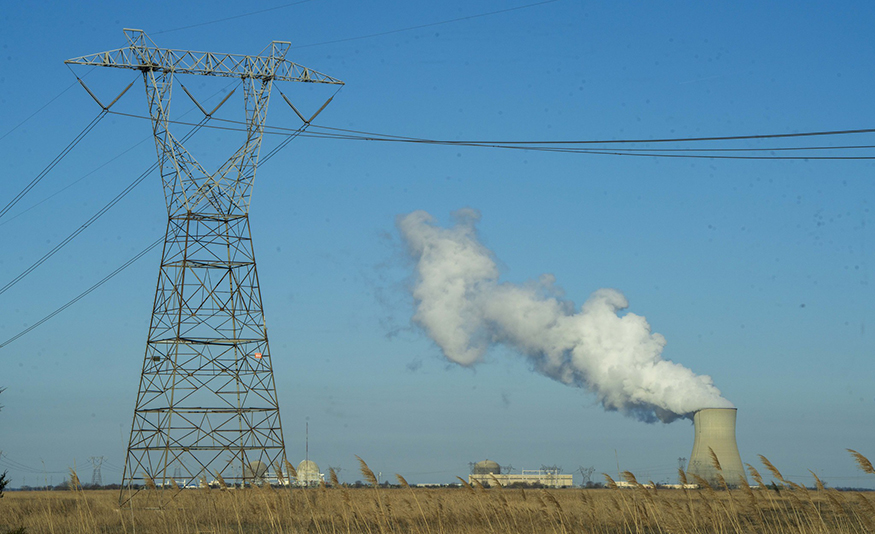
Sen. John Burzichelli, D-3rd District, one of the bill’s prime sponsors, said the legislation establishes a framework for future nuclear development rather than authorizing immediate construction.
“Now, don’t think tomorrow the nuclear plant construction is going to start,” Burzichelli said. “But what this bill does, it sets a framework. It sends a message across the country that New Jersey is open for business in this area.”
Countering high utility bills

He stressed how the inadequate supply of energy has contributed to the spike in utility costs for consumers.
“One of the more effective ways of countering higher utility bills is the expansion of sources of power,” said Burzichelli. “Giving serious consideration to additional supplies of nuclear power would serve our energy needs. Advanced nuclear power is clean, reliable, and strengthens our long-term energy security.”

Assemblyman Wayne DeAngelo, D-14th District, said increasing energy generation became a priority after lawmakers spent months examining the causes behind rising electric prices.
“During my time in the Assembly, I have focused on finding solutions that expand our energy supply while keeping costs down for ratepayers. To me, these are not two competing goals, they go hand in hand,” said DeAngelo, who is a prime bill sponsor and chairman of the Assembly Telecommunications and Utilities Committee. “The Power NJ Act does exactly that.
“By establishing a clear pathway to procure advanced nuclear energy facilities, we can make smart, long-term investments in reliable, clean power for New Jersey that can support good-paying jobs.”
‘Thirsty’ for savings
Business organizations also applauded the measure, arguing that expanding reliable electricity generation is critical for economic growth and affordability.

“As we have said for years, nuclear power is a critical component for an all-of-the-above energy approach in New Jersey,” said Michelle Siekerka, president and CEO of the New Jersey Business & Industry Association. “Our businesses, particularly our manufacturers, are thirsting for affordable, reliable and abundant energy as our costs increase. We thank Gov. Sherrill for taking this important step of the signing of the NJ Power Act to put us on the path for increasing much-needed energy generation, while including protections for ratepayers.”

Tom Bracken, president and CEO of the New Jersey Chamber of Commerce, said the legislation will strengthen the state’s competitiveness while helping moderate future energy costs.
“Gov. Sherrill and the Legislature deserve credit for taking a thoughtful, forward-looking step to strengthen New Jersey’s energy future,” said Bracken. “Expanding our energy portfolio through advanced nuclear generation will help improve reliability, increase supply, and put downward pressure on energy costs over time.
“As the governor continues to focus on making energy more affordable and reducing the cost of doing business in New Jersey, the New Jersey Chamber of Commerce applauds this bipartisan effort to support employers, consumers, and our state’s long-term economic competitiveness.”
‘Better positioned to invest, hire and grow’
John Lucas, interim president and CEO of the Statewide Hispanic Chamber of Commerce of New Jersey, said dependable and affordable electricity is essential for businesses planning future investments.
“The Power NJ Act is an important step forward in strengthening New Jersey’s business community and economy through reliable, affordable and scalable energy,” said Lucas. “When businesses can better manage energy costs and plan with confidence, they are better positioned to invest, hire and grow.”
Erick Ford, president of the New Jersey Energy Policy Coalition, said the legislation positions New Jersey to meet future demand while supporting economic growth.
“The New Jersey Energy Policy Coalition thanks Gov. Mikie Sherrill, her team, and the Legislature for their swift action to strengthen New Jersey’s energy future,” said Ford. “This new law is an important step toward increasing base load capacity, improving grid reliability, and ensuring our state has the energy needed to support residents, businesses, and economic growth. We look forward to working with Governor Sherrill and her administration to help build a more reliable, affordable, and resilient energy future for all New Jerseyans.”
Sherrill said the legislation sets New Jersey up to play a leading role in the next generation of nuclear energy development while helping address future electricity demand.
“Tomorrow’s energy affordability depends on the decisions we make today. With this bill, we’re building the clean energy supply New Jersey needs to drive down cost, power the jobs of the future, and expand opportunity for generations to come.”
Watch the full announcement:
— Governor Mikie Sherrill (@GovSherrillNJ) July 13, 2026