Sign In
 Free Newsletter

Edison-backed Zagster sold to Superpedestrian
Jeffrey Kanige//June 4, 2020//


 Listen to this article
Private equity firm Edison Partners said June 4 that it sold Zagster, a shared micromobility and fleet management company, to Boston-based Superpedestrian.
Edison also announced that it led a new $15 million investment round in the buyer, along with existing investors Spark Capital and General Catalyst. Other financial terms were not disclosed.
Superpedestrian is a mobility engineering and technology company established by Massachusetts Institute of Technology urban transportation experts. The company builds what it calls intelligent electric scooters. In November 2019, it completed a $20 million investment round to support the introduction of the scooter fleet.
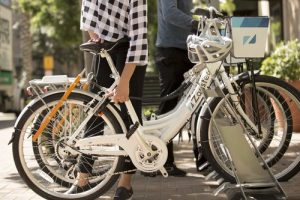
Also based in Boston, Zagster builds and operates bike and scooter sharing programs. In December 2019, the company began collaborating on an e-scooter sharing program in Fort Pierce, Fla., according to Edison Partners. It provides fleet management and services to cities, universities and real estate companies in more than 200 U.S. markets.
“Zagster’s fleet operations business and unique experience running a complex micromobility network across top cities is a natural complement to our mission to make cities safer and more productive with intelligent e-scooters and shared micromobility vehicles,” said Superpedestrian Chief Executive Officer Assaf Biderman in a statement. “We’re thrilled to have the backing of Edison Partners, who shares our vision for the next generation of personal mass transit.”
Partner Daniel Herscovici led the investment for Edison and joined Superpedestrian’s board. “The combination of Superpedestrian with Zagster creates the first fully integrated micromobility company,” he said. “One that includes product, manufacturing and supply chain as well as professional fleet operations, government and community relations.”
He added that he sees “a significant opportunity to improve the consumer experience, the relationship with the communities we serve, and deliver a world-class solution anchored in safety and compliance,” through what he calls Micromobility 2.0.
That concept entails creating a scalable platform to meet rider demand that is likely to increase after the COVID-19 pandemic. Other elements include end-to-end control over supply chains and ground operations and collaboration with government and local communities.
Princeton-based Edison Partners manages more than $1.4 billion in assets throughout the eastern U.S.