Sign In
Upcoming Event
 Free Newsletter

Former Marine uses winter sports to help kids avoid serious problems
Jeffrey Kanige//March 18, 2024//

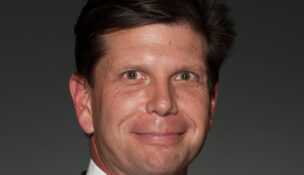
NJBIZ Editor Jeffrey Kanige speaks with Schone Malliet, a former Marine Corps pilot, salesman, banker and the founder of Winter4Kids, a nonprofit organization based in Sussex County that introduces vulnerable kids with an opportunity to experience winter in a new way, with lessons, better nutrition and, most important, fun. - NJBIZ
NJBIZ Editor Jeffrey Kanige speaks with Schone Malliet, a former Marine Corps pilot, salesman, banker and the founder of Winter4Kids, a nonprofit organization based in Sussex County that introduces vulnerable kids with an opportunity to experience winter in a new way, with lessons, better nutrition and, most important, fun. - NJBIZ
Former Marine uses winter sports to help kids avoid serious problems
Jeffrey Kanige//March 18, 2024//


Winters around these parts can be bleak, cold and gray. Even with climate change, the season can be unpleasant, especially for kids who may be struggling with all the problems life can present.
While there’s nothing Schone Malliet can do about the weather, he can help kids. And so the former Marine Corps pilot, salesman and banker is doing just that – by founding Winter4Kids, a nonprofit organization based in Sussex County that introduces vulnerable kids with an opportunity to experience winter in a new way, with lessons, better nutrition and, most important, fun.
“The fact is that kids and youth are in crisis,” Malliet says. “Some kids don’t have any idea on what they want to do. They are isolated. Some kids give up hope. It does affect those who are socially, economically challenged. But it affects all kids. So for us, when we looked at this and said, you know, all these kids are almost kids in crisis. We can now make a difference across the whole spectrum.”
Malliet recently sat down with NJBIZ to talk about how he came to establish Winter4Kids, what it took to get the organization started and how he keeps it running. What follows is an abridged version of that discussion. A video of the complete interview is available at NJBIZ.com/NJBIZConversations.
NJBIZ: First, I want to give our viewers a sense of your own background, which is actually quite interesting. Your experience includes as a marine pilot, a banker, executive roles at nonprofits. Let me start, though, with your introduction to skiing, which, as I understand it, happened while you were in the service. Is that correct?
Schone Malliet: It did. It’s not a very pleasant story. The net of it is never follow a friend to a ski area. They’ll say it’ll be OK, just follow me. But I did get into skiing at Park City while I was in the Marine Corps, and I did follow my navigator – which I always did as a pilot – without a lesson, up a particular slope, and, needless to say, it was not a great experience. … But I did join ski club and I had enough of a social environment to keep me going so that I could enjoy it. And that was that and here I am today.
Q: You then later became a ski coach, and now, as you say, here you are today. I’m curious, though. Given that wide range of experience, what drove you on your journey? What were you looking for?
A: I always tell people I probably couldn’t keep a job after college. But I do think that most of the things I did I really didn’t know I wasn’t supposed to. And for some reason as I grew up, let’s say late high school and college, the idea of opportunity was opened up to me and so I basically would pursue anything that came in front of me — from being a pilot, a salesperson, senior executive in technology, a banker helping people with their financial side. And then taking all of those things together to be able to not only find a place like the National Winter Activity Center, but to create a program that takes everything I’ve learned and helps kids develop better attitudes about their self, their self-esteem, their health. Health is more than just what the doctor says, but it’s nutrition, physical activity, mental health. Open their minds, and they have lots of opportunities … and then a lot of access to the outdoors. So all those things come together, and that’s the best thing I’ve ever had the opportunity to do in my life.
Q: Well, that was the next question I was going to ask – what prompted you to establish the National Winter Activities Center and Winter4Kids. What were you hoping to accomplish when you set out on that part of your life?
A: I think that, with the colleagues that I know around skiing, especially the competitive side of the sport – the national governing bodies, the U.S. Ski & Snowboard – some individuals wanted to extend the experience of winter sports to those who traditionally didn’t have access. And when we got together we looked at creating an organization with a mission to do that and actually built on a defunct environment in Vernon – which was the old Hidden Valley – a physical place and space to do what we just talked about.
The interesting part about that is we evolved from just getting into the sport but using the experiences of the outdoors to be able to be life changing and lifesaving. So, we took a sport and realized that there’s so much more to kids getting out there that happened to be able to affect them, to be able to deal with some of the crises that all kids from whatever background go through.
Q: Well, that’s interesting. What you do is more than just give ski lessons. Yes? I mean you’re providing a lot of different kinds of instruction, or help, to kids who may need it.
A: Yes, that’s true. Our framework, of course, is getting kids out on the snow or outside with lessons, with equipment, healthy food – which kids and everybody loves – and then instructors and group leaders who help to affect their experience while they’re out here.
But the keys were also, why were we doing that? And what did the impact of the experience and what the kids do for these participants? And from schools who are partners and their advocates, whether they’re principals or their chaperones or other organizations, they said that when they’re here, they’re able to find a way to develop positive responses to what we might all understand as negative experiences.
So take those things like hopelessness, sometimes isolation, maybe being bullied or bullying. From time-to-time people have family dysfunctional things, and that affects everybody, especially the kids. But when we have them here, we deal with those values of welcoming, empathy, embracing and belonging. We found that by taking those values and incorporating that into everything we do, we actually give them the opportunity to choose more positive behavior in spite of the negative experiences.
Q: And I’m guessing that what you’re doing has been fairly well received. As I’ve read, you’ve gone from a couple of hundred kids to nearly a couple of thousand kids at this point that you’re working with every season. Am I right about that?
A: We’ve gone from that 180 in 2015 to over 15,000 kids. And you know, the interesting part about that is that every kid who comes here is at least affected, or has the opportunity to actually kind of redirect that behavior, or at least have a safe environment to consider an alternative to negative behaviors.
And there’s one other part that I always forget: fun. These kids actually have fun skiing, snowboarding, cross country. So, while they have fun, they continue to grow as individuals.
Q: You mentioned that you’re in the former Hidden Valley ski resort. How did you get that? And how did you transform it into a place that’s good for kids to be? What do you have there now?
A: Well, at the time it was bankrupt, and everything, the infrastructure, was defunct. And of course, we have as a nonprofit, we had to go and to collaborate with funders and individuals to provide the necessary economic resources to repurpose and re-engineer. So, it has all new lifts, new trails, new buildings, new snow-making – state of the art – and also we moved from just Alpine and snowboarding and skiing to cross country.
Recognition

Winter4Kids was named Nonprofit of the Year (1-100 Employees category) as part of the NJBIZ 2023 Business of the Year Awards. Click here to see fellow honorees.
So, a couple of things people will care, people will support. And then a whole team of individuals who, with their time and talent, help make it a great place just for kids — no adults, no undirected free skating, but everything here built to be able to enable them to have fun, to develop skills and be better participants and youth than they were when they came here.
Q: You mentioned getting the funding. I read where you raised about $20 million originally. I suppose that your experience as a banker, in the corporate world, that that helped you.
A: I think that, yes, at heart I’m a salesperson. But in order to be a good salesperson, you have to have an extraordinary product. The fact that we take this sport and use it to change lives makes it easier for me to connect with individuals who care, and they care not only with their time and talent, but with the resources for us to not only build what we have but to help support the kids coming here. …
Q: Where does your funding come from now, because I also read that the kids who come there actually don’t pay anything out of their own pockets. How do you sustain what you’re doing now?
A: That’s an interesting question. There is a fee that the organizations – and sometimes, most times, kids contribute to, their families. … And there are different levels of funding, depending upon the economics of the place they come from, the families they are. So, there’s resources.
But in order to be sustainable, we have to do a very good job of making sure that our delivery on the outcomes – those kids who have positive behaviors – is both evident and also being able to prove to people that we make a difference. Then we have individuals who care, especially as they talk about redirecting kids before mental health becomes an issue. Because that’s a key thing. If we get them and give them a positive place in space before that. Then mental health becomes less of an issue.
But we’re not self-sustaining yet. We’re trying to build a fundable environment by raising more funds from individuals, corporations, foundations and partners to be able to make sure that this space is always there for any kid from any background for the rest of their lives and ours as well.