Sign In
Upcoming Event
 Free Newsletter


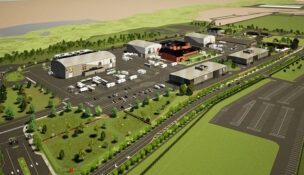
In September 2025, Netflix presented new renderings of the $1 billion Netflix Studios Fort Monmouth project, which will span over 290 acres in Oceanport and Eatontown. - PROVIDED BY NETFLIX
In September 2025, Netflix presented new renderings of the $1 billion Netflix Studios Fort Monmouth project, which will span over 290 acres in Oceanport and Eatontown. - PROVIDED BY NETFLIX
Fort Monmouth redevelopment enters transformative phase
Matthew Fazelpoor//May 18, 2026//


The basics:
- Several major projects underway at former Fort Monmouth military base
- Netflix soundstages rising at $1B, 292-acre production campus
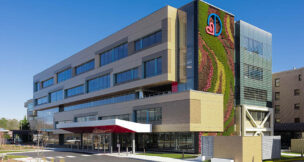
- RWJBarnabas Health developing Vogel Medical Campus specialty center
- Bell Works Fort Monmouth and Monmouth Square add momentum
After years of planning, demolition, infrastructure work and shifting market conditions, the redevelopment of Fort Monmouth is entering what officials describe as a transformative new phase — one where marked progress at Netflix, alongside several other major projects, is rapidly reshaping the former military base and the surrounding region.
What was once viewed by many residents as a stalled or uncertain redevelopment effort is now becoming one of New Jersey’s most significant economic development stories, driven by major projects including Netflix’s sprawling production campus (for which soundstage walls are rising), RWJBarnabas Health’s Vogel Medical Campus (which will feature the Specialty and Cancer Care Center and the relocated Monmouth Medical Center), Bell Works’ continued expansion from Inspired by Somerset Development, and the nearby sweeping redevelopment of Monmouth Mall into Monmouth Square being overseen by Kushner Cos.
Those are in addition to a number of developments and businesses that have been taking shape at the former base since it shuttered in 2011.
‘Crushing it’

Kara Kopach, executive director of the Fort Monmouth Economic Revitalization Authority, said the momentum now visible across the property reflects years of behind-the-scenes work finally converging at once.
“It’s pretty amazing to see everything converging at exactly the same time,” Kopach told NJBIZ. “We’ve been working really hard. Teams have been putting in a lot of hours to get us to this point. So, it’s really nice to see all the projects kind of happening, all the blight being removed, all the economic development that’s finally kicking in around here.
“And I think when one developer sees another developer doing so well, it encourages them to continue to invest money and take on even second-and-third-generation projects,” Kopach continued. “We see these first-generation heavy hitters – Netflix and RWJ – but then we also see these other developers are not only finishing their first-gen projects. But developments that have been here – they’re going, hey, I actually want to expand now. We’ve seen Trinity Hall do three rounds of redevelopment, because they’re just wildly successful over there.
“And we see now Park Loft maybe entertaining another round of redevelopment. So, people are absolutely crushing it right now.”
Seeing is believing
Lifelong Eatontown resident Kopach joined FMERA in 2015 before later becoming executive director. She said the redevelopment effort has now reached a point where years of infrastructure upgrades, planning and public-private coordination are beginning to produce visible results throughout the former base.
According to FMERA, more than 85% of the former Army installation is now engaged in one or more redevelopment projects spanning Eatontown, Oceanport and Tinton Falls. The authority’s long-term goals include creating 10,000 jobs and generating $2 billion in redevelopment investment across the region.
In addition to vertical development, FMERA has spent years modernizing aging infrastructure across the property, including water, sewer, electric and roadway improvements necessary to support the wave of incoming development.
Kopach said that long-term groundwork is finally becoming tangible for residents who for years questioned whether the redevelopment would fully materialize.
“It’s a palpable feeling of excitement in the community that all the nasty buildings are down,” said Kopach.
“I think for a long time – I can speak for myself, and definitely our team – our neighbors didn’t think we actually did anything for a living,” Kopach joked. “They’re kind of like, what are you doing over there? Are you going to actually get anything down? Are people going to actually move in?”
Welcome to Fort Monmouth
Now, she said, the pace of activity has changed perceptions dramatically.
“It seems very frenzied right now,” she said. “It’s actually very tactical. There’s a lot of construction happening at the same time. There’s a lot of infrastructure improvements happening at a lot of the same time. Water and sewer projects are pretty much wrapped up, but we have a lot of stormwater projects that we’re working on right now at exactly the same time – and we’ve done recent roadway improvements.”

Among the more symbolic milestones was the recent reopening of one of Fort Monmouth’s long-closed entrances. “We just opened up one of the entryways that have been closed since 2011,” Kopach said. “So, 15 years later, we finally have another entryway open to Fort Monmouth.”
The redevelopment is also creating a broader ecosystem of restaurants, recreation, housing and retail at Fort Monmouth that is transforming it into a destination rather than simply a redevelopment site.
Kopach pointed to growing activity around RiverWalk Center, a mixed-use development within Fort Monmouth, and surrounding properties, where businesses ranging from breweries and restaurants to athletic facilities are drawing new visitors.
The growing food and hospitality scene has become another sign of confidence in the area’s future. “We’ve been fortunate,” she explained. “We’ve actually had a lot of local residents be developers on Fort Monmouth. We certainly have our fair share of much larger businesses, too, like Lennar and Netflix and Robert Wood Johnson. But we do have those local elements where they saw it happening before it kind of got traction at a national or state level.”
Enter Netflix
The Netflix Fort Monmouth project has certainly garnered a lot of state and national attention – a $1 billion, 292-acre production hub that will feature 12 soundstages spanning nearly 500,000 square feet through Oceanport and Eatontown.
The streaming giant’s planned studio campus has emerged as the centerpiece of Fort Monmouth’s redevelopment and one of the largest economic development projects currently underway in New Jersey. And Netflix has begun posting jobs and hiring for the Fort Monmouth studio.

Kopach said Netflix has exceeded expectations not only in the scale of its investment, but also in the speed of its execution. “The thing that I can absolutely say about them is sometimes when people promise $840 million capital investment, we’re going to hit the ground running. You’d be right to maybe say – really, is this really going to happen in the way that you said it?” Kopach said. “And they have delivered and then some.”
According to Kopach, Netflix demolished nearly all 85 buildings on the property before the deal even formally closed — taking on substantial financial risk to accelerate construction. “They did that all at risk, and they had to pay prevailing wage on it, because we owned it as the state. So, they did it with additional costs at risk, because something could have died on the transaction.”
Now, visible progress across the site is accelerating. “There’s three sound stages up,” Kopach said. “It’s a twin soundstage and then two singles. In the first phase of their development, it’s four sound stages. Basically, they have them up.”
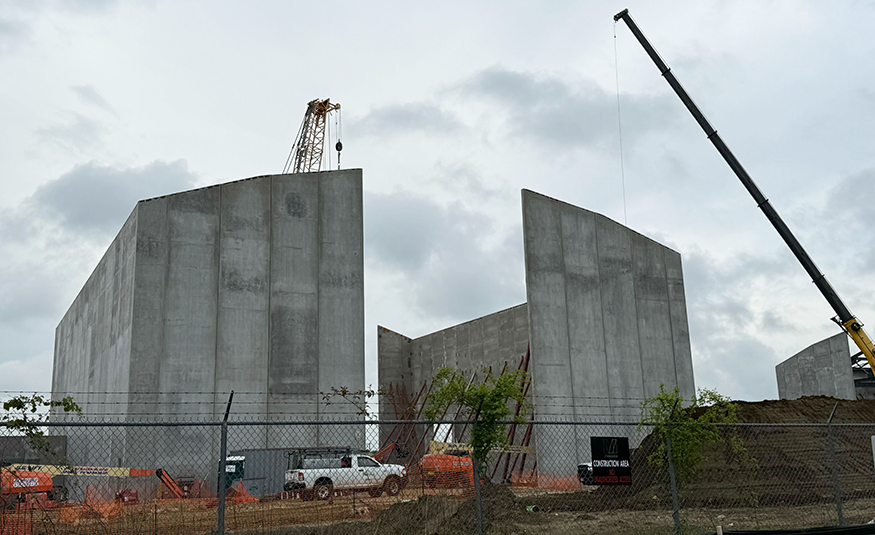
“They’re thinking they’re going to have this essentially operational in in mid-to-third quarter ‘27,” Kopach continued. “So that means you’re going to have filming here in a year.”
Putting Fort Monmouth ‘on the map’
The initial phase will be self-supporting with mills and other support elements, which Kopach says is critical for Netflix to be able to start filming once the first soundstages get online. “The first section is Oceanport. The other is that Eatontown section – to really start grinding out that construction and start then getting those soundstages up and running, a larger office space for the rest of the people they’re hiring,” she explained. “And really to then have that cohesive internal campus.”
Monmouth County Focus
Also in this special section
(all stories are complimentary):
- OceanFirst executives tout Monmouth County growth
- Kushner drives Monmouth County housing boom
- OPINION: Monmouth University drives growth in the county
Officials say Netflix fundamentally changed the trajectory – and visibility – of Fort Monmouth. “Listen, the whole thing is incredible,” said Kopach. “It put Fort Monmouth on the map, because for a long time, we had had a bunch of really successful projects where we were kind of towing the line, and people really didn’t have us on their radar. And now people know where Fort Monmouth is.”
Paradoxically, Kopach noted, Netflix only emerged after earlier redevelopment concepts failed to gain traction. The original reuse plan envisioned large-scale retail and transit-oriented development projects on portions of the property now occupied by Netflix.
“It was basically the economy had spoken,” she said. “We had a reuse plan – all the property that Netflix was supposed to be on was supposed to be essentially a town center for Eatontown with wild amounts of retail that we just can’t build anymore.”
Time to pivot
She said the collapse of traditional retail and the onset of the pandemic forced a major strategic rethink. “We had two failed contracts on that site, and then a transit-oriented development that we tried to pitch two months before the world closed because of COVID,” Kopach explained. “You can’t right that. You have these two things that literally are not functioning in the economy anymore.”
Ultimately, the state pivoted toward economic sectors prioritized by Gov. Phil Murphy’s administration — a process that opened the door for Netflix to bid on the property. “We decided to go back to old school, choose your own adventure with the procurement,” said Kopach.
The result, she acknowledged, was difficult to predict. “We avail ourselves to the public, because the reuse plan wasn’t functioning the way that we envisioned it in 2008 because now it was 2020 and we had been through so many economic cycles, a housing crisis, a brick-and-mortar crisis, and now in COVID,” Kopach recounted. “We had no idea what the world was going to bear at that point.
“And then we fail, and we end up with Netflix,” she continued. “It’s pretty wild.”
‘New beginning’ for Monmouth Medical
At the same time, another transformative project is reshaping the region through RWJBarnabas Health’s plans for a new Monmouth Medical Center campus and cancer facility, which NJBIZ has reported extensively about.
Kopach described the healthcare investment as deeply personal. “My mom passed away from cancer,” she said. “So, for me to have a new cancer center in our backyard, to be able to treat people, to have Sloan right up the street, and to have two state-of-the-art cancer centers to treat cancer patients in Monmouth County is kind of indescribable.”
She said the broader hospital relocation project represents a major modernization effort for the region. “It was time for a new beginning for Monmouth Medical Center,” Kopach said. “And we’re going to deliver that here.”

The project is slated to open in 2032 and will include a new 250-bed acute care hospital in Tinton Falls. Meanwhile, the cancer hospital is slated to open later this year. That will all be part of the Vogel Medical Campus on Fort Monmouth.
Not without controversy
Kopach acknowledged that the relocation process generated community concerns surrounding accessibility and transportation, particularly during public hearings on the project. “We did hear them,” she said.
FMERA is now exploring ways to improve transportation connectivity to the site, including potential transit coordination involving NJ Transit and nearby rail stations. “We’re going to work with RWJ and Transit and try and see how we can work with the train station, Little Silver, and the bus stop on 35 and figure out how to get some kind of extension of mass transit to these locations,” said Kopach. “And some of the other locations on Fort Monmouth. We’re really committed to trying to figure that out.”

She added that the FMERA remains focused on ensuring lower-income residents are not left behind as redevelopment accelerates. “We have a 20% affordable housing set-aside on Fort Monmouth,” she said. “So, we have 200 affordable housing units, either built and being lived in or constructed.”
‘Inspired’ project
Another major project taking shape is the new Bell Works Fort Monmouth at the site of the former Commvault building in Tinton Falls. The 55-acre site located on the former Army base was the first redevelopment project after the base closed in 2011, when Commvault established its global headquarters, before later selling to Inspired by Somerset Development in 2023.
New HQ
Jersey Mike’s Subs is relocating its headquarters to Bell Works Fort Monmouth. Find out more here.
At Bell Works, developer Ralph Zucker’s “metroburb” concept continues expanding as leasing activity and tenant demand grow – modeled after the successful Bell Works in Holmdel. Interestingly, FMERA itself relocated into Bell Works after selling its previous building as part of the Netflix transaction.
Kopach praised Zucker’s vision for blending office, retail and lifestyle uses. “Ralph is a genius,” Kopach said. “So many people thought he was crazy about the idea of a metroburb and taking Bell Works and doing that. He’s cracked the code on immersing office with this retail component.”
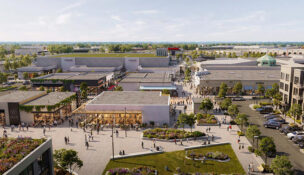
Nearby, redevelopment momentum is also building at Monmouth Mall, where large-scale mixed-use plans continue progressing as it transforms into Monmouth Square, with a Whole Foods rapidly taking shape and other components of the project rising.

‘Business is booming’
Kopach said many developers recognize that Netflix and RWJ will bring a wave of new workers, visitors and residents to the region — creating urgency around housing, retail and support services. “There’s going to be a lot of relocations of specialty doctors coming, especially for the cancer center,” Kopach said. “And they want to have appropriate housing ready.”
That demand is also reigniting previously stalled retail projects, with Kopach citing examples across from Monmouth Regional High School and by the Tinton Falls Municipal complex. “So, business is booming for a lot of people – and they want to be able to activate all of those spaces to capture this influx,” said Kopach.
Throughout the process, Kopach credited bipartisan support and regional cooperation as critical to the redevelopment’s progress. “My board is made up of basically every three-letter agency in the state,” she said. “All three mayors, County Commissioner Director [Thomas] Arnone, and then some public members that are appointed by the governor’s office.”
Despite political polarization elsewhere, she said Fort Monmouth redevelopment has largely remained collaborative. “It’s never been a question of doing the right thing, which is so refreshing in this day and age,” said Kopach. “I feel like we’re a house divided in so many ways. And Fort Monmouth has never been a debate of that, which is really cool.”
Dramatic changes ahead
Looking ahead, Kopach believes Fort Monmouth will look dramatically different within five years. “I think Netflix is done, probably done with both phases and fully operational,” she said.
By then, she expects most infrastructure work and roadway transfers to be complete, with little developable land remaining. “I’m not sure there’s any land left to sell at that point,” said Kopach. “Unfortunately, FMERA is probably out of business in five years, maybe sooner. But I think that’s the crystal ball. We’ve hit the milestone.”
She believes the redevelopment is approaching the finish line envisioned decades ago.
“The reuse plan was written for 20 years,” said Kopach. “It ends in 2028 on paper. But it won’t be done and wrapped up. The Army still owes us some land that we have to take from them and then pass on to other end users.
“But it’s going to be close to as final as we can get without owning all the property. And for being a 20-year plan, we’re going to come pretty close to hitting that milestone. It’s going to be an incredible development that is supporting itself. We’re going to see a lot of end users working together to provide services to support other end users, which is going to be super cool.”
Hoping for mom-and-pop shops
For longtime residents who endured years of uncertainty following the base closure, Kopach said the current momentum represents something much larger than construction projects.
“I just appreciate that they’ve stuck with us for a long time,” she said, noting the hardship the closure created for surrounding businesses and communities. “I was here when the base closed, and it was really such a burden, especially to the mom-and-pop shops outside the base that couldn’t make it work.
“And I’m hopeful that we see that revitalization of those mom-and-pop shops, where individuals can take a chance on creating a business outside the main post to support these end users,” Kopach said. “They can shoot their shot. I want them to have faith that this is going to be successful, that the proof is what we’re seeing now. I hope they know that we continue to have the best interest of the community at heart. And we really are just happy to see that it’s finally coming to fruition.”