Sign In
Upcoming Event
 Free Newsletter


In September 2025, Netflix presented new renderings of the $1 billion Netflix Studios Fort Monmouth project, which will span over 290 acres in Oceanport and Eatontown. - PROVIDED BY NETFLIX
In September 2025, Netflix presented new renderings of the $1 billion Netflix Studios Fort Monmouth project, which will span over 290 acres in Oceanport and Eatontown. - PROVIDED BY NETFLIX
OceanFirst executives tout Monmouth County growth
Jeffrey Kanige//May 18, 2026//


The basics:
- OceanFirst executives see strong Monmouth County growth
- Fort Monmouth redevelopment driving investment
- Bell Works in Holmdel fuels jobs and mixed-use activity
- Housing affordability remains a key challenge
OceanFirst Bank ranks among the most prominent financial institutions along the Shore. The bank operates locations from Perth Amboy to Cape May Courthouse, with a significant presence in Monmouth County, including its base in Red Bank. OceanFirst bankers work with businesses in the region and have keen insights into what works there and what doesn’t.
Two of those bankers recently shared their regional expertise with NJBIZ: President and Chief Operating Officer Joe Lebel and Executive Vice President and Chief Commercial Real Estate Officer George Destafney. As one would expect, both maintain that there is more to Monmouth than beaches and The Boss.
“It’s a lot more industry and commercial business than people give it credit for,” Lebel said. “But of course it’s very well known for tourism and … its affluence and, as you mentioned, celebrities that have either their primary or secondary houses in the market.”
And as befits a real estate expert, Destafney highlights location, location, location. “I think Monmouth County is ideally located, so it’s a great reach for people that are commuting into New York City, and to some extent, a lesser degree, into Philadelphia,” he said. “but it’s a very reachable area where you have access to a lot of different things … the shore areas, Asbury Park, and then the pockets of industry that you see here.”
What follows is a slightly abridged version of that discussion. The questions and answers have been edited for length and clarity. The full interview is available at njbiz.com/njbizconversations.
Q&A
NJBIZ: Let’s talk a little bit about some of the things that are going on and I want to start with Fort Monmouth, because that may be the most prominent redevelopment effort in the state right now. I’m interested, from both of you, what does that work mean for the region, especially with a name like Netflix as the headliner? George, what do you think the impact is going to be?
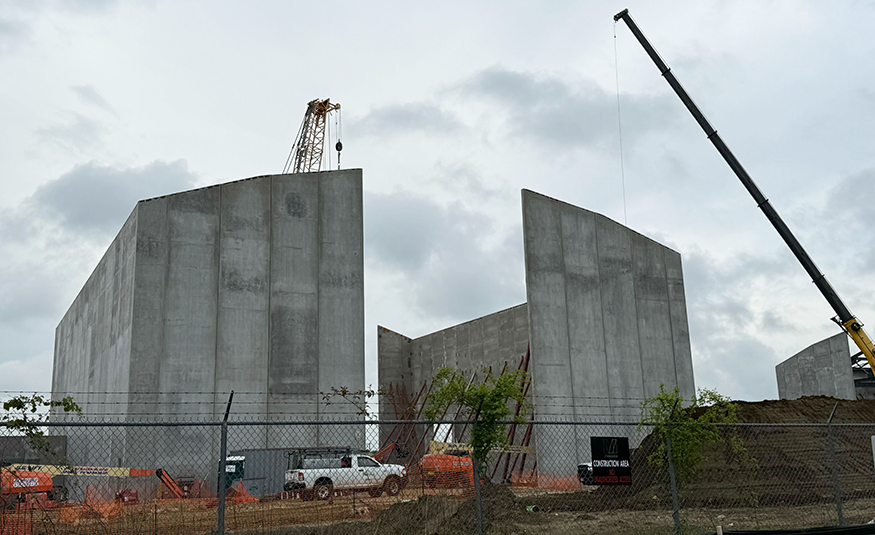
Destafney: I think the impact is going to be significant, and of course, Jeff, everyone’s talking about Netflix, especially now that some of the sound stages, you can see them up now. They’ve got two of the buildings up now, it really is coming a long way. But in the end, this is a gigantic investment into Monmouth County. A billion dollars, $2 billion something like that, 300 acres or thereabouts. … You’re going to have some interim construction jobs — 2,500, 5,000, something like that. But you’re going to have permanent jobs there, too. That could be 2,500, 3,000.
And then with that comes all the ancillary stuff that is in and around the fort — your dry cleaner, your pizza place, all those places are going to be positively impacted. And of course, the million-dollar question is, what happens to the housing market as these people pull in? It’s already a tight market, so what does that mean? Does it get tighter? With more people moving in, it does.
So, I think people are excited about it. It’s coming faster than I think people are realizing, and a lot of people are saying, “It’s great. Let’s take a wait and see and see how it all pans out in the end.”
Q: Joe, I mentioned Netflix, but as George alluded to, there’s a lot more going on there. But generally speaking, military installations are economic drivers for their regions. How is that going to change from what Fort Monmouth was to what it’s going to become? There’s all sorts of things going on, so tell me a little bit about the change.
Lebel: I think you hit it right on the head, and I think George touched on it as well. Netflix is probably the, at least for now, on the tip of the tongue for everybody, because it’s got a lot of notoriety, and it should.
But the redevelopment of Fort Monmouth started several years ago. There’s been a ton of housing, retail development, industrial development. You talk about a lot of the design work that’s been done to redevelop parts of the fort that were at the end of their economic life. So, we see it every day because we’re in the market. You see it in the traffic congestion, which, believe it or not, is a good thing. It gets back to George’s comment about the retailers benefiting by that, and everybody else, so we’re more than cautiously optimistic.
I think the housing shortage aside, everything else in the redevelopment’s been good for Monmouth County.
Thinking starting (or relocating) a business?
Q: And we are going to talk about housing a little bit later, but I just wanted to get a sense for your feeling about some of these projects going on. What should anyone thinking about starting or relocating a business here know about Fort Monmouth and that area? George talked about dry cleaners and some other kinds of things coming in there. What is the opportunity going to be like? Can you quantify it in some way about what sort of economic impact it’s going to have?
Destafney: So, Fort Monmouth, at one point, had roughly 5,000 people on that base. And then they estimated anywhere between 2,500 and 5,000 people surrounding the base that directly relied on it. When that base closed. It was a big impact for Monmouth County, although the county has recovered pretty well since then. That’s going back a bunch of years to the [Base Realignment and Closure process]. So, a lot of that stuff has been backfilled. You’ve seen other projects in the area where you’ve seen employment bases draw back. If you look at the Bell Works property in Holmdel, that’s been a big employer that helped backfill some of that space, and there’s other projects like that.
Monmouth County
facts and figures
- Population: 651,035
- Under 18: 20.5%
- Over 65: 20.4%
- Housing units: 271,964
- Median valuation: $606,100
- Homes with broadband: 93.7%
- High school graduates: 94.2%
- Bachelor’s degree or higher: 51.3%
- Labor force age 16+: 65.9%
- Total retail sales (2022): $15.7 billion
- Median household income: $124,845
- Per capita income: $66,696
- Total employment: 257,734
Source: U.S. Census Bureau
So, I think that the reinvestment in Fort Monmouth, as you said, we’re talking about Netflix, but if you drive around to three host towns, Oceanport, Eatontown, Tinton Falls, you’re seeing other economic development, too. Big retail parcels, some entertainment spaces come online. There’s a couple of different breweries on the property, so all those things will be good, ancillary projects other than just Netflix.
I expect that there’ll be more than that. There’s a housing component there, too, a retail component, and that’ll continue, and that’ll continue to be a boon for … for that area, economically. So there’ll be always opportunities to come out of that.
Q: And Joe, what if this redevelopment had never happened? What would the area be like? It’s a counterfactual, but what were the plans before all of this? It must have come as a blow when the base was closed. What was the feeling then, and how has it changed over the years?
Lebel: Well, look, I think whenever you have a level of density – New Jersey’s known for its density, the number of people in the state in terms of residency – but whenever you have something as voluminous as the fort and then you have the closure, what you saw in Monmouth County was everybody rally together to say, what do we need to do, and what can we get, whether from the federal authorities that, at that point, supervised the fort, or local municipalities banding together to say, what do we need to do, and how can we approve the varying uses in an expeditious fashion to not lose the economic impact.
And weirdly, looking back on it now, I think it would have been disastrous if we didn’t move as quickly. So, we’ve got to give credit to all the folks in local governments that did band together to put together, an auspicious plan, and the state as well. I mean, the state did its part, so I think everybody, deserves credit.
Q: And that does speak, I think, to the business climate in the region that, as you just described. A lot of stakeholders came together to make this happen.
Lebel: Yes.
About Bell Works …
Q: Now, George, you mentioned Bell Works in Holmdel. That’s something that we’ve covered extensively. NJBIZ readers will know it very well. Inspired by Somerset Development, calls it a metroburb. What sort of effect has that had on the region? Because that predates Fort Monmouth and the redevelopment there. It’s been there for a while. It’s very recognizable, especially to people who watch Severance. It’s become sort of a television icon, but how important is it economically to the region?

Destafney: Well, listen, it was certainly important for the revitalization of that property. I mean, the property, 400 acres, I think it’s 2 million square feet of total space, like a million leasable. So, you talk about filling those buildings there, that’s brought more employment to the area. I think that’s been a big boon. It’s been a great success.
Ralph [Zucker] and his team over there have really done a nice job, pulling that together. So when you go there now, it’s like a city within a city. You have the housing units on the outside that they did a great job on, so it really made that area look very nice and brought some more people to town.

And then it brought a bunch of employers to town. So that brings more people to our area. And each one of those folks that come are contributors to our local economy. So I think that was a great project, great example of how to repurpose things that may not have been readily apparent what you do with it, and then you come out and you have this great pillar of a building that sits right there in Holmdel.
Q: And Joe, that concept of having all of these kinds of things in one place, and really making it a destination, is it viewed that way in Monmouth County, in the region, as a place to go and not just a place to work? But as a place to live, and a place to go to shows, and do all sorts of things?
Lebel: I guess you’d probably consider it a little bit of a precursor to what everybody refers to today as the work-live-play. Because the live is sort of around the periphery of Bell Works, but the work-play aspect of it, absolutely. What I loved about the project was that the history of the building was preserved a bit, and that what you have is still a variety of tech companies, as well as others, non-tech, in the building. The building was the original Bell Labs. So, you think about that dynamic, and you have a lot of tech companies that are there.
But the common area space, which is substantial, probably half a million feet, is utilized for a variety of not only fairs, arts and programs for the county and for the local Holmdel market, that does drive activity to the property unrelated to those that are working there or living around the periphery.
More major projects
Q: OK. What, then, are some of the other, sort of, economic lodestars in the county? I’m thinking other cities, like Long Branch, Asbury Park, Red Bank, maybe Monmouth University. Where are some of the other centers of economic activity, George, that folks should know about?
Destafney: Well, certainly, there’s quite a few. The Monmouth Mall’s another big project that’s being renovated right in Eatontown, coincidentally. You know, it’s reportedly a half a billion-dollar project, a thousand luxury apartments being built, and then repurposing, I think a little bit under a million square feet of retail space. Whole Foods is going there. When you see things like that, it’s a real good indicator for the town, and a real good project that’s coming back online.

But there’s others. The Vonage building is being repurposed. There’s a bunch of activity going on in Asbury Park, reinvestment in some retail projects and some residential projects, so a lot of investment being made there. Monmouth Park, there’s some investment being made there for some residential units, or at least some plans have been submitted there.
So, I think you see these pockets of reinvestment. But it’s spread out throughout the county. There’s stuff happening on the western part of the county as well, so you’re seeing kind of those developments all over the county, and they’re big investments and big dollars of people that are coming in and think that those investments are worth it in the county.
Q: And Joe, let me get you on that, too, because George just mentioned the western part of the county. I think most people when they think of Monmouth, they think of the beach. They think of the ocean, they think of Asbury Park, Long Branch, and being close to the water. But there’s a lot to the county. It’s 650,000 people, I think, at last count live there. What else is going on around the county that folks should know about?
Lebel: Well, you know, look, I think, you talk about the shore, even parts of the shore that either were less developed or underdeveloped, were in certain markets where we’d had probably what I’d refer to as underperforming in prior histories. Those have all been reinvigorated. Obviously, the boardwalk along Long Branch is pretty well known in how that’s gone. Asbury, we’re seeing now significantly more expensive housing units being developed. And of course, the beachfronts.
But you go a little bit further north into the Highlands and Keansburg and other areas that are all now getting their fair share, justifiably so, of attention and development as well. So I think you’re going to just see a broadening of what’s been successful in other towns along the whole coastline.
Where will residents live?
Q: We should talk about housing, because I can remember talking to folks in Monmouth County during and immediately after the pandemic, when there was sort of a rush of people from urban areas to buy houses, and particularly Monmouth County, because it’s close to the beach, and there was space there, it’s a nice place to be. You mentioned that all this development is bringing in new folks, people who do want to start a business there or expand there. They’re going to have to find places for people to live. And affordability is obviously a main topic of conversation. It was a part of the gubernatorial campaign we just went through. What does the residential housing situation look like now, George? Are prices still going up, or is it still possible to buy a house somewhere in Monmouth County?
Destafney: It’s getting trickier, Jeff, I’ll tell you that much. We continue to see the median home price click up a little bit. So, depending on who you ask or what stat you look at, if you look at the Fed stats or you look at some of the more commercial stats, average house price in Monmouth County, a shade under $800,000, $790,000, something like that, that’s a hefty price tag. That’s clipped up a bit year over year, and days on market have also clicked up a little bit year over year, too. So, you’re seeing, maybe getting a little bit closer to a bounce, but you’re not there yet. You’re still seeing a lot of velocity around deals, you’re still seeing a lot of cash deals. And that still means that there’s a lot of people chasing less and less inventory. So, it continues to be an inventory story. And that’s going to continue to make affordability a challenge.
I’ll just add another point. We talk about a lot of these apartments coming online that do include components that are designed to help affordability out a little bit. The single-family housing market is a little bit different. That market continues to be very tight.
Q: And Joe, we’ve mentioned Asbury Park a couple times, and it sounds like there’s a lot of luxury development going on there, and even in Long Branch. Is that a problem? Being close to the water is great, and people love it, and they love to look at the ocean, but it’s expensive. And are there affordable places for folks to live in Monmouth County if they want to work there?
Lebel: George hit it on the head. I think they’re harder and harder to find. And what you’re going to see is what you see in other markets, where people need to commute into work. So they can’t afford to live as close as they’d like to live, until a date in the future or a certain point of income is reached. And look, Monmouth is a desirable place to live. So, we talked about the access to all logistical things that you need, whether it’s rail, or water, or transportation over the over the roads. That’s a benefit, as well. Taking the ferry to Manhattan is a benefit, but it’s a trade. You’re going to pay more for your house.
You’re still probably paying less than you’re paying in New York City. So, if you’re a New York resident that wants to move to New Jersey, that’s a benefit to come here versus there. But I think it is hard for a single homeowner, or a single wage earner, or a young couple that are trying to find their way into certain markets. But that is a New Jersey dynamic. It’s not limited just to Monmouth.
Local workforce
Q: What about the quality of the workforce? Talking to folks, particularly in the hospitality industry, right after the pandemic, it was hard for them to find folks to come back to work. Is that still an issue, and how is the situation for other kinds of employers? Joe, are folks able to hire, do the hiring that they need? Are they finding the skills that they need, the education levels from the workforce in Monmouth County?
Lebel: Well, I will tell you, I can speak for us, we haven’t had issues hiring people. There’s talent available. There are people, I think, that are out there looking for the right opportunities. I’m also not hearing that at the other end, from the folks that we bank in hospitality. We’re not seeing those troubles that we did a couple years ago. And we’re heading toward the summer season, so when you head toward the summer season, you’re going to get some more of that feedback, because people are looking to hire seasonal workers. I’m not hearing that there’s any adverse issues yet relative to seasonal work, either, all of which is a positive. And I do think it gets back to the comment about people want to work in an environment where it’s conducive to their success, and Monmouth County, in particular, has proven that there’s a wealth of opportunities, whether it’s retail or wholesale or any other area.
Monmouth County Focus
Also in this special section
(all stories are complimentary):
- Fort Monmouth redevelopment enters transformative phase
- Kushner drives Monmouth County housing boom
- OPINION: Monmouth University drives growth in the county
If I had to guess just from the folks that we’ve talked to, the construction trades still struggle a bit. That’s a skill set in a workforce that’s, in many areas, aging a bit, and not getting as many new folks in as they would like. So, if there’s any area that we’re hearing some of that feedback, that would be one.
Q: And George, we’ve mentioned the fact that it’s an attractive place to live. That’s got to help bring people … bring the kinds of skilled workers, educated workers from elsewhere, yes?
Destafney: It does, for sure. You know, our building here that we’re sitting in today is in Red Bank. So, we’ve been able to attract people who had been going into the city and said, ‘Hey, this is a great place, I live here, is there a good opportunity to work there well?’ And others, I’m sure, have done the same. You know, you see every major financial house has a presence here in Monmouth County, Red Bank, Freehold — everyone’s fairly well represented. So you’re seeing a lot of that employment right here in the market.
And it’s a good market for the employment base. Something like 50% of the market here, Monmouth County, has a bachelor’s degree or higher. So folks looking for that level of work, it’s a good pull for it.
And it’s interesting, I was talking to one of our shore operators over in Sea Bright, and I was asking the same question that you just asked. How are we looking for summer help? How are we going to be? And he said, well, right now, I think I’m OK, but that’s all good until five days before we open the doors. We’ll know five days before we open the doors whether we’re good or not. But they were optimistic that the help was there, and that they were going to be okay getting restarted for the summer.
Land of opportunity
Q: OK. So, where do you think the most interesting opportunities are? Is there a certain region or geographical area, or are there certain industries that you think, Joe, might … might be more fertile for growth, or be poised to kind of take off a little bit here?
Lebel: Look, I think the easy answer is all varying factions of technology. I mean, whether it’s any type of information technology or anything related to technology. But look, I’m a finance guy. I actually think there’s a little bit of resurgence in finance. We had a little bit of the dip the last couple years. We’ve been very fortunate, and I think some of our competitors have well, in that we’ve been able to hire, a cadre of young finance professionals, whether it be former interns that now want to have banking as a career, whether it be our training program, which is a fairly robust program we’ve offered the last few years. That gives me a sense of pride, but also some comfort in that the industry is attracting the folks that we need to attract.
Q: All right, before I let you go, I’d like to get a sense for the outlook, what you’re expecting. Short-term, what does the summer season look like? And then more long-term, what does it look like down the road?
Destafney: Talking to some of our seasonal operators, they seem very positive. You know, from the restaurant folks to the beach folks, they seem very positive that they think it’s going to be a heavy shore travel season. Fuel prices always weigh into that, Jeff, where people are going to say, ‘Hey, I’m not going to travel, I’m not going to fly, it’s too expensive, it’s too inconvenient. I’ve got a great option that’s 60 miles from my house, so we’ll go there.’ People are always cautious, but we’re seeing the summer rental numbers look good, meaning that the units that are rented, especially the units that maybe the larger single-family homes with a lot of bedrooms and amenities, pools, and things like that. That seems to be a very attractive end of the market.
But in the end, the summer rental rates are up, our operators are optimistic. The restaurateurs are optimistic. So for today, the immediate summer season, I think everyone’s looking very positively.
Q: And longer term?
Destafney: Longer term, listen. If you’re just looking at the regional stats, they all look good. If you’re looking at the unemployment numbers, particularly if you’re looking at the unemployment numbers in Monmouth County, they bode very well. They’re positive compared to the state. So, if you look at all the kind of consumer spending, all the different things that you would look at for larger national trends, I think they’re all looking OK.
Now, I’m going to hedge it. My typical banker answer is that it depends. You never know. There’s some geopolitical instability. You never know with energy prices. But for now, all the signs today that I see are pointing in the right direction.
Q: And Joe, similarly, for the shorter term, over the summer, and then longer term, is there cause for optimism, in your view?
Lebel: Yes. Look, as you would expect, we have economic cyclicalities. So I do think there’s a little bit of a tale of two sides of the coin. You’re going to get some of the folks, as George mentioned, that are going to get in their car, they’re going to do the day trip, or the weekend trip down to the shore, because that’s the best way to get the most out of their dollars. And there are other folks that have a little bit more in terms of resources that are going to give them the opportunity to rent a larger house, or bring the whole family group down for a week or two.
But that’s still all positive. We’re not hearing any negatives. The other great thing about being, and doing what we do for a living is you see the metrics. George talked about consumer spend. Consumer spend is up in the region, which is good. And we also look at credit metrics. So, when people are confident and comfortable, they pay on time, and they take out new loans to do a variety of things, whether it be home refinance or improvement, or a new vehicle, or any of those kinds of things. So, those are all positives. Delinquencies are very low. So, you know, we’re very, very optimistic overall.