Sign In
 Free Newsletter

Law Power 50 N – Z
NJBIZ STAFF//June 1, 2020//


Philip Norcross

Parker McCay may be the epitome of the politically connected law firm, and as CEO and managing shareholder, Norcross is the nexus of the connections. He is the brother of both George Norcross, the South Jersey political kingmaker, and Donald Norcross, a U.S. congressman representing the First Congressional District. Those connections have proved problematic in the past, with activists, reporters and Murphy administration officials raising questions about whether all the influence was used appropriately. What is certain is that the firm remains influential, especially in South Jersey.
Melissa Orsen

As senior vice president and general counsel at energy services holding company South Jersey Industries, Orsen is the principal legal officer serving as a key advisor to the CEO, senior management, and board of directors. She oversees the corporate legal and government affairs teams, as well as outside counsel relationships. Orsen was previously CEO of the New Jersey Economic Development Authority, where she directed more than $1 billion in economic development activities across the state. She has also been a chief of staff to the former lieutenant governor, secretary of state and to the Department of Community Affairs.
Sheilah O’Halloran
 With a team of nine attorneys, three paralegals, insurance professionals, clinical risk and patient relations managers, and outside counsel across the country, O’Halloran is responsible for all legal aspects of Atlantic Health System’s operations, including its six hospitals and annual revenues exceeding $2.6 billion. O’Halloran joined Atlantic Health System in 2010, as assistant general counsel and was named as general counsel in April 2016. O’Halloran and her team navigated the legal, regulatory and proprietary arrangements to make it possible for Atlantic Health employees to bring their ideas to enhance health care delivery and lower costs to life through Atlantic Health Advancements (Aha!) – while also sharing in the benefits from their creations. O’Halloran was instrumental in creating the legal framework for Atlantic and six other hospital organizations to form the Healthcare Transformation Consortium. This arrangement brings together competing organizations to collectively lower costs and enhance care and access for the 75,000 employees across these organizations.
William Palatucci

It’s tough to be influential as a Republican in New Jersey these days, given the pallid state of the party here. But Palatucci, a partner at Gibbons, is still a member of the Republican National Committee and so retains some measure of clout within the GOP at least. And the GOP did retake some Assembly seats and welcomed a defecting Democrat to its otherwise decimated congressional delegation. With a presidential election looming– and Republicans hoping to regain their footing – Palatucci will likely be a key player throughout the campaign. During the Christie administration, he was recognized as a power player in the national party and served as general counsel to the Trump transition committee. Palatucci serves on the Board of Visitors of the Seton Hall University School of Law and on the National Advisory Board for the Rutgers University Heldrich Center.
Gianfranco A. Pietrafesa
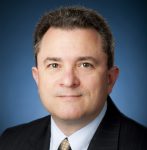
Employers look to Archer partner Franco Pietrafesa on a daily basis to prepare employment agreements, consulting and independent contractor agreements, employee handbooks, severance and separation agreements and general releases. Banks, lenders, and borrowers look to him for guidance through loan transactions. Lawyers look to him for guidance, too, which puts him in the position of a frequent presenter: This year alone he conducted programs on ethics for M&A attorneys at the New Jersey Institute of Continuing Education, and LLC issues at the bar association’s annual meeting. He’s also a director and past chair of the board of directors of the business law section of the New Jersey State Bar Association, and a longstanding member of its business entities committee. The Best Lawyers in America listed him as Hackensack corporate law “lawyer of the year” for 2020; but he’s been nabbing recognition for a couple decades at this point, starting with a 2002 40 under 40 recognition from the New Jersey Law Journal.
Stuart Rabner

Despite being the top official in New Jersey’s judicial branch, Rabner has maintained a relatively low-key and quiet state presence compared to his counterparts in the state Legislature and executive branch. Granted, that does not mean that Rabner has not been making noise. That was evident in April, when in response to the financial hardship that 2020 law school graduates will face due to the indefinite postponement of the bar exam Rabner decided to allow students who have not taken and passed the exam to practice law here. The order was also meant to fulfill legal needs during the COVID-19 public health emergency, which some lawyers say will cause an influx of pro bono legal needs, including those addressing employment law and domestic violence cases. In addition, as the state’s top judge he can, and has, issued directives for how lower-level courts statewide conduct this business, such as limiting how much courts will cooperate with federal immigration officials when it comes to undocumented residents.
Dan Schwartz
 Schwartz has been at the helm of Chiesa Shahinian & Giantomasi since 2016, and has been a player at the firm since 1983. The firm has strong ties to government officials, a relationship evidenced by its reported engagement as bond counsel for the Murphy administration as officials pursue a controversial plan to borrow billions of dollars to close budget holes opened by the COVID-19 pandemic. In addition, Schwartz has been the driving force behind CSG’s stockpiling of former federal prosecutors, with Danielle Corcione and Erik Sandstedt coming on since this time last year. Firm revenue and attorney count grew 3 percent and 5 percent respectively over the last year, and in the last year, he’s overseen the development of immigration, alternative capital, and qualified opportunity zone groups. Schwartz practices in the areas of corporate and securities, mergers and acquisitions, banking and finance and health care and hospital law. His corporate law experience includes counseling clients that range from small, closely held businesses to Fortune 500 companies. His counsel on mergers, acquisitions and project finance transactions helped close deals valued in the hundreds of millions of dollars.
Kevin D. Sheehan
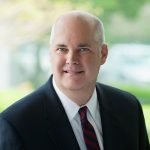 As the Murphy administration has ramped up its scrutiny of how the state’s multi-billion dollar corporate tax breaks were crafted and administered, Sheehan emerged as one of the key players in crafting the existing incentive program. The New York Times reported that Sheehan wrote amendments put into the New Jersey Economic Opportunity Act of 2013 creating the Grow New Jersey credits in order to benefit clients of Parker McCay – the law firm where he is a partner and that is run by Philip Norcross, brother of South Jersey powerbroker George Norcross. The story was one of defining narratives of the Murphy administration’s relationship to South Jersey politicians, but it has been sidelined by the pandemic response.
Jennifer Phillips Smith

As a director at Gibbons PC, Smith counsels clients on real estate matters ranging from redevelopment projects spanning hundreds of acres to issues affecting small business owners. She represents clients seeking site plan approval and variances from numerous planning and zoning boards in connection with restaurant, residential, retail, office, financial, medical, educational, and mixed use projects. Smith also represents clients in redevelopment areas and has experience drafting and reviewing redevelopment documents, including redevelopment agreements and redevelopment plans. She has extensive experience in land use litigation, including both the defense of and objection to municipal land use approvals. She also has expertise in real estate development and redevelopment regarding applications for development, typically representing applicants and objectors in applications to planning and zoning boards and commissions. Smith has worked extensively on Riverton, a $2.5 billion mixed-use project being developed in Sayreville along the Raritan River and on a site formerly owned by National Lead. Even during the COVID-19 crisis, she continues to move this project closer to breaking ground.
Dave Sorin
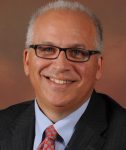
Sorin is a venture capital attorney and office managing partner at law firm McCarter & English, with 34 years of legal experience. According to the firm, Sorin focuses primarily on privately and publicly owned startup, early stage, emerging growth, and middle market technology, tech-enabled and life science enterprises, as well as the investors, executives, and directors who support and lead them. Perhaps not surprisingly, Sorin has been at the forefront of rethinking law firm business practices. “As the result of declining labor intensity, the billable hour will become increasingly anachronistic,” he told NJBIZ. “It’s something that clients and lawyers have struggled with for years, whether it creates the right incentives, whether it truly aligns the intentions of lawyer and client. The profession will move from its over-reliance on the billable hour toward a mechanism that represents the pricing based upon value.”
Tami Bogutz Steinberg

Steinberg is a corporate lawyer for startup companies at Flaster Greenberg. According to her employer, Steinberg represents entrepreneurs and closely held businesses, assisting companies across a range of industries, and with multiple diverse legal issues. She emphasizes mergers and acquisitions, financings, joint ventures, partnership and shareholder transactions, dispute resolutions, corporate governance and contracting, and private placements. Steinberg specializes in the area of business breakups. She represents both minority and majority shareholders/partners and other disenfranchised parties and she counsels business owners in how to protect themselves in the event of business disputes.
Michael H. Ullmann

Ullmann is executive vice president, general counsel of Johnson & Johnson – one of the drugmakers leading the search for a COVID-19 vaccine – and a member of the company’s Executive Committee and Management Committee. He has worldwide responsibility for legal, government affairs and policy, global security, aviation and health care compliance and privacy. Ullmann joined Johnson & Johnson as a mergers and acquisitions attorney in 1989 and has held various management positions in the company’s Law Department since 1999. Before assuming his current position in 2012, Ullmann served as general counsel of the Worldwide Medical Devices Group for six years. He also served as corporate secretary from 1999 to 2006.
Jim Walden
 As the chief counsel and arguably most vocal member of the task force Gov. Phil Murphy convened to investigate the state’s corporate tax break program, Walden was one of the faces of that effort. While interest in the matter has waned during the pandemic, Walden – a former federal prosecutor and now a partner at Walden Macht & Haran LLP – was the figure grilling witnesses and drawing out documents during the hearings. At some point, the debate over tax incentives will be rekindled, and the allegations Walden and the task force brought to light will help shape that discussion.
Kevin Walsh

In January, Gov. Murphy appointed Walsh, a longtime affordable housing advocate, as state comptroller—a powerful watchdog tasked with rooting out fraud, abuse and waste at all levels of government in New Jersey. His selection could revive the position’s tradition of independence. As the executive director of Fair Share Housing Authority, Walsh played a large role in how residential development took place in the state. Simply put, no affordable housing settlement was undertaken without the FSHA having a say. In a broader sense, both FSHA and Walsh played a role in the retention and growth of the state’s working economy. Under Walsh’s direction the FSHA reached 275 settlements with municipalities regarding their affordable housing obligations. That work will result in tens of thousands of new homes throughout the state and will help New Jerseyans who struggle with high housing prices.
Gary Wingens
 In Wingens’ first year at the helm of Lowenstein Sandler, firm-wide revenue hit $175 million. After a decade under his leadership, the firm more than doubled. Law.com reported that only 11 of the top 200 U.S. firms grew more than 10 percent from 2017 to 2018, and Lowenstein was one of them, jumping 14 percent. In the last decade, the firm’s New York office has more than tripled, and offices have grown from its Roseland headquarters to offices in Palo Alto, Calif.; Washington, D.C.; and Utah. It’s not just quantity, though, it’s quality: big names like former state attorneys general Chris Porrino and Anne Milgram have joined in recent years. One of Wingens’ first actions as managing partner in 2008 was to create the Lowenstein Center for the Public Interest, which dedicated extra effort to the separation of families and children at the country’s southern border by representing legal service providers for children in ongoing class actions and by mobilizing 30-plus law firms to advocate for the legal rights of immigrant children.
Freda Wolfson
 Wolfson took over as chief judge of the U.S. District Court for the District of New Jersey when Jose Linares stepped down from the bench last year. She was quickly faced with a logjam of cases resulting from vacancies not being filled on the state’s federal bench. This year, she has been overseeing the multidistrict litigation in which plaintiffs allege that Johnson & Johnson talcum powder caused their cancers. In April, she delivered what Law.com called a “major setback” for the company by ruling that the plaintiffs could introduce testimony from five expert witnesses. After graduating from Rutgers Law School, Wolfson began her legal career at Rosenstein Sandler and the now-defunct Clapp & Eisenberg. She served as a federal magistrate from 1986 to 2002, when President George W. Bush appointed her top the district court.
Jennifer Zachary
 Zachary has been executive vice president and general counsel of Merck & Co. Inc. since April 2018. Before joining Merck, Zachary was a partner at Covington & Burling from 2013 to 2018. She also served as an associate chief counsel for enforcement of the U.S. Food and Drug Administration’s Office of Chief Counsel from 2005 to 2011 and was a special assistant U.S. attorney in the Civil Division of the U.S. Attorney’s Office for the District of Columbia in 2009.
Ted Zangari

Remember opportunity zones? Before the COVID-19 outbreak, the federal program was seen as a major advance in the effort to lure economic development to distressed areas. At some point, that activity will return to prominence. And Zangari is the man to see about investing in Opportunity Zones. A member of Sills, Cummis & Gross and chair of the firm’s real estate department along with its government relations and public policy and redevelopment law practices, he is often interviewed for articles and tapped for speaking engagements on the subject. In a ranking of “politically influential law firms” by politickernj.com, the firm was ranked number one among Am Law 200 law firms in New Jersey, and Zangari was described as someone who is “well-liked by insiders on both sides of the aisle.” He steers a team on large-scale mixed use projects including land assemblage, redeveloper designations and agreements, tax increment financing and other public incentives.