Sign In
 Free Newsletter

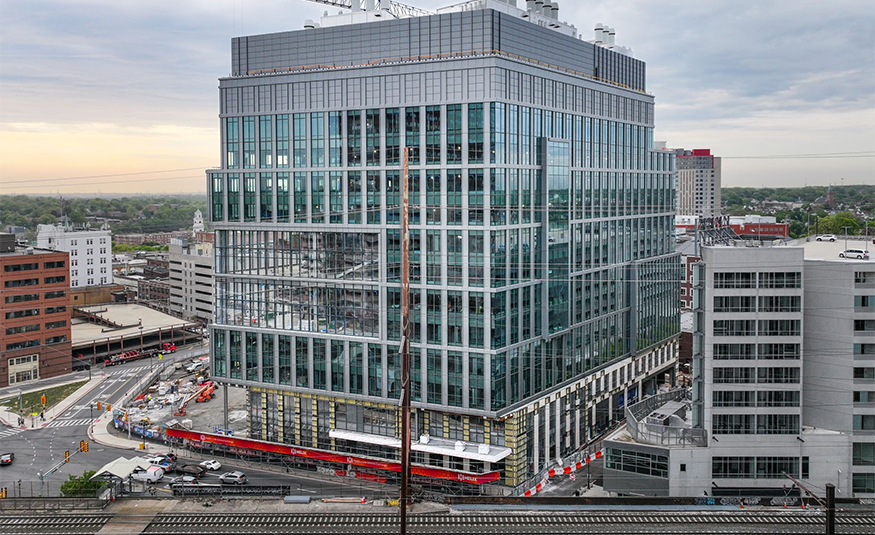
HELIX 1 in New Brunswick. - PROVIDED BY JLL
HELIX 1 in New Brunswick. - PROVIDED BY JLL
Middlesex County drives innovation with major investments
Matthew Fazelpoor//June 29, 2026//


The basics:
- Major Middlesex County investments include HELIX in New Brunswick
- Middlesex College projects expand workforce, community assets
- Morris Cancer Center marks a milestone first year
- County invests in AI, transit and economic development
For years, Middlesex County’s competitive advantages have been obvious: a strategic location at the heart of New Jersey, major transportation infrastructure, world-class healthcare institutions and one of the nation’s most concentrated life sciences corridors.
Equally important is the county’s educational ecosystem – anchored by Rutgers University and Middlesex College – which plays a central role in workforce development, research and economic growth.
Over the last several years, county leaders and institutional partners have advanced an ambitious strategy designed to capitalize on those strengths through investments in education, healthcare, innovation, transportation, recreation and community development.
Today, that vision is increasingly visible on the ground. From transformative projects taking shape at Middlesex College and new partnerships involving Rutgers to the emergence of the HELIX innovation district in New Brunswick and the successful first year of the Jack & Sheryl Morris Cancer Center, initiatives that once existed as long-term plans are now coming to fruition.
Together, they reflect a coordinated effort to position Middlesex County as one of New Jersey’s leading centers for innovation-driven growth.
For county leaders, that growth strategy has centered on making long-term investments that create opportunities for residents while strengthening the region’s economic foundation.
Providing stability
“My colleagues and I on the Board of County Commissioners feel it is our responsibility to continue to provide stability, security, and consistency to our residents, and this stability is more crucial now than ever before,” Middlesex County Commissioner Director Ronald Rios said during his 2026 State of the County address.
“With our 2026 budget finalized, not only can we provide stability — we are continuing to invest in our community.”

Much of that investment is driven through the county’s Community, Innovation, and Opportunity (CIO) Strategic Investment Plan, a long-term initiative unveiled in 2022. Designed as an extension of the county’s Destination 2040 vision, the plan seeks to transform the Middlesex College campus and surrounding assets into a regional hub for education, workforce development, recreation, arts and community engagement.
Coming to life
Several of the plan’s cornerstone projects are now moving from planning to execution.
Among the most visible is the Multipurpose Community Venue, a new stadium and entertainment destination under construction on the Middlesex College campus. The venue is expected to host sporting events, community gatherings and entertainment programming while also serving as the future home field for Rutgers baseball.

The project represents a notable partnership between county government, Middlesex College and Rutgers, while reinforcing the county’s emphasis on creating destinations that support both quality of life and economic activity.
Adjacent to the venue, construction continues on the new Middlesex College Student Center. The facility will include student gathering spaces, event venues and a full-service restaurant that will double as a culinary training laboratory, creating hands-on workforce development opportunities for students pursuing careers in hospitality and food service.

The county is also investing in future talent pipelines through the Middlesex County Innovation Magnet School, another major CIO initiative designed to prepare students for careers in emerging industries. Together, these projects reflect a broader strategy that links education directly to workforce development and economic competitiveness.
The right partners
Beyond the college campus, the county is reimagining Thomas A. Edison Park as a regional sports and recreation destination. Planned improvements include synthetic turf athletic fields, baseball and softball facilities, tennis courts, cricket amenities and championship-level venues designed to attract tournaments, visitors and economic activity.

To help maximize the impact of these investments, Middlesex County recently selected The Sports Facilities Cos. to oversee operations at the new stadium, Thomas A. Edison Park and the hospitality venue within the Student Center.
“Our new premier destination for sports and entertainment in Middlesex County needs an experienced partner who understands quality standards, guest experience, and diverse programming,” said Rios.
Representing the county’s future
Middlesex County
by the numbers
The basics
- Area: 309.3 square miles, the state’s 12th-largest county
- Total population: 883,335
- Employment rate: 64.7%
- Total employer establishments: 22,314
- Median household income: $111,549
- Total housing units: 320,245
- Building permits: 2025: 1,476
- Education – bachelor’s degree or higher: 45.6%
Retail demand
Retail trade, food services & drinking places
- Average spent: $36,616
- Total: $11.3 billion
- Retail Trade: $30,703 (average spent) $9.5 billion (total)
- Food Services & Drinking Places: $5,912 (average spent) $1.83 billion (total)
Housing
- Median listing price: $559,000
- Median price per square foot: $350
- Median rental price: $2,600 per month
- Y-O-Y rent growth: 3.05%
- Realtor.com ranks the market as hot on its Realtor Hotness Index, with homes selling in a median 34 days from listing and closing with a sale-to-list price ratio of 100%.
Sources: U.S. Census Bureau and Realtor.com
The projects have attracted attention beyond Middlesex County. In March, the New Jersey Alliance for Action recognized both the Innovation Magnet School and the Multipurpose Community Venue and Student Center during its annual New Jersey Leading Capital Construction Projects Awards Program.
“These projects represent the future we are building in Middlesex County — one rooted in innovation, access, and opportunity for every resident,” Rios said at the time. “Through our CIO Strategic Investment Plan, we are making bold, strategic investments that strengthen our education pipeline, create vibrant community spaces, and position our County as a leader in economic development across New Jersey.”
“The recognition of these projects underscores our commitment to creating spaces that serve multiple generations and multiple purposes,” said Middlesex County Commissioner Chanelle Scott McCullum, chair of the Economic Development Committee.
Transportation & tech
The county’s investment strategy extends well beyond bricks and mortar. Transportation, technology and workforce development initiatives also play a significant role.
Through the Middlesex County Improvement Authority, officials continue to advance major transit-oriented projects, including improvements at New Brunswick Train Station and planning efforts for the future North Brunswick Train Station. County leaders view these investments as critical infrastructure that will support future economic growth and improve regional connectivity.
Meanwhile, Middlesex County is increasingly positioning itself as a test bed for emerging technologies. Through its DataCity initiative, the county is using real-time data to improve roadway design, traffic flow and pedestrian safety. Plans are also underway to launch an autonomous shuttle pilot program at Middlesex College.
Artificial intelligence is another area that receives increased attention. Middlesex County schools and higher education institutions have expanded AI-focused educational programs and workforce pathways, while county officials are supporting new entrepreneurial initiatives designed to help technology startups grow and scale.

To your health
The county’s growing prominence in healthcare and life sciences is also evident in the continued expansion of major medical and research institutions.
In mid-June, RWJBarnabas Health and Rutgers Cancer Institute celebrated the first anniversary of the Jack & Sheryl Morris Cancer Center in New Brunswick, the state’s first and only freestanding cancer hospital and one of only 13 freestanding cancer hospitals in the nation. Developed by New Brunswick Development Corp., the facility is a joint venture between RWJBH and RCI and has quickly emerged as one of the most significant healthcare investments in New Jersey’s history.
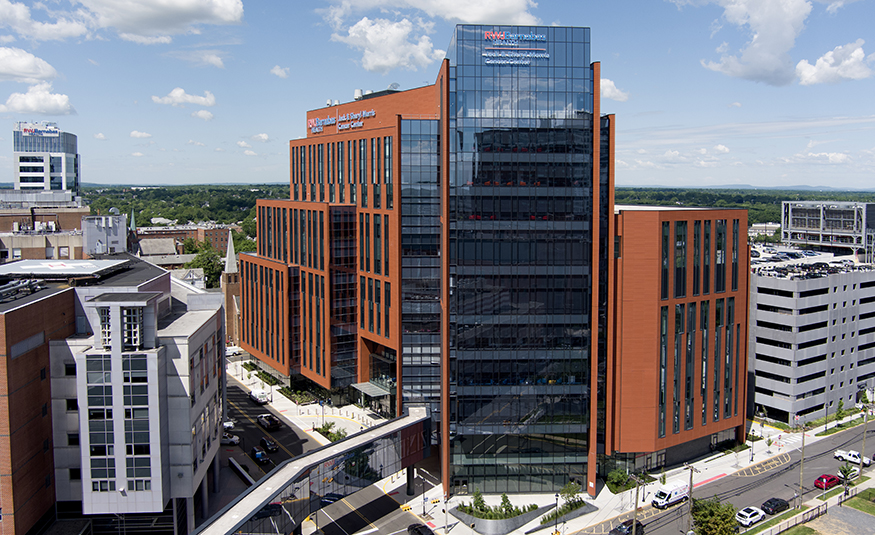
In just its first year of operation, the facility treated more than 85,000 patients, delivered more than 23,000 chemotherapy infusions, provided nearly 20,000 radiation therapy treatments, performed more than 1,900 surgical procedures and offered access to nearly 300 clinical trials.

“The tremendous response to the Morris Cancer Center over the past year demonstrates the need for and value of having NCI-designated Comprehensive Cancer Care available right here in New Jersey,” said Dr. Steven Libutti, director of Rutgers Cancer Institute and senior vice president of oncology services for RWJBarnabas Health.

“We’re only one year in, and the Morris Cancer Center is already raising the high bar we initially set,” said Mark Manigan, president and CEO of RWJBarnabas Health. “We purpose-built the Morris to put leading-edge research and world-class care in one place and within reach of every cancer patient, cutting out the long travel times and waits too many families had known before. By every metric, we are succeeding.”
The milestone reflects the growing concentration of healthcare, research and innovation assets in New Brunswick, where universities, healthcare institutions and private-sector partners increasingly work in close proximity to advance scientific discovery and patient care.
Supporting innovation
Nowhere is that convergence more visible than at HELIX.
The Health + Life Science Exchange, commonly known as HELIX, is one of New Jersey’s most ambitious economic development and innovation projects. DEVCO also leads development on the project. Envisioned as a three-building, 1.5 million-square-foot innovation district in downtown New Brunswick, HELIX is designed to bring together universities, healthcare institutions, startups, researchers, investors and global corporations in a single ecosystem dedicated to advancing life sciences, healthcare and technology.

More than a real estate development, HELIX is intended to create the physical infrastructure needed to support innovation at every stage — from academic research and workforce development to startup incubation, commercialization and corporate research and development.

The ambitions are significant. In a recent social media post, DEVCO President Christopher Paladino described HELIX as “maybe the greatest economic development partnership in New Jersey history” – a reflection of the unusually broad coalition of public institutions, universities, healthcare systems, corporations and government partners that have come together around the project.
Middlesex County has been a key player in the development along with the New Jersey Economic Development Authority as part of the Strategic Innovation Centers initiative, joining anchor institutions including Rutgers, Princeton University, RWJBarnabas, Hackensack Meridian Health and a growing roster of public- and private-sector partners working to strengthen New Jersey’s position as a global center for innovation.
HELIX timeline
Near completion, the district’s first building, H-1, is slated to open this summer. It will house Rutgers translational research programs, Rutgers Medical School and the New Jersey Innovation Hub, creating an environment where scientific discoveries can move efficiently from research into real-world applications.

Future phases will include H-2, the new 350,000-square-foot home of Nokia Bell Labs; and H-3, a mixed-use tower featuring office space, residential units and additional collaborative environments. Together, the three buildings will provide more than 1.5 million square feet of research laboratories, office space, educational facilities, public gathering areas, retail amenities and housing designed to support the full innovation lifecycle.
County leaders have repeatedly highlighted HELIX as a cornerstone of Middlesex County’s long-term economic development strategy.
During the 2026 State of the County address, officials noted that H-1 is in its final stages of construction, H-2 remains on track for a 2027 opening and H-3 is expected to break ground later this year.
A hub in the Hub City
One of the most significant recent developments is the launch of the New Jersey Innovation Hub, a 30,000-square-foot startup incubator within H-1 that Portal Innovations will operate.
The facility is designed to support early-stage companies focused on therapeutics, diagnostics, medical devices and related life sciences technologies. In addition to providing laboratory and office space, the incubator will connect entrepreneurs with investors, corporate partners and research institutions.

Sangeetha Ramsagar, executive director of Portal Innovations, described the organization’s approach as providing more than traditional incubation space. “Portal works on a philosophy of crafted capital,” she said. “What that means is that they provide not just incubation, but fully equipped incubation space, plus access to capital in the form of direct investment. But also in the form of access to their syndicate of 350-plus investors.”

The Innovation Hub recently gained additional momentum when BioNJ announced it would become a foundational member. The organization, which represents more than 400 life sciences organizations across the state, will establish a presence within the facility and help connect startups with industry leaders, investors and research partners. “This is a milestone moment for BioNJ. And the HELIX is a milestone moment for New Jersey – and for all of us,” said Debbie Hart, president and CEO of BioNJ. “Innovation ecosystems don’t happen overnight. They don’t happen by accident. They don’t just pop up. They’re built intentionally, collaboration by collaboration, company by company, brick by brick.”
Accelerating breakthroughs
Another major endorsement came in May when Johnson & Johnson secured naming rights to the Innovation Hub’s central convening space, now known as the Johnson & Johnson Exchange. The space will host founder programming, investor discussions, networking events and community gatherings aimed at connecting startups, academia and industry.

“For 140 years, New Jersey has been home to Johnson & Johnson and a launchpad for healthcare innovation that changes lives around the world,” said Joaquin Duato, chairman and chief executive officer of Johnson & Johnson.
“The Johnson & Johnson Exchange at the New Jersey Innovation Hub reflects our belief that great ideas can come from anywhere, and that when industry, entrepreneurs, and academia come together, we can accelerate medical breakthroughs to deliver better outcomes for patients, support job creation and drive economic growth across New Jersey.”
“DEVCO is proud to partner with Portal Innovations and Johnson & Johnson on a project that aligns so closely with New Jersey’s vision for inclusive economic growth and innovation-led development,” said Paladino. “The Johnson & Johnson Exchange will be a cornerstone for collaboration and a catalyst for the entrepreneurial activity we aim to attract and support.”
More from
Middlesex County Focus
- Centrally located, Middlesex County emerges as industrial beacon
- Clio Snacks thrives in Middlesex County innovation ecosystem
“My administration is committed to transforming New Jersey into the destination for startups and entrepreneurs to set up shop,” said Gov. Mikie Sherrill. “By expanding resources to support budding enterprises and investing in Strategic Innovation Centers like HELIX, we are driving life-changing breakthroughs in the health and life sciences sector and cementing our state’s reputation as a thriving innovation hub.
‘Every state isn’t like this’
During an April preview event for the Innovation Hub that showcased the real-world potential and opportunity of this new ecosystem, Chris Picariello, president of Johnson & Johnson Innovation-JJDC – the company’s venture capital arm – highlighted the concentration of resources already present in the state.
“It’s not like we have to tap into something that’s not here in New Jersey, New Brunswick,” said Picariello. “It’s about how do you aggregate all these capabilities and amazing things that are here? We have amazing research hospitals; we have amazing academic institutions; we have amazing capabilities, clinical development perspective, manufacturing capabilities in the state.”

Portal Innovations founder and CEO John Flavin echoed that sentiment.
“This audience and the cohesiveness of the New Jersey ecosystem – it’s impressive,” said Flavin. “Every state isn’t like this. That is organized, cohesive, and thinking about it from the perspective of how does an entrepreneur or a company hit the easy button? New Jersey is the easy button.”
Getting social
HELIX is also being designed as more than a research and office campus. Developers have placed significant emphasis on creating gathering spaces and hospitality offerings that encourage collaboration beyond laboratories and conference rooms.
Earlier this year, developers announced that New Brunswick staple Clydz will relocate to HELIX H-1, while Strand Market will debut as a food hall and community hub featuring multiple dining concepts.

“The HELIX is about collaboration – in the lab and the office but also at the coffee bar, the communal lunch table, at dinner, and at happy hour,” said Paladino. “Chef Jackie Mazza and Doug Schneider have been bringing people together in New Brunswick for a generation – they were the natural choice to lead the hospitality at the HELIX.”
“The HELIX is not just a place for research and innovation; it is a place where a community comes together,” said New Brunswick Mayor Jim Cahill. “The addition of Clydz and Strand Market brings energy, hospitality, and gathering spaces that are essential to creating a vibrant, collaborative environment.