Sign In
 Free Newsletter

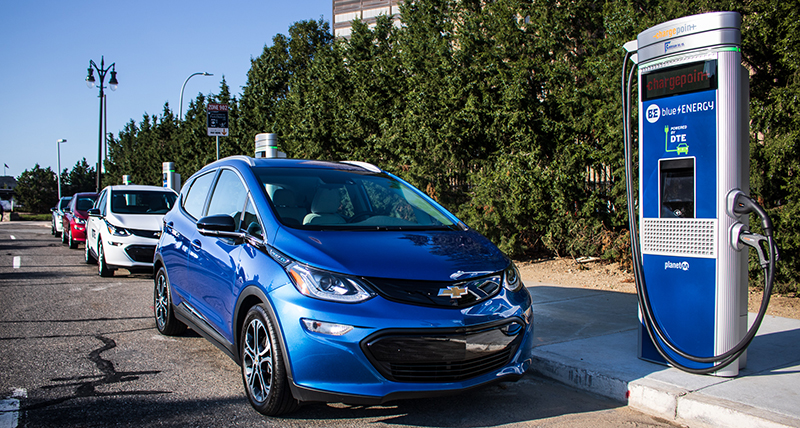
Hoboken was recently awarded a $150,000 grant from the New Jersey Board of Public Utilities to install two publicly accessible DC fast chargers, which enable electric vehicle owners to fully charge their vehicle in under an hour. - CITY OF HOBOKEN
Hoboken was recently awarded a $150,000 grant from the New Jersey Board of Public Utilities to install two publicly accessible DC fast chargers, which enable electric vehicle owners to fully charge their vehicle in under an hour. - CITY OF HOBOKEN
Murphy proposes new clean cars rules
Matthew Fazelpoor//July 18, 2023//


Gov. Phil Murphy announced the filing of the Advanced Clean Cars II (ACCII) proposal July 18, which would require automobile manufacturers to make zero emission vehicles (ZEVs) an increasing percentage of their new light-duty vehicle sales as they ramp up toward 100% ZEVs by 2035.
The proposal, filed with the Office of Administrative Law, is the latest step in Murphy’s ambitious clean energy goals. As NJBIZ reported in February, the governor directed the New Jersey Department of Environmental Protection to begin the stakeholder process to adopt ACCII in New Jersey during a speech outlining six steps to combat climate change.
According to Murphy, the rule does not impose any obligations on consumers or car dealers, and provides compliance flexibilities for manufacturers, including a credit trading mechanism. Next month, the Office of Administrative Law is expected to publish the proposal in the New Jersey Register, kicking off a 60-day public comment period that would run through Oct. 20, 2023.
“By filing the ACCII proposal, we build upon our nation-leading record of bold climate action while delivering on our promise to utilize every tool at our disposal to combat the intensifying climate crisis,” said Murphy in a press release Monday. “Our commitment to bringing the ACCII proposal to fruition is a commitment to every New Jersey family and the air they breathe, air that will be cleaner and healthier tomorrow thanks to the steps we’re taking to reduce emissions today.”
Murphy also announced Monday that New Jersey has signed on to the Accelerating to Zero Coalition’s Zero-Emission Vehicle Declaration, a global agreement launched by the United Kingdom at the 26th United Nations Climate Change Conference of the Parties (COP26) in November 2021. So far, the accord has been adopted by 41 national governments and 74 cities, states and regional governments. New Jersey signed on to Section 2C of the declaration, committing the state to a zero-emission vehicle future in accordance with the goals of the Paris Agreement.
“That commitment is underscored by our signing of the ZEV Declaration, which recognizes that New Jersey is just one crucial piece of our global response to climate change,” said Murphy.
In addition to those steps, Murphy’s office also points out that the recently signed Fiscal Year 2024 state budget includes a new $10 million appropriation to support more electric vehicles on the road with the installation of additional changing stations at businesses, multi-unit residential buildings, and public locations.
Clear benefits and concerns
The actions were applauded by clean energy advocates and stakeholders.
“Under Gov. Murphy’s leadership and through the tireless work of the DEP, New Jersey is one step closer to turning our vision for a zero-emission future into a reality,” said Catherine Klinger, executive director, Governor’s Office of Climate Action and the Green Economy. “Reducing emissions from the vehicle sector, which accounts for more than 40% of emissions in New Jersey, will deliver considerable public health and climate benefits for generations to come.”

“As New Jersey continues experiencing the adverse impacts of climate change, we have the power and obligation to reduce its effects by limiting the emissions of climate pollutants,” said NJDEP Commissioner Shawn LaTourette. “Through the adoption of zero-emissions vehicle standards, New Jersey can reduce its greatest source of climate damaging emissions, improve air quality and public health, and support a growing cleantech marketplace that will create even more green jobs in New Jersey and beyond.”
“The actions the administration is taking today to increase the number of electric vehicles on the road are vitally important to fighting the ravages of climate change,” said New Jersey Board of Public Utilities President Joseph Fiordaliso.
“The rapid adoption of Advanced Clean Cars II will reduce air pollution and bring us closer to a cleaner future,” said Alex Ambrose, policy analyst with New Jersey Policy Perspective (NJPP).
“Two decades ago, New Jersey took bold action by passing the Clean Cars Act. Today’s Advanced Clean Cars II rule proposal from the Murphy Administration moves us closer to a clean, electric transportation future that gets us off oil and fights the largest source of climate pollutants,” said Doug O’Malley, director, Environment New Jersey. “Amidst a world-wide heat wave, there are clear benefits of New Jersey adopting this program this year which will lead to getting more electric vehicles on our roads and joining other leading Clean Car states.”
But there are some concerns from business groups, such as the New Jersey Business & Industry Association (NJBIA), about the timeline and feasibility of this proposal.

“While we should all work to reduce carbon emissions, the ban of gas-powered cars in such an expedited time frame does not take costs or feasibility into account – and it is likely to result in a major increase in New Jersey residents who actually won’t be able to afford to drive,” said Ray Cantor, deputy chief government affairs officer, NJBIA. “The 2035 directive to only allow EVs to be sold in New Jersey, will likely start in earnest with model year 2027 vehicles – with a mandated target of having 43% new EV sales. That percentage will increase each year heading to 2035. New Jersey’s EV sales, however, are currently only at about 7%.
“If targets are not reached under this mandate, it’s likely there will be a sizable penalty or surcharge imposed on the buyer of every non-EV car sold,” Cantor continued. “So, we will see the real-world impacts of costs much sooner than 2035. This mandate will actually drive up the cost of all cars in New Jersey, new and used, by thousands of dollars.”