Sign In
Upcoming Event
 Free Newsletter

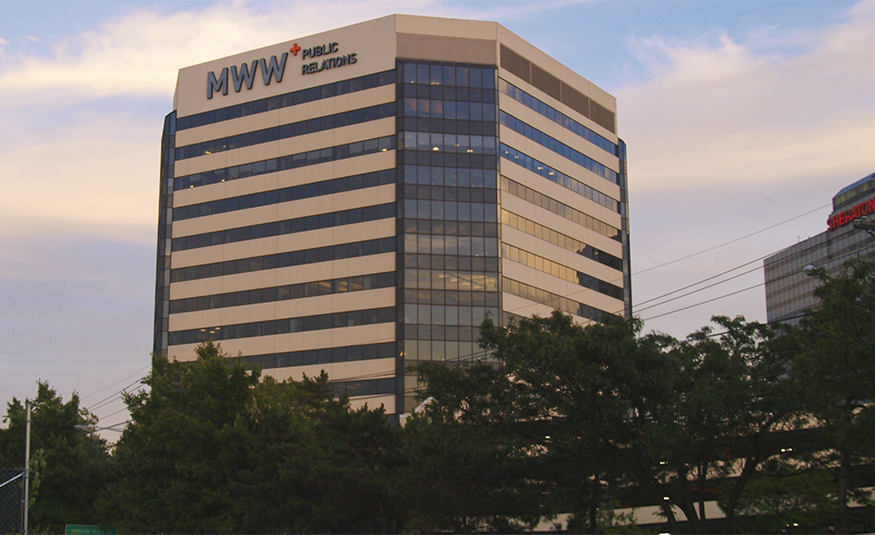
For more than 30 years, MWW's main offi ce was located at the Metropolitan Center in East Rutherford overlooking MetLife Stadium. The company transitioned to a hub in Hasbrouck Heights in 2024. - PROVIDED BY MWW
For more than 30 years, MWW's main offi ce was located at the Metropolitan Center in East Rutherford overlooking MetLife Stadium. The company transitioned to a hub in Hasbrouck Heights in 2024. - PROVIDED BY MWW
MWW marks 40 years of global growth from New Jersey
Matthew Fazelpoor//August 3, 2026//


The basics:
- MWW will celebrate its 40th anniversary this September
- Founder Michael Kempner credits New Jersey for the public relations firm’s success
- Company expects to exceed $75M in revenue this year
- Recent acquisitions expanded sports, entertainment and workforce communications
Four decades ago, conventional wisdom said a global public relations firm couldn’t be built in New Jersey.
Michael Kempner never bought into that thinking.
Since launching MWW from East Rutherford as a 28-year-old former political operative, the company has grown into one of the world’s largest independent communications firms, with offices spanning North America, Europe and Latin America. And Kempner credits New Jersey.
Today, the independent firm employs more than 225 professionals across North America, Europe and Latin America, advising organizations on corporate reputation, crisis management, consumer marketing, public affairs and employee communications. Its work spans industries including healthcare, financial services, technology, sports and entertainment, logistics and consumer brands, with clients ranging from Fortune 500 companies to professional sports organizations and nonprofits.
As MWW prepares to celebrate its 40th anniversary in September, Kempner says the firm’s growth has been guided by one principle that has endured through technological change, economic cycles and industry transformation.
“After being in politics and government for close to a decade, I decided to take much of those skillsets and create my own company that would allow me to transfer the strategic communications, three-dimensional chess, looking around corners, all the things you need to do to be successful in politics,” Kempner told NJBIZ. “And we were built on a simple belief that reputation is a company’s most valuable asset.”
Along the way, it has weathered recessions, spent a decade inside a global holding company before returning to independence, helped lead New Jersey’s recovery after Superstorm Sandy and remained committed to the philosophy that first inspired its creation.
[W]e were built on a simple belief that reputation is a company’s most valuable asset.
– Michael Kempner, founder and CEO, MWW
Starting differently
The communications industry Kempner entered in 1986 bears little resemblance to today’s.
“We started as, what in those days was, a traditional public relations firm,” he recalled. “It was 100% earned media; it was counting clips; it was a very different era. There was no internet. Fax machines had just been invented. So, you think about how different it was.”

While MWW began as a conventional public relations firm, Kempner said it quickly progressed into something broader. “But then we evolved into a reputation management company that helps organizations earn trust, stay culturally relevant, and drive business growth.”
Kempner believes his lack of agency experience became one of the firm’s greatest competitive advantages. Before launching MWW, Kempner had worked for Gov. Brendan Byrne, managed Bob Torricelli’s congressional campaign and served as his first legislative director, and later joined the Democratic National Committee.
Blue-ribbon moment
Among MWW’s thousands of assignments, founder and CEO Michael Kempner points to one above all others: New Jersey’s “Stronger Than the Storm” campaign following Superstorm Sandy.
“If you ask the people who work here, who were here at the time, what was … the most exciting, important, and impactful and meaningful assignment they’ve ever had, it would be ‘Stronger than the Storm,'” he said.
Research conducted after Sandy found roughly 60% of prospective tourists believed the Jersey Shore remained closed after the devastating storm that ravaged New Jersey in late 2012. Kempner described the campaign as a defining moment.
“It was a bet-the-farm moment for the economy of the State of New Jersey,” he said. “But, most importantly, for the livelihoods of thousands of small businesses and families across the state.”
With just weeks to create the campaign, more than 100 employees contributed to developing the slogan, advertising, events and earned media strategy. “We established a headquarters in a house in Asbury Park,” Kempner recalled.
The symbolic reopening of the shore became one of the campaign’s defining moments.
[I]t was a massive statement to the country that New Jersey is stronger than the storm, and that New Jersey is open for business.
– Michael Kempner, founder and CEO, MWW
“We had the world’s longest blue ribbon,” Kempner said. “The ‘Today Show’ did their entire programming from our location. And it was a massive statement to the country that New Jersey is stronger than the storm, and that New Jersey is open for business. And that the shore was going to be better and stronger than ever.”
Despite poor weather that summer, Kempner said tourism rebounded. “The Jersey Shore up to that point had its best year ever.” More important than awards, he remembers the enthusiasm inside the agency. Team members worked long hours and even volunteered their own time to see the campaign through.
“We were part of saving the economy of the State of New Jersey,” Kempner said. “We were part of making sure thousands of small businesses and their families could continue to prosper.”
Those experiences forged connections throughout New Jersey that helped the fledgling company gain early traction. “By the time I was in my mid-20s, I had extraordinarily positive relationships with a large segment of the socio-economic universe of the state,” Kempner said. “So, even though we were unknown, we were very successful very quickly because we had wonderful contacts.”
‘Unique advantage’
More importantly, he entered the business without preconceived notions. “And we had this unique advantage. Some would call it a disadvantage – but unique advantage that I never worked at a public relations firm before,” he said. “So, we started with a premise that we were not going to live by conventional norms.”
The firm’s culture emphasized speed, efficiency and accountability. “Our job wasn’t to take our clients’ money,” he said. “Our job was to earn our clients’ money. And to earn our clients’ money, we had to be efficient, and we had to be successful, and we had to be impactful.”
Kempner said the company set standards higher than clients often expected.
“We believed that we needed to have a higher level of expectations for ourselves than our clients ever would,” he said. “Clients would have someone working on something for two years, and we’d get it finished in two weeks.”
That mindset evolved into an ideology that still guides decision-making today.
“We created this odd philosophy, that you don’t know is a philosophy when you start it,” Kempner said. “Even today, we operate this business – and I always have from the beginning – with a very simple premise. And that is:
“If it makes sense, let’s do it. If it doesn’t, let’s not.”
The Jersey advantage
One of the obstacles during MWW’s early years wasn’t competition. It was geography.
“The biggest impediment to start with was that in 1986, you couldn’t be a global firm and be in New Jersey,” Kempner explained. The prevailing belief was that serious communications firms belonged in Manhattan, “that if you weren’t … you could not be competitive,” he said. “That you couldn’t be a major firm in New Jersey.”
Instead of relocating, Kempner embraced the Garden State.
Founded in East Rutherford, MWW spent nearly four decades building its business there before opening its hub in Hasbrouck Heights in 2024. Today, the firm is headquartered in New York City. It still maintains the Bergen County base as its primary New Jersey location and corporate home in the state, alongside other offices across the U.S., the United Kingdom and Mexico.
Looking back, Kempner believes staying in N.J. became one of the company’s defining advantages.

“[W]e were a big fish in a smaller pond,” he said. “I learned quickly, it was the advantage – because in New Jersey we could spread our wings. In New Jersey, we could be significant. We can be of substance. We would understand all the different disparate pieces of the state. And really had very little competition. That confidence gave us the confidence to grow and prosper.”
“I think our decision to stay in New Jersey for the first 10–15 years of our life gave us the confidence to become what we are today,” he said.
One of the most important decisions we made early on was not just to be located in New Jersey. But to be of New Jersey.
– Michael Kempner, founder and CEO, MWW
That connection remains central to MWW’s identity. “One of the most important decisions we made early on was not just to be located in New Jersey,” Kempner said. “But to be of New Jersey.”
“We would never be where we are today without … the strength and character it gave us; without the support of the business community, the political community, even the media,” he continued. “We had so many cheerleaders in New Jersey; we had so many people trying to be part of our growth. We were able to attract wonderful people and very talented people, great companies.
“I would say that the most important part of our success and the most important variable in our success was New Jersey.”
Evolving with technology
Another of the company’s strengths has been embracing major technological shifts rather than resisting.
“We were there at the beginning of the commercialization of the internet. I remember using Prodigy dial-up, Netscape, AOL,” he said. Each wave created opportunity. I always believed in technology as a force multiplier, not as something to be afraid of,” said Kempner.
A lasting legacy
As MWW approaches its milestone anniversary, founder and CEO Michael Kempner said one absence is deeply felt.
Longtime and highly respected executive William Murray died in June 2025 after 35 years with MWW.
“He was my longest-tenured employee,” Kempner said.
Known for constantly being on the road serving clients, Murray became something of a company legend. “Bill would always call in — ‘Oh, I’m on the Turnpike.’ ‘I’m calling from Route 80,'” Kempner recalled. Following his death, the company transformed its town hall space into “The Bill Murray Rest Stop” — complete with a replica New Jersey Turnpike sign.
“Bill was one of a kind,” Kempner said. “Not anybody you can replace in the same way. Obviously, we brought some fantastic people to help us move forward. It’s hard to believe that Bill is not here.”

His legacy, Kempner said, centers on hard work, honesty, humility, respect and integrity.
“Treat your most junior employee with the same respect that you treat a CEO,” he said, describing Murray’s philosophy. “He was very committed to both his people and his clients. So, to come to work every day to earn the trust of your people and your clients – and never take that for granted.”
With artificial intelligence representing the latest evolution, rather than treating AI as a novelty, the executive said MWW developed two distinct strategies.
The first focused internally: How do we make ourselves more efficient, so faster, better and with greater value to our clients?
The second centered on improving client outcomes: How do we have more precision in the recommendations we’re making to clients that would lead to more predictability of outcomes?
Kempner believes AI allows agencies to move beyond intuition toward measurable confidence. “Our AI tools today help us have much more precision in what we recommend and how we do things, which leads to a much higher level of predictability of success.” Yet even as technology evolves, he says the firm’s mission has not. “Great companies begin with a clear purpose and not a perfect plan,” he said. “We continue, even 40 years later, working with that same level of purpose.”
Perhaps no decision better illustrates MWW’s philosophy than Kempner’s decision to buy back his company after selling it to Interpublic Group in 2000.
Kempner remained with the organization throughout its decade as part of the global holding company before purchasing it back in 2010 alongside members of the management team. “We believed that we were better as an independent.”
Kempner added, “ … That’s what our DNA is.”
New identity
MWW rebranded as MikeWorldWide in 2021. The move was designed to reflect both its founder and its broader evolution into a global reputation and integrated communications firm.
The company has also expanded through strategic acquisitions while maintaining its independent structure.
Kempner said that independence has become even more valuable as consolidation reshapes the communications industry. Without layers of corporate bureaucracy, MWW can move faster.
In 2025, the firm acquired Berk Communications, a longtime partner agency, creating one of the nation’s largest sports and entertainment communications practices. Then earlier this year, it added HudsonLake, a nationally recognized change management and workforce communications firm. The move strengthened its employee communications, organizational transformation and corporate reputation capabilities.
Broader industry shift
As MWW approaches its milestone anniversary, Kempner says the company is entering another period of expansion. The firm expects to exceed $75 million in revenue this year and has set its sights on reaching $100 million within the next 12 to 18 months.

He also sees a broader shift across the industry.
“When you look at the industry today with the mass consolidation of the holding companies – people don’t want to work for holding companies anymore,” Kempner said, arguing the same dynamic extends to clients and acquisition targets.
“Clients would much rather work with an independent with scale than a holding company,” he said. “Acquisitions don’t want to sell to a holding company. They want to sell to mid-sized agencies with scale – and there’s only two or three of us.”
“[W]e like to be able to have an impact; we like to have limited bureaucracy. We like to get to do the right things for the right reasons. Sometimes you’re wrong. But as long as you’re wrong for the right reason, you can live with that,” Kempner said. “But you never want to be wrong for the wrong reason. So … we try to be right every day for the right reasons.”
“There are going to be winners in this change,” he also said, adding, “We expect to be in the leading pack of winners.”
People will talk
For Kempner, reputation has expanded beyond communications into an overall business strategy. “Today, every employee is a publisher. Every customer has influence. AI can create content instantly. And reputation can change globally in a minute,” he said.
“The one thing that has never changed – that has always been the core of our business – trust still has to be earned. Reputation is our business. Reputation affects talent recruitment, customer loyalty, investor confidence, regulatory relationships, market valuation, crisis resilience. And communications have moved from just the marketing department today to the boardroom.”
Kempner believes companies increasingly compete in what he calls “the reputation economy.”
“People will spend more money for a product or a service or a company that they believe in,” he said. “And they will advocate tirelessly against you if you lose their trust. That is the core of today’s business.”
Reflecting on four decades, Kempner admits he did not envision the company reaching its current scale.
“I always thought we could become a dominant business,” he said. “But early on, I never envisioned it becoming as big as it has.”
Leaning on the team
He attributes much of the growth to talented employees.
“When I first started, I was very young. I was in my 20s and I didn’t necessarily appreciate that your most critical asset is your people,” he said, noting lessons only come with the experience of going through them. “The mistakes were required to get the experience. It was learning that your only asset is truly your people – because we’re in a business that sells ideas. So, your only asset is truly your people.”
That guides how Kempner looks at the business today. “I don’t really run a PR firm,” he said. “I run a human capital company that happens to sell marketing services.”
And his leadership philosophy remains straightforward. “I’ve always hired people who are better than me at what they do,” he said. “I don’t want to be the smartest person in the room. I want to have the smartest people in the room work for me.”
Kempner also encourages employees to embrace calculated risk. “Don’t fear failure, fear standing still.” The leader advised remaining curious, practicing “radical empathy” and remembering that culture itself can become a competitive advantage.
“People don’t just join companies; they join missions,” he said. “Build a culture that attracts talented people who share your values. And remember why you’re doing it. Entrepreneurship isn’t just about creating wealth. It’s about creating value for customers, employees, partners, your community. If you focus on creating value consistently for those stakeholders, financial success is much more likely to follow.
“I would say that success isn’t measured by the company you build; it’s measured by that trust you earn, the people you develop, the problems you solve, the impact you leave behind. Build those well, and the business will take care of itself.”
Looking ahead, looking back
After four decades, Kempner says he remains enthusiastic, though he describes being in a service business as not for the faint of heart. “But I look back at it with a big smile on my face, with great pride. Some days it feels like 80 years, and some days, it feels like four weeks,” he said. “The days are long, but the years are short – and that’s how I feel. But every time I think about it, it puts a big smile on my face.”
Watching employees build careers and families, and seeing former colleagues succeed elsewhere, has become one of the greatest rewards. “That level of pride is extraordinary,” he said.
Looking toward the future, Kempner remains as optimistic as the young entrepreneur who launched the company in 1986. “I would say that I’m as enthusiastic today as I was then,” he said. “The opportunities are even greater today than they were then — and I’m excited to see what’s next.”