Sign In
Upcoming Event
 Free Newsletter

New CTF business tax to fund NJ Transit draws fire
Corporate Transit Fee unveiled in governor's latest Budget Address
Matthew Fazelpoor//March 4, 2024//

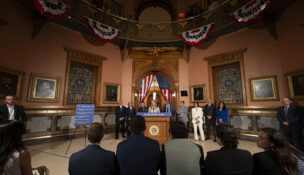
Gov. Phil Murphy delivered his seventh annual budget address on Feb. 27, 2024, in Trenton, outlining spending priorities for Fiscal Year 2025. - PROVIDED BY EDWIN J. TORRES/NJ GOVERNORS OFFICE
Gov. Phil Murphy delivered his seventh annual budget address on Feb. 27, 2024, in Trenton, outlining spending priorities for Fiscal Year 2025. - PROVIDED BY EDWIN J. TORRES/NJ GOVERNORS OFFICE
New CTF business tax to fund NJ Transit draws fire
Corporate Transit Fee unveiled in governor's latest Budget Address
Matthew Fazelpoor//March 4, 2024//


While the dust is still settling on Gov. Phil Murphy’s latest Budget Address, the battles over the record $55.9 billion spending plan are just beginning. “Over the past six years, in a world with no shortage of challenges, we have seen the very best of New Jersey,” said Murphy during his seventh such speech, which took place Feb. 27 at the State House in Trenton. “We have seen it in the dedication of the working people who keep our state – and our economy – moving.”
The governor acknowledged the tough decisions families are making about money. “And frankly, those kitchen table conversations are no different than the conversations we are having, right here in Trenton,” Murphy continued. “At a moment of economic uncertainty and unease, how do we – as a state – move forward? Well, here is the good news: we are prepared to meet this moment. New Jersey is prepared to face our challenges – confidently, capably, and ambitiously. And we are prepared, because over the past six plus years – together – we have restored fiscal responsibility while remaining true to our values. We have saved money where we can – so we can invest more where it counts: strengthening the economic and societal foundation of New Jersey.”
Highlights of the proposed plan include:
- A $6.1 billion surplus
- A full pension payment for the fourth consecutive year – $7.16 billion in Fiscal Year 2025
- More than $3.5 billion in direct property tax relief, which includes $2 billion-plus through ANCHOR and Senior Freeze
- $200 million to pre-fund StayNJ
- Additional funding for the RetireReady NJ savings program
- Maintaining recent expansions of the Earned Income Tax Credit, the Child and Dependent Care Tax Credit, and the Child Tax Credit
- The first full funding of the New Jersey public schools formula – with $11.66 billion in total K-12 funding proposed for FY 2025
- Initiatives to address critical workforce needs
- Using funds from the Debt Defeasance and Prevention Fund to avoid borrowing and fulfill commitments on several projects
- Funding and a suite of initiatives to advance the AI Moonshot and build upon the AI Hub at Princeton University
- The establishment of a new Corporate Transit Fee to help fund NJ Transit, which is approaching a fiscal cliff
The NJ Transit issue grabbed most of the attention in the immediate aftermath of the speech – as well as the ire of the business community. The CTF comes on the heels of the expiration of the corporate business tax surcharge, which business leaders fought hard for and applauded Murphy for letting sunset. This new fee will also be 2.5% on all earnings, hitting the state’s most profitable companies with net incomes greater than $10 million. While not as many as the CBT surcharge, the business community has been outspoken in the effect it will have on New Jersey’s standing and image for business friendliness.
“We will raise this revenue without placing any new burdens on small- and medium-sized businesses,” said Murphy. “In fact, nearly 2,500 companies will see their taxes decrease from last year. And let me take this opportunity to thank, in advance, the big companies which will be stepping up. Many of them have partnered with our administration since day one – and they have been essential in getting our economy back on its feet post-pandemic.”
The business community responded harshly to the news, which started floating around Trenton in the lead-up to the speech. The proposal resulted in some scorched earth statements from leading business groups — given that Murphy had shot down calls for such a fee coming back on his recent radio call-in show. He’d also stressed that he saw no tie-in with that surtax and transit funding, as some advocates and Democratic lawmakers had tried to make the case for.

“Just days later, we are here with another new and unnecessary corporate business tax of a different name, returning New Jersey to its extreme outlier status for business taxes after seven weeks – retroactive to Jan. 1, to add insult to injury,” said Michele Siekerka, president and CEO, New Jersey Business & Industry Association, in a statement.
“We note that the added $10 million revenue threshold of the new CBT tax in his budget proposal changes almost nothing about the negative impact on New Jersey’s business competitiveness in attracting corporate job creation and capital investment. It is an unfair and undeniable negative that delivers another serious blow to our business reputation.”
Siekerka characterize it as punitive against the state’s largest job providers to re-commit to this tax to fund NJ Transit at a time of multibillion-dollar surplus, when there is no correlation between those affected corporations and public transportation. She added that Murphy acknowledged that himself.
“It is a punishment they do not deserve,” she stressed.

New Jersey Chamber President and CEO Tom Bracken, another major advocate for the CBT sunset, described this plan as a nightmare scenario for New Jersey.
“We have been preaching that New Jersey needs to become more affordable, more business friendly and more competitive. Now we are shocked that there is talk of reinstituting higher taxes on businesses less than three months after the 2.5% CBT surcharge expired,” said Bracken. “If the fiscal 2025 state budget is passed, as proposed, and the surcharge is reinstated, New Jersey will go quickly from being the CNBC ‘Most Improved State for Doing Business’ to being one where companies flee – and stay away.”
Bracken stressed that this fee would do long-term harm to the state’s reputation and the economy.
“Our positive momentum will immediately pay the price since we have the highest business tax in the nation. That’s a major step backwards,” Bracken said. “The state will have deliberately chosen to send a message that New Jersey is an unpredictable place to set up shop – and that there is a possibility promises made to executives and business owners might not be honored. It is that plain and simple – and extremely disappointing.”
[W]e are shocked that there is talk of reinstituting higher taxes on businesses less than three months after the 2.5% CBT surcharge expired.
– Tom Bracken, New Jersey Chamber of Commerce
The New Jersey Society of Certified Public Accountants said its 13,000-plus members were also disappointed to see this surcharge included in the budget proposal. “NJCPA members, who serve tens of thousands of businesses and individuals, already hear objections about New Jersey’s high taxes from clients who are looking to leave New Jersey,” the group said in a statement. “In member surveys, 75% said they have recommended to some clients that they move out of state.”
NJCPA added that this surcharge will again move New Jersey to the top of list of states with the highest corporate tax rates – while our neighbor Pennsylvania is reducing theirs.

“The NJCPA strongly urges Gov. Murphy to reconsider this tax increase and to consider the impact on New Jersey’s business community. The NJCPA stands ready to be a resource to the governor and the Legislature,” the group continued in its statement.
“After working with the business community and legislators on both sides of the aisle to reduce our highest-in-the-nation CBT, Gov. Murphy’s announcement blindsides our state’s job creators and undermines whatever trust or goodwill that had developed,” said Garden State Initiative President Regina Egea.
“We are hopeful that the state Legislature does not concur with this plan. We are already one of the most inhospitable places to do business in the county, and this will only make it worse.”
“With our state standing on a fiscal cliff driven by a structural deficit in the billions of dollars, the governor’s budget plan proposes increasing spending by another $1 billion,” said Audrey Lane, policy director, GSI. “How a budget that is short on revenue already can raise spending even more is disconcerting. This, on top of toll hikes, record high property taxes, energy rate increases, and NJ Transit fare increases, we are beyond the tipping point. Where does it end?”
Siekerka added that the budget and surtax reaffirms New Jersey’s anti-business climate. She described the governor’s sudden reversal, with no warning, as “simply bad form.”
“Businesses require the ability to plan to be successful. When you make promises that drive investment, and then renege on them a few weeks later, it goes well beyond creating terrible policy,” she said. “Our legislators need to do better by our business community – period, full stop.”
Statehouse reaction
The Legislature takes over the process for the next few months as hearings get underway.
In a statement, Senate President Nick Scutari, D-22nd District; Senate Majority Leader Teresa Ruiz, D-29th District; and Senate Budget Chair Paul Sarlo, D-36th District said: “We welcome the governor’s proposed budget with a plan that recognizes the economic uncertainty and fiscal challenges we face.
“The proposal outlines ways to address our shared priorities of meeting the needs of working people, making New Jersey more affordable, expanding economic opportunities and supporting the policies that improve the quality of life for all our residents.”

The statement continued by noting that management of state finances have put the state in a better position to contend with economic challenges and continue investments to move New Jersey forward.
“Fully funding our schools, making another full pension payment, and providing a record amount of property tax relief will serve as a good foundation for the budget,” the three senators said. “The governor’s proposal is now the responsibility of the Legislature. ”
“As we work together over the coming months, I remain convinced that any discussion about increasing corporate taxes must be had with our state’s long-term fiscal health and a further commitment to reducing property taxes in mind,” said Assembly Speaker Craig Coughlin, D-19th District. “We will have to make some difficult decisions on spending and how to pay for programs and services in the months ahead.
Republican lawmakers expressed different sentiments — blasting the plan in a news conference held immediately after the speech.
“The governor has talked for months and months about having the corporate business tax expire – only to create a new tax, which is higher than the corporate business tax surcharge that recently expired,” said Assembly Republican Leader John DiMaio, R-23rd District.

“We have enough money in the budget to fund NJ Transit. We added $1.5 billion in legislative add-ons last year that are just for pet projects for specific districts of the state – not across the state,” said Assembly Republican Budget Officer Nancy Munoz, R-21st District. “It doesn’t collectively benefit the entire state – just certain areas. But we could use that money to help NJ Transit. NJ Transit is depended upon by the working- and middle-class people of the State of New Jersey. And this is a burden on them.”
“You just heard the governor deliver a pretty rosy budget address,” said Senate Republican Leader Anthony Bucco, R-25th District. “From our perspective, we think that when you look behind the curtain, you’re going to see something that’s a lot different than was projected today. This budget continues to spend more money than the state takes in. In fact, over the Murphy administration, we’ve seen an over 60% increase in spending and an over 50% increase in taxes. And this budget continues along that narrative.”
“Mark my words, history is going to judge this administration as one of, tragically missed opportunities,” said Senate Republican Budget Officer Declan O’Scanlon, R-13th District, pointing to the spenddown of the surplus by $2 billion despite any major revenue challenges. “This administration has done nothing to build a long-term sustainable budget. All of these wonderful things the governor is claiming that we’re doing could easily go away as soon as there’s the quickest and most slight revenue downturn – never mind, a major one. There were huge opportunities here. We were flush with cash after the pandemic happened.”
In his first public remarks following the Budget Address, Murphy appeared last week on his monthly television call-in show on News 12 New Jersey. During the program, he defended his plan to fully fund NJ Transit, citing post-pandemic economic realities for the public transit system.
He noted that the money will come from a combination of the CFT, a proposed 15% rate hike, state funding, and a restructuring of the administrative side of NJ Transit.
Murphy said that the short term will require a spending diet for his administration and the Legislature, but that he remains bullish on the medium-to-long-term prospects. He also pushed back on the criticism of the budget proposal as the process begins in earnest.
“I’m proud of the budget. It’s the beginning of a process that will culminate in June,” Murphy said. “And I think New Jersey does that budget process as well as any state in America. And I’m looking forward to the next several months.”