Sign In
 Free Newsletter

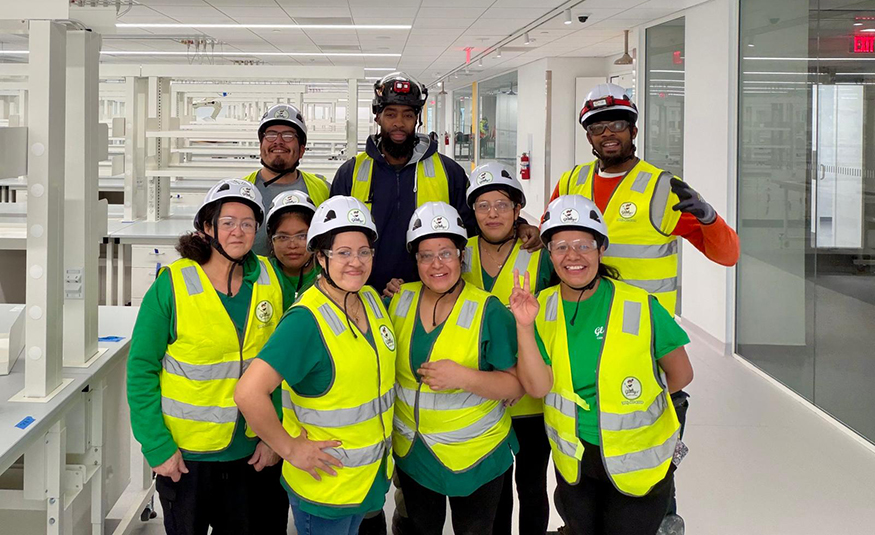
A team from Gladys Cleaning Service, where embracing diversity has allowed the company to grow from residential work to a business serving such clients as Johnson & Johnson, University Hospital and the Port Authority with plans for further expansion along the East Coast. - PROVIDED BY GLADYS CLEANING SERVICE
A team from Gladys Cleaning Service, where embracing diversity has allowed the company to grow from residential work to a business serving such clients as Johnson & Johnson, University Hospital and the Port Authority with plans for further expansion along the East Coast. - PROVIDED BY GLADYS CLEANING SERVICE
Diverse workforces help NJ businesses drive growth, leaders say
Martin Daks//June 8, 2026//


The basics:
- Diverse workforces help businesses improve innovation, decision-making
- Leaders link inclusion to stronger hiring, retention
- Entrepreneurs credit diversity with expanding market reach, growth
When Gladys Vonglahn arrived in the United States from Chile in 2001, she had ambition, a work ethic, and a dream — but little else. Two years later, she launched Gladys Cleaning Service, built initially around a flexible schedule and steady residential clients. Today, her Union-based company employs 18 full-time workers plus 30 or more temporary staff; serves clients including Johnson & Johnson, University Hospital, and the Port Authority of New York and New Jersey; and is expanding into New York City with plans to grow up the entire East Coast.
Vonglahn credits much of that growth to embracing diversity — both within her workforce and across the markets she serves. “We are 90% labor, and we bring diversity but with the same vision — we all make money,” Vonglahn said. Speaking Spanish and Portuguese has allowed her to build a team that reflects and respects different cultures and lifestyles, which she believes strengthens client relationships and employee loyalty.
For fellow small- and medium-sized business owners, her message is direct and personal. “If you are honest and follow your passion, the American dream is still here,” Vonglahn said. A diverse, unified team, she has proven, is the engine that drives it.
‘Smart business strategy’

In today’s competitive business environment, “Building a diverse workforce isn’t just the right thing to do, it’s a smart business strategy,” according to John Harmon Sr., founder, president and CEO of the African American Chamber of Commerce of New Jersey. He knows this firsthand, having built his career across banking and transportation logistics before dedicating himself to championing equitable business practices across the Garden State.
“Whenever you have a business, you want to put the best team in place to make the organization successful,” Harmon said. “People from different cultural experiences, different life experiences, they bring different perspectives to the table, and they arrive at conclusions based on different perspectives.”
That diversity of thought, he argues, translates directly to better decision-making and stronger results. His view is backed by data. Harmon pointed to research from McKinsey, PricewaterhouseCoopers, and EY – three of the world’s leading consulting firms – all of which have reached similar conclusions: companies with diverse workforces consistently outperform those without them.
Companies rolling back initiatives
The message to SMBs is clear. Diversity shouldn’t be treated as a box to check or a concession to pressure — it should be approached with the same creativity and intentionality that owners bring to every other part of running their business.
“Just like you find a way to be creative in your marketing strategy, or creative in your communications, or in how you execute, you have to apply those same principles to ensure that you have the best talent,” Harmon said.
Despite the compelling business case, Harmon acknowledged that some companies are pulling back. In New Jersey, he noted, sectors including technology, fintech, and pharmaceuticals have begun rolling back diversity initiatives, in part due to concerns over federal contracting requirements. But he cautioned business owners against letting political headwinds override sound strategy.
“At the end of the day, you can’t be close-minded when you’re looking to have a competitive business,” Harmon said. “People are spending money in the state to support these enterprises, and they have to be mindful of that.”
Strengthening ability to serve customers
A variety of utilities get it. Says PSEG Executive Director, Future of Work, Employee Experience and Talent Acquisition Steve Fleischer, “With more than 13,000 employees who deliver safe, reliable and affordable service, it’s essential they feel protected and supported. We also know that an inclusive, engaging workplace strengthens our ability to serve customers and enables us to attract and retain an exceptional workforce.”
He added that, “Our employee experience and engagement strategy is built on four pillars: people insights and action; connection and belonging; recognition and appreciation; and inclusion for all. Employee business resource groups and local inclusion teams reinforce this work by creating opportunities for development, connection and community service. With 59% of our employees union affiliated, we remain committed to strong partnerships our unions, along with ongoing training and recruiting new talent to meet New Jersey’s future energy needs.”
‘A business priority’
And at Camden-based New Jersey American Water, “We view diversity broadly as part of building a safe and inclusive culture — one where employees feel trusted, respected, valued, and able to contribute,” said Kimberly Schalek Downes, vice president, Business Development, Government & External Affairs. “Fostering an inclusive culture is both a business priority and an important part of serving our customers and communities effectively.”
In a highly regulated, customer-focused industry, “Success depends on trust, collaboration, and strong problem-solving,” she added. “Teams with varied perspectives can contribute to more effective approaches to operational challenges, talent development, and customer engagement. At New Jersey American Water, this has supported stronger community partnerships and broader outreach and workforce development efforts that help connect more people to careers in the utility industry.”

Schalek Downes said job skills programs like Water UP! and partnerships with skills organizations like fellow Camden organization Hopeworks, “reflect this effort by expanding awareness of utility careers while helping strengthen our long-term development of a workforce pipeline.”
The water utility also recognizes “that building an inclusive culture takes leadership commitment, ongoing attention and action tied to culture, talent development, and community engagement,” she added. “For us, that means supporting efforts that help create opportunities, encourage collaboration, and reinforce a workplace culture where employees feel their perspectives matter. One challenge for any company is balancing these efforts with day-to-day operational demands, budget considerations, and workforce realities. Progress is often built over time through communication, professional development, mentorship, community partnerships, as well as a workplace culture that helps employees feel valued and supported.”
Addressing challenges
Other New Jersey companies share that commitment. A diverse workforce “strengthens decision-making, drives deeper employee engagement, and enhances our understanding of the communities and customers we serve,” said OceanFirst Bank Senior Executive Vice President and Chief Administrative Officer Michele Estep. “In banking, trust, judgment, and relationships are essential. When employees bring different experiences and perspectives, it helps broaden thinking, identifies opportunities more effectively, and builds stronger connections with a broad customer base. It also supports talent attraction and retention, which is critical in a competitive labor market.”
At the bank, “Diversity and inclusion are part of how we create a stronger culture, develop talent, and deliver better outcomes for employees, customers, and shareholders,” she added. “Our Employee Resource Group, OFB LEAD, was established to create opportunities for connection, awareness, mentoring, and professional growth across the organization — helping employees build relationships, learn from one another, and feel a stronger sense of belonging. In parallel, our leadership development and culture-based training is reinforced through the employee experience, from onboarding through career growth.”
Some companies struggle to prevent diversity initiatives from becoming performative or box-checking exercises, and to hold leadership accountable for real, sustained progress. How does OceanFirst address these challenges?
“The key is making inclusion part of how the organization operates, not a stand-alone program,” she explained. “At OceanFirst, we focus on measurable actions and consistent dialogue with employees. That includes monitoring representation and hiring trends, tracking engagement feedback, providing manager education, and discussing progress with leadership and the board of directors.”
Listening to employees
Accountability matters, she said. “Because culture does not change through statements alone. It changes when leaders consistently reinforce respect, fairness, development, and opportunity in day-to-day decisions. We also listen closely to employee feedback so we can refine our approach and stay focused on what is meaningful, not just what is visible.”
Ensuring the experience is consistent across a growing organization with different functions, geographies, and business priorities “is a challenge we focus on constantly,” Estep said. “Culture is built locally, team by team. This requires not only setting the right strategy but making sure it is felt in the day-to-day employee experience. Resource constraints are always real, which is why at OceanFirst we focus on efforts that can be sustained and embedded into existing processes rather than creating initiatives that are difficult to maintain.”
[C]ulture does not change through statements alone. It changes when leaders consistently reinforce respect, fairness, development, and opportunity in day-to-day decisions.
– Michele Estep, senior EVP and chief administrative officer, OceanFirst Bank
Prioritizing such actions as “strong onboarding, employee feedback, fair talent practices, and programs that build connection and development is a commitment at all levels in our company,” she related. “The objective is not to do everything at once; it is to make steady, credible progress in ways that are practical and durable. We communicate the value of diversity by connecting it directly to our culture, our business, and our responsibility to one another. It begins with leadership messaging, but it also has to be reinforced through training, onboarding, employee resource groups, internal communications, and the everyday expectations we set for managers and teams.”
Alvin Romero, president and CEO of Nutley-based Excel Facility Services Group, has scaled his company from a single market to 28 states, with 350 employees and more than 100 subcontractors — and he credits diversity as a core driver. “Different demographics bring different ideas and innovation, and that increases your profits,” Romero said. “As a service provider, it gives us expanded market reach.”
Excel is now a preferred vendor for all PSE&G facilities, a relationship Romero built in part through chamber connections. His advice: “It’s all connected to your market. A diverse team doesn’t just reflect the communities you serve — it opens doors to them.”
Come together
For small and mid-sized business owners, building a diverse workforce isn’t just a feel-good strategy — it’s a competitive advantage, according to John Lucas, president of the Statewide Hispanic Chamber of Commerce of New Jersey. Lucas has spent his career helping entrepreneurs of all backgrounds grow their businesses, and he sees diversity as a fundamental driver of economic strength.
“While there may be challenges that are specific to minority business owners, the reality is that our challenges are more broadly for small businesses in general,” he explained. “That shared experience, is precisely why diverse networks and inclusive training programs are so valuable — they bring together people with different backgrounds who are all solving the same fundamental problems.’
His organization’s membership tells that story directly. Of nearly 11,000 members, roughly half are non-Hispanic. “We don’t say only a woman can be in this, or only a Hispanic — we’re open to all,” Lucas said. “And I think that’s a very powerful and important message.”
He believes that openness makes the chamber stronger and its programs more effective, “because diverse perspectives lead to better solutions.” Lucas cites the chamber’s Entrepreneurial Training Program as a prime example of inclusion in action. The free, 14-week program – supported by private and public sponsors – welcomes business owners from every background, from food vendors to ballet studios to aircraft industry professionals.
“I’ve had everybody from food vendors to ballet studio owners — in the last class, we had somebody who did aircraft machinery,” Lucas said. “It is an amazing group of people.”
The results speak for themselves. Graduates like Vonglahn and Romero both went on to join the chamber’s board and mentor the next generation of entrepreneurs.