Sign In
Upcoming Event
 Free Newsletter


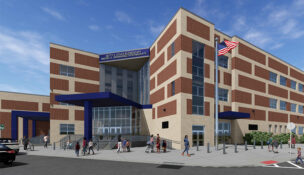
New Jersey City University's Hepburn Tower - PROVIDED BY NEW JERSEY CITY UNIVERSITY
New Jersey City University's Hepburn Tower - PROVIDED BY NEW JERSEY CITY UNIVERSITY
NJCU releases 1st Academic Master Plan
Matthew Fazelpoor//February 19, 2024//


Just before the weekend on Feb. 16, New Jersey City University (NJCU) introduced its first Academic Master Plan (AMP).
Designed by the Division of Academic Affairs, the Office of the Provost authored the AMP. The school says the plan is the result of a months-long collaborative process between a number of university community stakeholders. That work also included a Mission Refresh Survey.
It’s the latest in a string of notable announcements for the Hudson County institution. NJBIZ has reported on some of those, such as new partnerships, promising enrollment numbers, updated mission and vision statements, and more.
Four new institutional pillars drive the AMP:
- Student Success and Retention
- Community Engagement
- Culture of Continuous Improvement
- Financial Stewardship and Responsibility
“The new Academic Master Plan is the culmination of months of close collaboration between administration, faculty, students, and professional staff,” said Fran Moran, president of the University Senate. “It provides a solid blueprint to guide this institution on how we continue to best serve our students and our community.”

NJCU officials developed measurable organizational actions (KOAs) and key performance indicators (KPIs) to achieve 10 AMP goals:
- Prioritize academic programs that provide jobs where students can use their degrees.
- Emphasize civic and community engagement within all academic disciplines.
- Ensure a community of care for all NJCU students, including faculty and staff involvement in student success.
- Ensure that principles of justice, equity and inclusion are taught and applied across all curricular and co-curricular programs and services.
- Ensure that every student can be mentored through research, internships or other educational experiences.
- Ensure that environmental conditions are optimized for teaching and learning.
- Ensure that curricular content and degree offerings are responsive to the needs of the labor market.
- Strengthen and develop academic programming that demonstrably provides opportunities for students to attain economic mobility.
- Invest in academic programming that yields persistent and high levels of enrollment, retention, student learning, applicable licensing scores and career placement.
- Ensure long-term financial sustainability of the academic portfolio.
Starting with students
On the whole, NJCU President Andres Acebo said the AMP offers an outcomes-oriented approach. He said the plan deliberately focuses on where students’ journeys and stories begin.

“This perspective is at the heart of our mission of meeting our students where they are and giving them the tools to empower their lives,” said Acebo.
According to the university, the introduction of the AMP is the latest step in the strategic revitalization of its mission.
“New Jersey City University’s Academic Master Plan is a guide to operationalizing our mission,” said Donna Breault, provost and senior vice president of academic affairs. “It speaks to our shared lived experiences as a university community, and it helps us to create the conditions through which our community will continue to thrive.”
“Our university’s first comprehensive Academic Master Pan was an intentionally community-driven endeavor whose process exalts the potential of shared governance in higher education – a data-driven plan that was written by our campus, for our community,” Acebo added.
Stay tuned for more in the Higher Education Spotlight in the March 4 issue of NJBIZ. Then, we sit down with Acebo to discuss all things NJCU and what’s ahead in 2024.