Sign In
Upcoming Event
 Free Newsletter

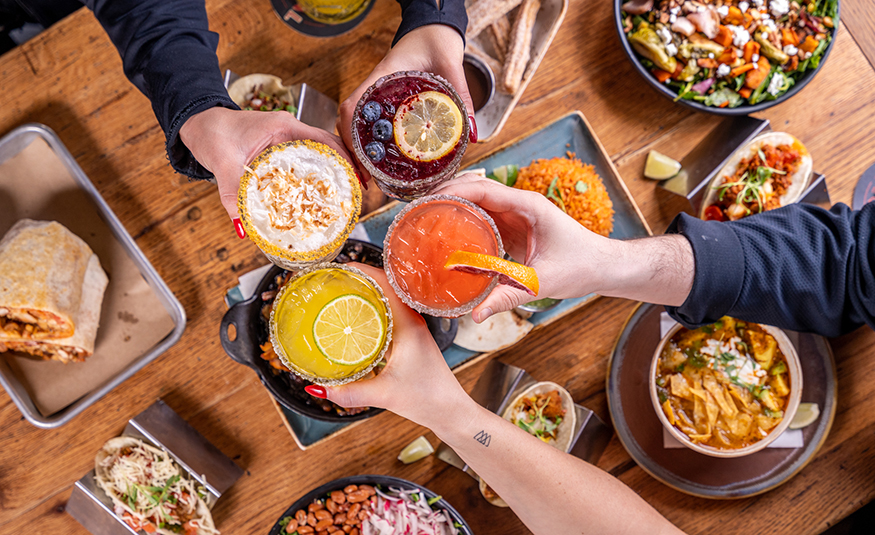
Mocktails at Central Taco in Haddon Township - PROVIDED BY SEGEL ASSOCIATES
Mocktails at Central Taco in Haddon Township - PROVIDED BY SEGEL ASSOCIATES
Popular South Jersey bar town gets on board with ‘Dry January’
Kimberly Redmond//January 3, 2025//


 Listen to this article
A Camden County town known for its bar scene is trying to make it easier for people who want to start the new year by cutting out alcohol.
In Haddon Township – one of the only towns in the county where restaurants and bars can serve alcohol – several establishments will offer special non-alcoholic drink offerings this month.
During the monthlong “Dry January” fast, individuals abstain from drinking alcohol, whether it be wine, beer or cocktails. The practice has grown steadily in popularity since the trend emerged a decade ago in the U.K.
The interest comes as more people become intrigued by the sober-curious movement. According to market researchers Civic Science, 42% of American adults say they are trying to be more mindful about their relationship with alcohol. That’s up from 33% two years ago, Civic Science said.
Randall Teague, Haddon Township’s longtime mayor, noted the increasing interest in Dry January. And while Haddon Township has several great bars and beer gardens at seasonal events, the mayor said, “The new year is always a great time to try something new and healthy.”

According to the Haddon Township Business Improvement District, zero-proof Dry January specials are available at:
- Reunion Hall – Blueberry Cobbler and Cinnamon Hibiscus Refresher
- Keg and Kitchen – Chai Espresso Tini, Cure All (carrot juice, turmeric-honey syrup, fresh lemon ginger beer), Green Dream (cucumber mint, fresh green apple and spinach juice, fresh lime, matcha syrup), Frosty Fizz (white cranberry, pineapple, peach juices, topped with N.A. sparkling wine) and Berry Bliss (fresh blackberry sugar & lime)
- Rexy’s – Cranberry Basil Sangria (cranberry, orange juice, club, garnished with apples, cranberries & basil), Appley-tini (apple sauce, simple syrup, fresh lemon, garnished with dried oranges), Sweet Sunrise (orange juice & grenadine, garnished with orange slice and cherry), Pineapple Mint Mojito (muddled mint, pineapple juice, simple syrup, lime, club), Lime Margarita (fresh lime & lemon juice, simple syrup, club, salt rimmed) Chocolatey Martini (milk, chocolate syrup, shaken, served cold, crushed Oreos rim) and Cosmictini (cranberry, lime, club, sugar rim, dried lemon)
- Central Taco – Any margarita can be served as a mocktail
Additionally, PJW Restaurant Group serves non-alcoholic beer at its Haddon Township location all year long.
Many of the other establishments always have mocktails on the menu, a spokesperson for Haddon Township Business Improvement District noted.
Ending prohibition
Elsewhere in Camden County, residents of Haddon Heights voted on Election Day 2024 to lift a 120-year-old ban on alcohol sales. Roughly 62% of the 3,400 ballots cast were cast in the non-binding referendum supported the idea of permitting retail consumption licenses.
Before ‘Dry January’
Taking place the day before Thanksgiving, Green Wednesday has become a popular day for special cannabis promotions. Read more >>
The municipal council still needs to create and adopt new ordinances to formally end the long-standing prohibition.
Currently, there’s about two dozen “dry towns” left in New Jersey. South Jersey houses the majority of those remaining, in rural Cumberland and Salem counties, according to the Philadelphia Inquirer.
In recent years, local communities like Moorestown have held successful referendums in support of allowing breweries, distilleries and winery salesrooms in the long-dry municipality.
Despite the end of Prohibition in 1933, the community with Quaker roots continued to restrict such sales. Notwithstanding referendums in 1935 and 1953, the Moorestown laws remained in place until 13 years ago, when voters approved sales in the area of the Moorestown Mall.
Now, the mall boasts several dining spots. Meanwhile, work is underway to convert the Community House of Moorestown’s long-unused swimming pool into a microbrewery.