Sign In
Upcoming Event
 Free Newsletter

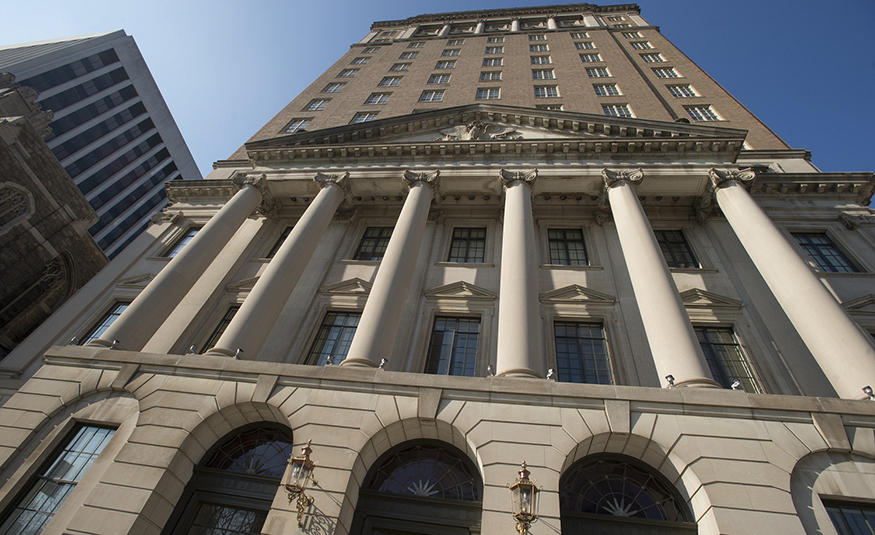
Rutgers University-Newark's Ruth Bader Ginsburg Hall, 15 Washington St. in Newark - PROVIDED BY RUTGERS UNIVERSITY
Rutgers University-Newark's Ruth Bader Ginsburg Hall, 15 Washington St. in Newark - PROVIDED BY RUTGERS UNIVERSITY
Rutgers-Newark’s impact on Newark and Essex County
Tonya Smith-Jackson//July 27, 2026//


The basics:
- Rutgers-Newark celebrates 80 years of impact in Newark, Essex County
- University serves 11,667 students, has 136,000 alumni worldwide
- Community partnerships address crime, housing, health, AI and entrepreneurship
What drew me to Rutgers University-Newark was the extraordinary possibilities that emerge when a strong public research university and a thriving city and county grow together.
There is a shared flourishing, an understanding that the success of Rutgers-Newark is tied to the success of Newark and Essex County. The prosperity of our region is strengthened by the 80-year presence of Rutgers in education, research, creativity and community engagement. We are in a powerful cycle of mutual growth.
The questions that matter most to society are not distant from us — they are all around us. They inspire our scholarship, inform our teaching, and create opportunities for our students to learn through real-world engagement.
At the same time, the co-discoveries generated by our faculty, staff, students and community experts – those with lived experience – contribute new ideas, new solutions, new businesses and new possibilities. And these are extended across America and the world.
Few schools are as deeply embedded in their communities while maintaining the kind of academic excellence that returns on the investment for students and alumni. We are recognized as a Carnegie Community-Engaged institution because we integrate teaching, research, and service with community partnerships.
Rutgers-Newark is also nationally recognized as a Carnegie Opportunity University because we excel at creating pathways to success for students from many different backgrounds. We’re ranked No.5 nationally for Social Mobility (No. 1 in New Jersey), No. 75 among National Universities, No. 36 among Top Public Universities, and No. 45 among Best Colleges for Veterans, according to U.S. News and World Report.
From the mayor
Newark Mayor Ras Baraka said it best when he congratulated Rutgers–Newark on its 80th anniversary this year.
“Our partnership with RU-N extends way beyond enrolling and graduating generations of Newark students, many of them first-generation, and creating clear pathways to careers,” he said. “It fosters critical public health initiatives, small business development, youth mentorship and scholarships, and millions of dollars of research investment into our neighborhoods, advancing solutions in housing, criminal justice reform, and environmental justice.
“RU-N truly represents the best in academic institutions that rise up from deep roots in their community and yield fruit that truly is sustenance for the people of our city and beyond,” added the mayor.
Our community of 11,667 students, more than 2,000 faculty and staff and 136,000 alumni worldwide has left an indelible mark on Essex County.
We bolster the local economy as patrons, researchers, residents, volunteers, entrepreneurs, corporate employees, artists and leaders in local government. Our alumni own 339 businesses in Essex County, including 41 in Newark. Our faculty influence state and local policies, benefiting residents throughout New Jersey.
Essex County partners
What makes our work so powerful is that we collaborate with community members not as research subjects but as partners, grounding scientific inquiry in the lives and experiences of residents, rather than taking a more traditional academic approach, which is often impersonal and detached.
The Newark Public Safety Collaborative, a School of Criminal Justice initiative, maps and analyzes crime and community data in partnership with community members and city government to collectively develop crime prevention responses.
It has contributed to Newark’s lowest crime rates in decades: a 65% reduction in homicides, a 34% decrease in robberies, and more than a 35% reduction in thefts from autos.
More: Essex County Focus
The Center on Law, Inequality and Metropolitan Equity (CLiME) publishes research addressing rent burdens, environmental justice and housing inequality. CLiME also identifies ways in which elected officials can expand access to fair and affordable housing.
The Institute for Data, Research and Innovation Science (IDRIS) focuses on improving healthcare, education, public safety, and community well-being through the ethical use of AI and data science.
Programs at Rutgers Business School have a strong legacy of helping thousands of local entrepreneurs launch and develop their careers and businesses.
The Center for Urban Entrepreneurship and Economic Development (CUEED) integrates scholarship with private industry, government and nonprofits to spur entrepreneurial and economic growth. It has assisted more than 1,000 small business owners, including 40% based in Newark.
The Entrepreneurial Pioneers initiative, which helps first-generation business owners develop their fledgling companies, has supported 370 entrepreneurs in New Jersey, including 108 who have businesses in Essex County and 49 with businesses in Newark.
Newark is home to the largest container port on the U.S. East Coast and serves as a global gateway. So, it’s fitting that Rutgers–Newark has the strongest, most prolific supply chain researchers worldwide, including the Supply Chain Analytics Institute, which has been using AI-enabled supply chain advancement and risk management for more than 10 years.
‘Greatest contributions’
But our greatest contributions to Newark and Essex County are RU-N graduates — and the opportunities we create for students, over 50% of whom are first-generation and 56% of whom are Pell-eligible.
RU-N graduates earn $20,752 above the median for graduates of four-year colleges and universities nationally, according to data from the Department of Education. Ninety-two percent were working full-time or continuing their post-secondary education within six months of graduation.
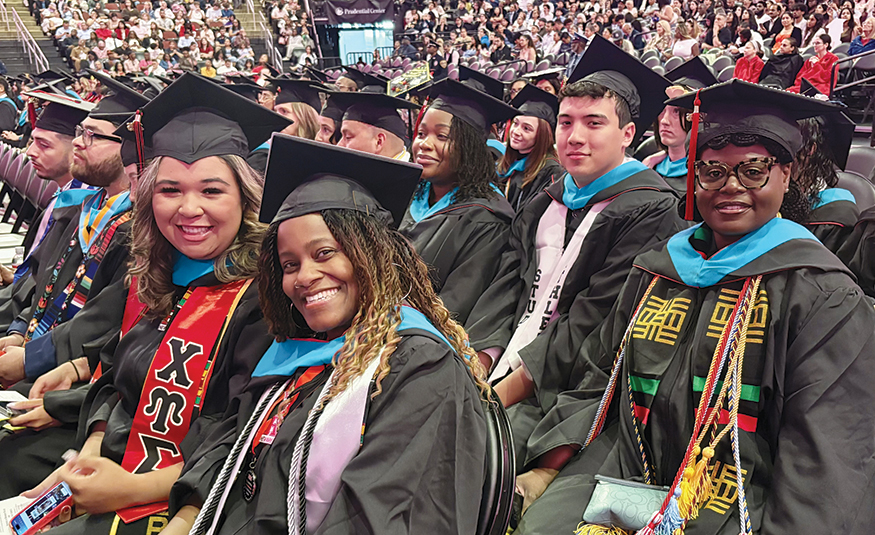
Making higher education accessible to Essex County’s working- and middle-class students has been Rutgers–Newark’s North Star from the beginning. Established in 1908 as a small constellation of schools, they eventually consolidated to become the University of Newark before merging with Rutgers University in 1946.
The move expanded Rutgers’ statewide mission to include the children of immigrant laborers in the state’s largest industrial center — and those who were laborers themselves.
Just like RU-N students today, many were bright, ambitious Essex County residents, determined to work hard and attain a better life for themselves, their families, and their communities.
Like many of them, RU-N is rooted in Newark, and its trajectory is limitless.
I will end with a tribute to both my new home in Essex County and my 85-year-old mother, who lives and works on our family farm in North Carolina. When I speak of the miracle that is Rutgers–Newark, I often end by saying, “There is really no better place to be than this city and this university.”
A deeply spiritual woman and believer in righteous and truthful speech, she typically adds, “Except heaven.”
Tonya Smith-Jackson is chancellor of Rutgers University–Newark and a resident of Newark. An industrial and systems engineer with extensive leadership experience in higher education, she has also held positions in industry and government, including the National Science Foundation.