Sign In
Upcoming Event
 Free Newsletter

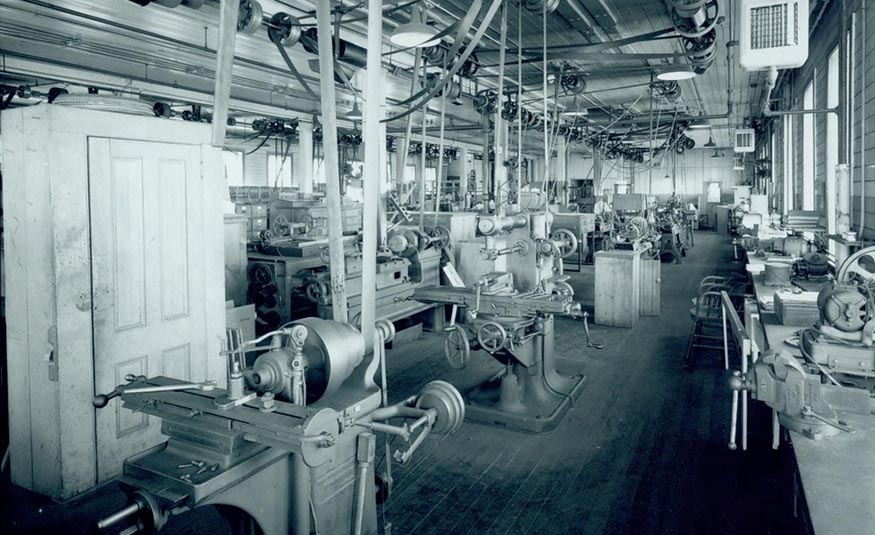
The second-floor precision machine shop at Thomas Edison's West Orange laboratory complex, shown before renovations. - PROVIDED BY NATIONAL PARK SERVICE/PUBLIC DOMAIN
The second-floor precision machine shop at Thomas Edison's West Orange laboratory complex, shown before renovations. - PROVIDED BY NATIONAL PARK SERVICE/PUBLIC DOMAIN
Essex County helps build New Jersey’s innovation economy
Matthew Fazelpoor//July 27, 2026//


The basics:
- HAX Newark has helped launch and grow dozens of hard-tech startups
- NJIT, Montclair State are expanding research and innovation programs
- Audible is investing in Newark’s entrepreneurs and business community
- CoreWeave‘s growth highlights Essex County‘s AI innovation potential
Innovation has long been woven into the fabric of Essex County. From Thomas Edison’s laboratories in West Orange to Newark’s manufacturing strength and engineering tradition, the region has helped shape the technologies that transformed modern life.
Today, that tradition is evolving into something new. Across Essex County, universities, startups, global technology companies and public-private partnerships are forging an innovation ecosystem that stretches from research labs to AI infrastructure, from entrepreneurs launching new ventures to established companies investing in the communities where they operate. Together, they are creating the talent, ideas and institutions that will shape New Jersey’s next economy.
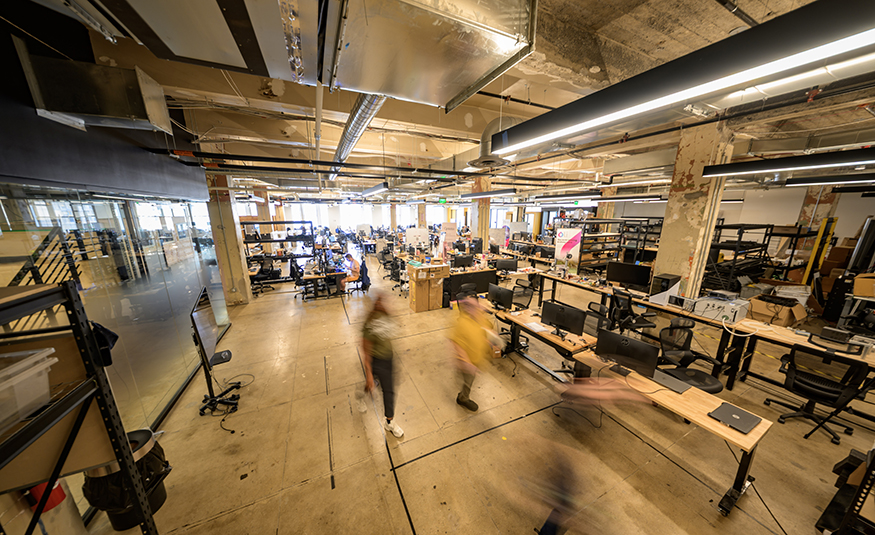
One of the clearest examples came in April 2024, when HAX Newark officially opened as New Jersey’s first Strategic Innovation Center, giving hard-tech founders access to engineering support, investors and lab space in the heart of downtown Newark.
Since then, the program has become one of the state’s most productive startup engines. According to SOSV Partner and HAX Chief Science Officer Susan Schofer, approximately 25 companies now occupy the space day-to-day, while roughly 65 startups have come through the program since its earliest days.
More important, those businesses are beginning to stay.
‘A mini ecosystem’

“It takes a bit of time for these companies to grow, but what we’re really seeing now is we have got a mini ecosystem here,” Duncan Turner, general partner at SOSV and global managing director of HAX, recently told NJBIZ. “We have founders that are staying here, choosing to stay here. They’re building their companies here. We’ve got companies that, for the first time, are outgrowing the space here and have now found places in Jersey. That’s what we wanted to make happen, and that is happening.”
That momentum is now expanding beyond Newark. SOSV, along with Princeton Plasma Physics Laboratory and the New Jersey Economic Development Authority, recently announced the upcoming HAX Plasma Forge at the historic SRI campus in Princeton, while startups graduating from Newark continue to find homes throughout the region. Still Bright, for instance, recently announced it will establish an HQ at NEST in Kenilworth, illustrating how innovations seeded in Essex County are helping grow a broader statewide ecosystem.
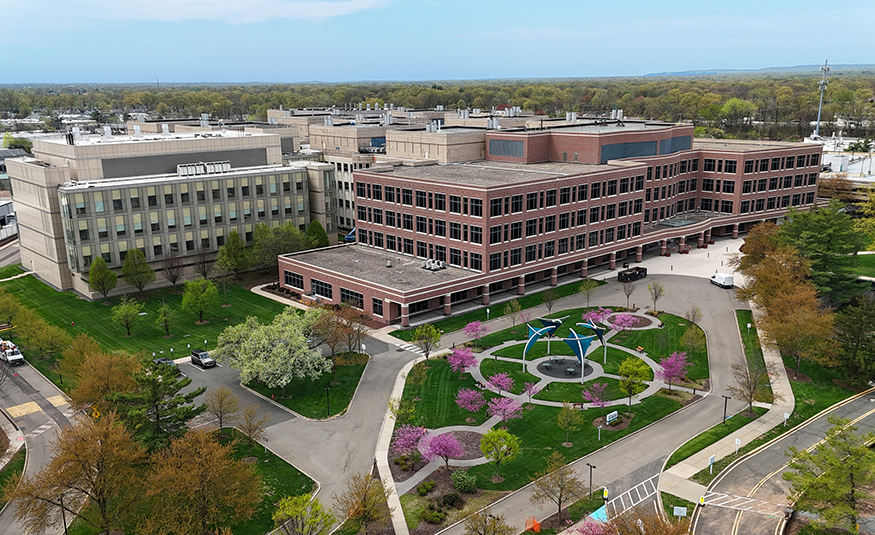
Just blocks away from HAX, New Jersey Institute of Technology is helping supply the next generation of ideas – and companies. Last May, NJIT and the NJEDA launched the NJII Venture Studio, the state’s 10th Strategic Innovation Center and the second in Newark (after HAX). Designed to help researchers turn discoveries into companies, the Venture Studio aims to launch 10 startups over five years, with each eligible for up to $1 million in support.


“We solve real-world problems — and the Venture Studio will be a critical addition to our efforts to turn R&D into products and services that can improve people’s lives,” said NJIT President Teik Lim at the time.
New Jersey Innovation Institute, an NJIT corporation, President Michael Johnson said, “We look forward to fostering innovation through our NJII Venture Studio initiative.”
Real-world applications
The Venture Studio builds on NJIT’s broader role as one of New Jersey’s leading technology universities. The institution conducts more than $170 million in annual research while expanding programs that move innovation beyond the classroom. Earlier this year, NJIT and Verizon announced an expanded workforce initiative offering AI, cybersecurity and IT training, including a new AI Literacy micro credential and Cybersecurity Community of Practice designed to prepare New Jersey residents for careers in emerging technologies.

More: Essex County Focus
The university also demonstrated how those capabilities can be applied beyond campus during the 2026 FIFA World Cup. Students and faculty developed transportation planning tools with the New Jersey Department of Transportation, created an AI-powered fan sentiment platform that evolved into the public-facing NJ Fan Go Guide in partnership with CGI, and designed community-focused fan zones through the Hillier College of Architecture and Design. NJIT paired those projects with one of the region’s most visible World Cup campaigns, showcasing the university across transit systems and fan destinations as global attention turned to New Jersey.
As Aryeh Ganz, investment manager of the NJII Venture Studio, recently wrote for NJBIZ, “The next chapter of its innovation economy will depend less on whether the state can generate discoveries and more on whether we continue building the culture and infrastructure that consistently turns those discoveries into enduring companies. The institutions doing that work have arrived, and they are just getting started.”
Committed to Newark
Innovation in Essex County is also measured by the companies choosing to invest in the communities where they are headquartered. For nearly two decades, Audible has made Newark more than its global headquarters, positioning the city as a laboratory for urban innovation and entrepreneurship.

In October 2025, the company opened The Pillars, a 15,000-square-foot retail and community hub in Newark’s Arts & Education District that CEO Bob Carrigan described as Audible’s “most ambitious investment yet in Newark’s future.” Designed as an anchor for local entrepreneurs and community gathering, the space combines locally owned retail, wellness programming, public listening booths and flexible event space while reinforcing the district as a destination for residents and visitors alike. The project reflects Audible’s broader commitment to strengthening downtown Newark – not simply as the place where it is headquartered, but as a community where entrepreneurs, creators and residents can thrive together.
“When we invest in Newark’s success, we create a more vibrant environment that attracts talent, enriches our company culture, inspires innovation. So, it’s about building a stronger city that benefits everyone,” Carrigan said at the opening.
Supporting fellow businesses
The Pillars complements Audible’s Business Attraction Program, launched in 2023 to help businesses expand or relocate to Newark through grants, mentorship, networking and relocation assistance. By 2026, the initiative had supported more than 30 businesses, invested $4.1 million, activated more than 95,000 square feet of commercial and retail space, and created or sustained 174 jobs across downtown Newark.
This spring, the program welcomed HealHaus, Newark Culture Club and Legacy 27, continuing Audible’s effort to strengthen the city’s entrepreneurial ecosystem while building on earlier investments such as Sweet Jeans Kitchen & Espresso Bar and other locally owned businesses.

“Every business that opens its doors in Newark through our Business Attraction Program is a testament to the entrepreneurial spirit of the city,” said Aisha Glover, Audible’s global head of urban innovation. “With HealHaus, Newark Culture Club and Legacy 27 joining our growing community of supported founders, we’re proud to continue building an ecosystem where diverse entrepreneurs can thrive, create jobs and strengthen the fabric of our city.”
Building the future
Elsewhere in Essex County, Montclair State University is expanding its role in New Jersey’s innovation economy by growing both its research enterprise and its position as one of the state’s leading communications and media institutions.
Just last week, the university broke ground on a $120 million, 110,000-square-foot Interdisciplinary Science Building that will triple laboratory capacity, expand interdisciplinary research and create dedicated space for corporate and community partners. The facility will include state-of-the-art teaching and research laboratories, technology-driven classrooms, collaborative workspaces and an innovation-focused “Imaginarium,” while reserving space for an industry partner to locate research activities on campus.


“At Montclair, we strive to offer an academic experience that is both accessible and excellent. The Interdisciplinary Science Building is part of that commitment,” President Jonathan Koppell said at the July 22 groundbreaking. “Fulfilling our mission requires constant innovation and investment to ensure we provide the best experience possible for our students. By creating modern laboratories, collaborative spaces and research opportunities, we ensure our students receive an education worthy of their investment while preparing them to shape the future of New Jersey.”
Beyond research, Montclair continues to leverage its nationally recognized College of Communication and Media as a statewide asset. The university was selected this year to operate NJ PBS, returning New Jersey’s public television network to an in-state operator while creating new opportunities for journalism, public affairs programming and workforce development.
During the 2026 FIFA World Cup, Montclair State operated a Global Media Center and Content Creation Hub for credentialed journalists, broadcasters and digital creators covering the tournament. The facility offered professional production studios, podcast and live broadcast capabilities, and collaborative workspaces just minutes from MetLife Stadium (dubbed New York New Jersey Stadium during the tournament), while giving students hands-on experience supporting one of the world’s largest sporting events alongside industry professionals.
From a garage in Roseland …
Few companies better illustrate the success of New Jersey’s – and Essex County’s – growing innovation ecosystem than CoreWeave.
The AI infrastructure company began in a garage in Roseland, growing and evolving from a crypto mining startup into one of the world’s leading providers of cloud infrastructure for artificial intelligence. Since then, the Essex County-born company, which is now based in Livingston, has followed precisely the trajectory that innovation ecosystem leaders hope can be emulated by other startups: building locally, scaling globally and continuing to invest at home.
CoreWeave’s growth has accelerated since its 2025 initial public offering, with the company joining the Nasdaq 100, expanding its Livingston headquarters and developing a major AI data center at the NEST campus in Kenilworth.

This year alone, the company announced major long-term agreements with Nvidia, Meta, Anthropic and Jane Street, among others. CoreWeave is also among the founding partners of the New Jersey AI Hub, alongside institutions including Princeton University, NJIT and the state government, helping anchor a broader AI strategy.

As CEO Michael Intrator wrote in his April shareholder letter: “There are moments in history when a new technology stops being a curiosity and becomes the foundation for everything that follows, when even the fiercest skeptics become believers. We are in one of those moments. Artificial intelligence is no longer a bet on the future; it is the present.”
He also reflected on the company’s New Jersey roots. “Our story began in a New Jersey garage before AI became inevitable,” Intrator wrote.
That journey – from a garage in Essex County to powering many of the world’s leading AI model developers – has become one of New Jersey’s most notable recent innovation success stories and an example of exactly the kind of company the state’s growing innovation ecosystem seeks to produce.
Essence of Essex County
Taken together, these milestones tell a larger story. Essex County’s innovation economy is not being built around a single company, institution, neighborhood, or municipality. It is growing through a network of universities, entrepreneurs, investors, global employers, public partners, and key stakeholders that reinforce one another.
The organizations and milestones highlighted here represent only a portion of that broader ecosystem. Across Essex County, established companies are investing in their communities, universities are expanding research and workforce development, entrepreneurs are launching new ventures, and public-private partnerships are creating new pathways for innovation. Collectively, those efforts are strengthening the region’s position as one of New Jersey’s leading centers for technology, entrepreneurship and economic growth.
Innovation has always been part of Essex County’s story. Through the efforts highlighted here – and countless others across the region – it continues to prove that innovation is one of its defining strengths, not simply part of its history, but the foundation of its future.