Sign In
Upcoming Event
 Free Newsletter

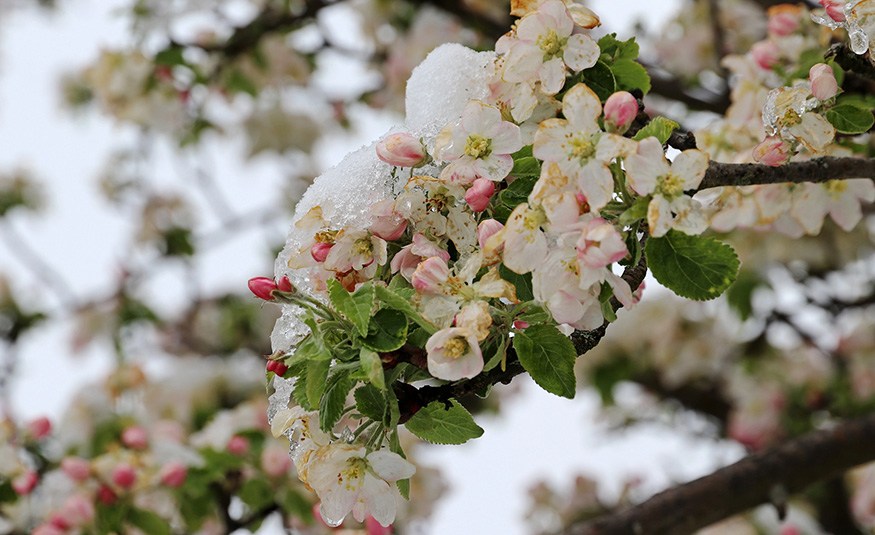
PHOTO: DEPOSIT PHOTOS
PHOTO: DEPOSIT PHOTOS
NJ declares emergency over $300M crop freeze losses
Matthew Fazelpoor//May 20, 2026//


The basics:
- Sherrill declares statewide emergency after April freeze
- Unusual weather swing causes $300M in crop damage
- NJ Department of Agriculture reports 30%+ losses
- Governor said impacts could affect businesses beyond farms
Gov. Mikie Sherrill declared a statewide State of Emergency May 20 following devastating agricultural losses from an April freeze that officials say caused more than $300 million in crop damage across New Jersey.
Issued through Executive Order No. 18, the declaration follows damage assessments by the New Jersey Department of Agriculture and federal partners showing widespread losses exceeding 30% across many crops. Some farms reported near-total seasonal destruction.
The damage resulted from an unusual weather swing in mid-April. Unseasonably warm temperatures pushed crops into bloom before a sudden freeze dropped temperatures into the 20s between April 19–22.
“New Jersey’s agricultural sector is a vital engine of our economy; it is the very reason we bear the name the Garden State,” said Sherrill. “The April freeze caused serious damage to our growers, and those losses demand decisive action. This executive order mobilizes a whole-of-government recovery effort out of Trenton, cutting through bureaucracy and accelerating results for impacted farmers and families.
“Our farming families are hurting, and I won’t stand by and let it happen,” she continued.
What happens next
The order activates statewide emergency coordination, allows regulatory flexibility to speed recovery, and directs agencies to support affected growers while aligning with potential federal assistance efforts. Officials said the goal is to stabilize farm operations, protect local agricultural economies, and reduce further financial losses heading into the next growing season.
New Jersey Secretary of Agriculture Ed Wengryn said the declaration provides immediate support tools for farmers while reinforcing the need for broader relief.

“Gov. Sherrill’s declaration of a State of Emergency sends a clear message that New Jersey stands behind its farming community in the wake of the April freeze,” Wengryn said. “This executive order … opens the door to immediate assistance for our tree fruit and berry growers, while laying the groundwork for broader relief ahead.
“As our farmers work to recover, we encourage New Jerseyans to continue supporting them by buying local. When the state and federal government move together, our farmers are stronger for it,” Wengryn added.

“This freeze was unlike anything our growers have experienced in decades, and the damage is staggering. An entire season of peaches, apples, and grapes were almost entirely decimated in a matter of hours. Many other fruits are also suffering significant losses,” said U.S. Sen. Cory Booker, D-N.J.
“New Jersey farmers urgently need federal support to recover from this disaster, and swift approval of the state’s disaster designation request is an essential first step to helping them rebuild,” Booker continued.
This freeze was unlike anything our growers have experienced in decades, and the damage is staggering.
– U.S. Sen. Cory Booker, D-NJ
Disaster designation request
Sherrill also formally requested a federal Secretarial Disaster Designation from the U.S. Department of Agriculture in a May 20 letter to USDA Secretary Brooke Rollins. The request is for “several counties in New Jersey that sustained extensive agricultural losses” after the freeze.
She wrote:
Growers have reported substantial, and in some cases, catastrophic damage across many crop categories, including but not limited to peaches, cherries, pears, grapes, plums, strawberries, blueberries, blackberries, and apple varieties, with the possibility that additional crops may prove affected as the growing season continues. The full impact from this event is yet to be known, but what is certain is that this event resulted in widespread damage across our entire state rather than isolated hardship. Early estimates indicate that losses from this freeze event could reach or exceed $300 million statewide.
Sherrill pointed to New Jersey Department of Agriculture loss assessments, which showed damage exceeding the federal disaster threshold across multiple regions and crop types, with some growers reporting losses approaching or surpassing 90% in key fruit crops.
Today, I requested a Disaster Declaration from U.S. Secretary of Agriculture @SecRollins to unlock federal relief for New Jersey farmers facing devastating losses following an unprecedented April freeze event.
I urge her to issue this designation so farmers can recover, sustain… pic.twitter.com/SCRyNneLsj
— Governor Mikie Sherrill (@GovSherrillNJ) May 20, 2026
She also highlighted the broader economic importance of agriculture in New Jersey. The sector generates more than $1.5 billion in annual wholesale value and supports over 25,000 jobs across fruit and vegetable farming, nursery and greenhouse production, field crops, cut flowers and livestock, she noted.
‘Beyond the field’
The governor’s letter continued:
Impacts from this freeze event also extend beyond the field. Downstream businesses, agritourism partners, retail establishments, and local economies are also likely to feel significant economic strain as a result of reduced farm output. The financial pressure caused by this event will make it difficult for affected growers to prepare for the 2027 season without immediate federal relief. Emergency assistance is essential to preserve farm operations, stabilize local economies, and protect New Jersey’s agricultural capacity for future seasons.
Sherrill added that the requested designation “will provide critical access to support needed by growers to recover from this event.”
Downstream businesses, agritourism partners, retail establishments, and local economies are also likely to feel significant economic strain as a result of reduced farm output.
– Gov. Mikie Sherrill
State officials say the freeze ranks among the most economically damaging single weather events for New Jersey agriculture in recent years, with losses already confirmed in the hundreds of millions and still being fully tallied across multiple crop sectors.
As recovery efforts move forward, the focus now turns to federal approval and longer-term stabilization for a farming industry facing not just immediate losses, but the prospect of cascading impacts into future growing seasons.
Please stay with NJBIZ for the latest on this developing situation.