Sign In
 Free Newsletter

Bayonne-based entrepreneur on a mission to teach what CBD is – and is not
Kimberly Redmond//June 24, 2024//
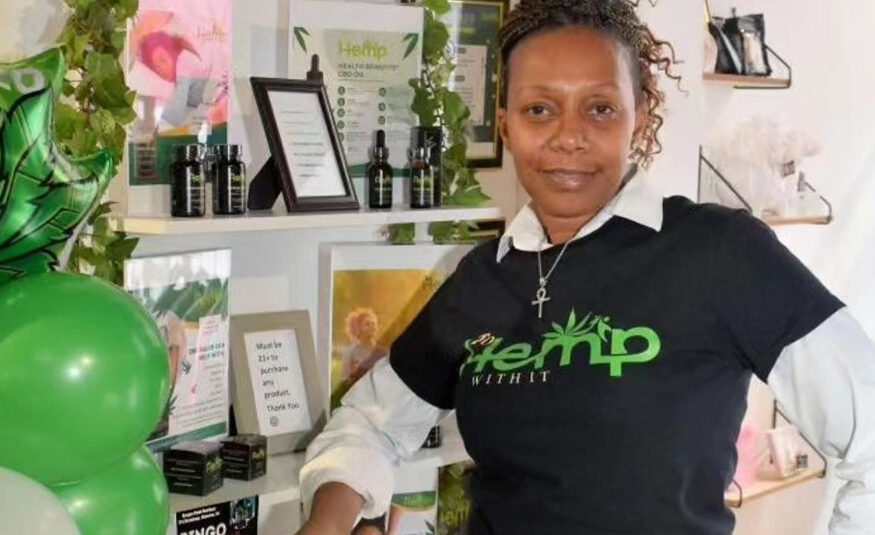
Stephanie Johnson, the founder and owner of To Hemp With It – a premium CBD and hemp wellness brand based in Bayonne – has made it her mission to help consumers sort through the widely held misconceptions about the products. - PROVIDED BY STEPHANIE JOHNSON
Stephanie Johnson, the founder and owner of To Hemp With It – a premium CBD and hemp wellness brand based in Bayonne – has made it her mission to help consumers sort through the widely held misconceptions about the products. - PROVIDED BY STEPHANIE JOHNSON
Bayonne-based entrepreneur on a mission to teach what CBD is – and is not
Kimberly Redmond//June 24, 2024//


The basics:
- Despite being legal on the federal level and in New Jersey, CBD and THC face confusion over how they differ from marijuana.
- Similar to cannabis companies, CBD and THC businesses encounter banking and finance and marketing and advertising challenges.
- The founder and owner of To Hemp With It is determined to set the record straight about hemp-derived cannabinoids.
Although hemp-derived cannabinoids like CBD (cannabidiol) and THC (tetrahydrocannabinol) are legal at the federal level and in New Jersey, it’s not easy for businesses that sell the products. Despite growing accessibility of the two cannabis derivatives, there’s still a lot of confusion over how they differ from marijuana and are often perceived as recreational drugs.
While these ventures may not have to deal with the same regulatory and legal issues that cannabis companies do, they must contend with similar problems related to banking and financial services, as well as marketing and advertising. And since CBD and THC are unregulated by the U.S. Food and Drug Administration, testing isn’t required on products, which has raised concerns about unknown ingredients, inaccurate strength indicators and overall safety.
For CBD – which is touted as a natural alternative to address conditions like anxiety, inflammation and insomnia – products are in high demand in the areas of pharmaceuticals, personal care, cosmetics, food and beverages. Experts estimate that the international CBD market will be about $16 billion by next year and hit $50 billion within the next five years. This expansion would indicate a compound annual growth rate from 21.3% up to 27.4% between now and 2028, which makes CBD one of the fastest-growing global markets.
Despite the popularity of CBD products, a Forbes Health survey found that Americans aren’t confident in their understanding of CBD, THC and cannabis. They’re also unsure if CBD use would result in a positive drug test and aren’t sure of differences between full-spectrum CBD, broad-spectrum CBD and CBD isolate.
Any confusion hasn’t seemed to prevent U.S. adults – particularly seniors – from trying CBD, though, according to the poll. Sixty percent said they’ve used CBD and believe it offers some kind of medicinal benefits.
The ABCs of CBD and THC
At the federal level, hemp-derived cannabinoids like CBD and THC are legal under the 2018 Agriculture Improvement Act as long as they contain no more than 0.3% THC by dry weight basis. While both can increase relaxation and sleepiness, improve mood and relieve pain, CBD does not contain the same psychoactive properties that THC does. Since CBD is not intoxicating, users will not feel high when consumed; however, it may help them feel more relaxed or less anxious. Its most common forms are gels, gummies, oils, supplements and extracts.
Delta-8 THC, which is the primary chemical compound responsible for cannabis’ euphoric effects, is typically consumed by smoking, as well as in oils, capsules, tinctures and edibles.
Cannabis products, regardless of whether they’re hemp derived, that contain more than 0.3% THC by dry weight are still illegal under federal law. Additionally, more than a dozen states – including those where recreational cannabis is legal, like New York and Colorado – have banned delta-8 or all unregulated forms of THC amid safety concerns over an easily accessible product made with unregulated production processes.
A bill that would make delta-8 products subject to the same regulatory framework as other legal cannabis products in New Jersey failed to advance last year. It was reintroduced again earlier this year.
Stephanie Johnson, the founder and owner of To Hemp With It, a Bayonne-based premium CBD and hemp wellness brand, is all the more determined to set the record straight about myths and misconceptions.
After witnessing how CBD improved the lives of her loved ones, Johnson launched the business three years ago and has made a point of getting out into the community to educate. Johnson said, “It’s really hard for small businesses like myself to get out there in the front because there is so much misinformation in the community … They see the word ‘hemp’ and automatically associate it with marijuana, not understanding that they’re two different things. They automatically see the leaf and say, ‘that’s marijuana.’”

In addition to an e-commerce platform and physical retail space at two shops in Bayonne, Johnson is a regular vendor at community events, like farmers markets and festivals. She has conducted presentations before local groups like the Rotary Club of Bayonne and helped host unique events, like a health & wellness Bingo Night.
This summer, Johnson is gearing up to participate in two Jersey City events: a June 23 pop-up at Vanilla Skies and the July 13 Black Businesses Matter Festival.
Johnson, a self-described entrepreneur who also works in real estate, said, “If I get out there in front of people and talk a little bit more about it and they see that I know what I’m talking about, it allows them to trust me a little and they can see that I’m not just out here trying to sell a product to make some money.”
For Johnson, the payoff is when a customer comes back with a positive report.
“I love it and it does something to my soul on the inside when somebody walks up to me and says, ‘that changed my life,’ or You don’t understand how it’s so different for me now,’” she said.
Johnson’s first experience with CBD was about nine years ago when her elderly Rat Terrier, Diamond, began to experience problems with her back legs and joints.
“I took her to a vet and the vet gave her Gabapentin to try to help her … I gave her one or two pills and they gave her the tremors real bad. She just wasn’t herself and it was killing me to see that,” she said.
After further research of natural treatments, Johnson was led to CBD and a pet shop in Jersey City that sold tinctures.
“I started giving her the CBD drops and in two days, I saw a difference in her. All her tremors stopped from the gabapentin and she was just moving around a little different. So, from that day to the time that she died at 20, CBD was part of her everyday wellness routine,” she said.
It also benefited Johnson’s nephew as he dealt with anxiety and depression, she said. Following multiple breakdowns, a short stint in a facility and prescribed medications that left him lethargic and unlike himself, Johnson explored CBD as an alternative.
When it wound up being an effective treatment for him, Johnson was inspired to raise awareness of CBD as a non-habit forming, non-psychoactive treatment people can use to manage certain conditions.
“It’s what really made me start getting into wanting to educate people and partner with one of the top manufacturers in that space for my products to get it out there,” she said.
A champion for natural remedies, Johnson said getting into CBD has made her even more focused on everyday wellness for herself and her family. “For me, I’m not sick, but I take every day to stay balanced in case something does go wrong,” she said. “I also take a multivitamin, zinc, all of that. None of those things make me feel different in real time. But I know that taking them every day prepares my body and gives me the best chance that if something jumps on me to fight it, this is no different.
“It’s all natural and not one size fits all. But, it is absolutely an amazing alternative to make part of the everyday wellness for a plethora of different symptoms of different illnesses,” said Johnson.

When Johnson started To Hemp With It, recreational cannabis sales were still illegal in New Jersey. Following the opening of the adult-use market in April 2022, the state has more than 130 dispensaries.
Johnson says her focus will remain on CBD and hemp. “My target audience is not people who want to be high or smoke. My target audience is always the everyday worker, mother, teacher, father or whoever else that needed extra support and wanted the benefits of cannabis without the head high,” she said. “I have a lot of teachers that love these gummies after a day of dealing with the kids. They get home and want to wind down a bit, and they can do that with a gummy, very inconspicuously. You don’t have to worry about the smell, you’re not smoking. It’s discreet.”
“People keep asking me all the time if I want to get into the marijuana space and I really don’t want to touch that. My space is my space. I do have products like my gummies for people who want some of that, but that’s really not my target audience, so to speak,” Johnson explained.
Looking ahead, Johnson said she hasn’t “really thought much” about having her own shop.
“What I would like to do is have my product throughout brick and mortars, health and wellness stores, just like a CVS or a Walgreens. I would love to see my product on shelves in those stores,” she said.
Shifting perceptions
CBD may be everywhere, but many people still know almost nothing about it. There is also a perception that it is marijuana and addictive or harmful to one’s health.
Johnson tries to overcome these issues by helping customers learn more about CBD. In general, she said people appear to be more open to natural treatments – especially seniors who may be dealing with pain and discomfort.
“People may understand how natural is a good way … but they’re not educated enough on those alternatives. They’re a little hesitant about it. So, you have to sit there and talk to them a bit,” she explained. “It’s absolutely possible that it may take a while for people to catch on. But to me, it has to start that way because once one person sees it works, they’re going to refer it to their friend or someone else. This has been a slow roll, but I see the progress.”
Despite being legal on the federal level, platforms like Facebook, Instagram and Google AdWords have taken a hard line on CBD advertising, making it difficult for companies to promote their products. As a result, brands must determine a way to reach the right audience in a restricted digital landscape without overstepping the boundaries. As part of those rules, companies may not state or imply that their products can treat, cure, prevent, and mitigate a disease or medical issue in humans or animals. Ads also can’t target people under the age of 18.
“With social media advertising, one of the biggest things is that the platforms don’t allow you to say or use certain words. So, you have to be very creative with how you market and very creative with what you put out there, because they’re very strict on anything they consider drugs,” Johnson said.
“On Instagram and Facebook, where you can reach people, you have to change the wording. You can’t even really put the whole word ‘CBD,’” said Johnson, adding, “I’ve been blocked a time or two from social media for putting a picture of a product up.”
“Here’s an example: I was selling branded black hoodies with my logo on it. I did a campaign on Facebook and it ran for two days. On the third day, they hit me and told me they were refunding my money because my campaign goes against community standards,” she said.
Some of the workarounds in the industry include using photos that are slightly blurred so the label’s wording isn’t too visible, she said.
“What I’ve done honestly is backed down a little bit from depending on social media so heavily,” she said. “That’s why I’m out in the community. Word of mouth is free. Having a product that’s good that people could share the word. Last summer, every Saturday until November I was at events, which is nice. I try to get out there in front of people. That’s what my way around that piece of it is.”
Consumer confidence
Due to a lack of standardized manufacturing processes and regulations, there is a wide variation in the quality and purity of CBD products on the market. Besides impacting consumer trust, it also poses health risks.
At To Hemp With It, Johnson wants her customers to feel confident that they are buying quality products that are safe and reliable.
Her offerings – which include gummies, soft gels, topicals, hemp flower, tinctures and CBD for pets – are grown organically by a manufacturer in Colorado. To Hemp With It products also come with detailed third-party lab testing information that is readily available to consumers.

“Every product that I sell comes with a QR code on the label that the customer can scan, put in the batch number and it gives them the lab reports for that batch of their product,” she said. “You can see everything that was tested, what’s in there, the percentages, everything.”
While Johnson declined to say what company she partnered with, she described it as one of the most trusted and award-winning hemp and CBD manufacturers in the country.
“It’s hard to find is a company that you are totally aligned with that doesn’t mind holding your hand and knowing that your success is their success. A company that’s transparent, that picks up the phone, that responds to emails that resolves issues, any questions you have, and that’s what I found in the company that I’m partnered with. They have been spectacular with making sure that everything that I am a success and that I have nothing but the highest quality,” she said.
Similar to marijuana-related ventures, CBD companies can find it difficult to get merchant services and banking services. Many financial institutions are hesitant to work with CBD because of regulatory uncertainties. That has left CBD business owners with limited options for reliable and compliant banking solutions. As a result, many companies have to operate on a cash basis, which raises concerns about financial security and transparency.
For her e-commerce site, Johnson uses Square, which allows sellers to accept payments for hemp and hemp-derived products that have less than, or equal to, 0.3% THC in dry weight. To participate, CBD businesses must submit a host of information, including item descriptions and lab reports for products.
For banking, Johnson opened a business account with a bank she already had a relationship with for her real estate business.
The key is to be careful with the wording used in business description when opening account,” said Johnson, who went on to say, “I would recommend using words like natural herbs, botanicals, etc. However, before opening a bank account one should make sure all products are 2018 Farm Bill compliant in case proof is requested.”
A growing number of banks are also becoming more CBD-friendly, including Chase Bank, Safe Harbor Financial, First Federal Bank and North Bay Credit Union, Johnson pointed out.