Sign In
Upcoming Event
 Free Newsletter


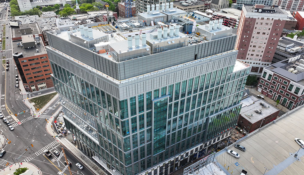
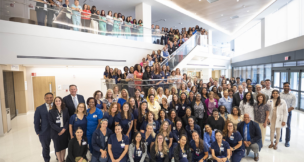
Cellares, in collaboration with Mitsui Fudosan, will establish Japan’s first next-gen commercial production site for CAR-T cell therapies. The facility is under construction in Kashiwa City. - PROVIDED BY CELLARES
Cellares, in collaboration with Mitsui Fudosan, will establish Japan’s first next-gen commercial production site for CAR-T cell therapies. The facility is under construction in Kashiwa City. - PROVIDED BY CELLARES
Cellares expands global reach with cell therapy tech
Matthew Fazelpoor//June 30, 2025//


The basics:
- Cellares has been on fast track since opening Smart Factory in Bridgewater in 2024
- FDA awards Cell Shuttle first-ever advanced tech designation
- New CAR-T manufacturing site launching in Japan with Mitsui Fudosan
- Partnerships with Cabaletta Bio, UW-Madison drive innovation
The first half of 2025 has been a notable one for Cellares. The cell therapy manufacturer operates its first commercial-scale Integrated Development and Manufacturing Organization Smart Factory in Bridgewater. That facility opened at the start of 2024, and things have been moving fast for the company since then.
In March, Cellares and Cabaletta Bio announced the successful completion of the manufacturing Technology Adoption Program (TAP) using Cellares’ Cell Shuttle platform. The program examined Cellares’ ability to automate, reduce costs and scale out manufacturing for Cabaletta Bio’s clinical-stage drug, rese-cel. The medication is a CD-19-targeting CAR T cell therapy designed to treat patients with a broad range of autoimmune diseases.
The TAP illustrated the ability of the Cell Shuttle to successfully produce automated, concurrent manufacturing of multiple rese-cel batches.
“The success of this Technology Adoption Program demonstrates the effectiveness of the Cell Shuttle as a scalable, automated and cost-effective platform for the manufacturing of cell therapies,” Cellares CEO and co-founder Fabian Gerlinghaus said in March. “Working with Cabaletta Bio proves that small biotech companies can successfully partner with Cellares to benefit from next-generation automation.”
Gwendolyn Binder, president, Science and Technology, Cabaletta Bio, said, “Through our partnership with Cellares, our teams have successfully achieved proof of concept for the ability to automate the rese-cel cellular drug substance manufacturing process. I believe that the potential increase in capacity, meaningful reduction in costs, and rapid global technology transfer offers a potential solution for the global scale out of rese-cel for patients with autoimmune disease.”
Gerlinghaus notes that the Smart Factories allow clients the opportunity to effectively realize economies of scale, even at the low batch numbers required by clients in early clinical development. According to him, these spaces provide the ability to manufacture 10 times the number of therapies in a small space at half the cost.
An FDA first
Then, in early April, the momentum continued as Cellares announced that the Cell Shuttle was awarded the first-ever Advanced Manufacturing Technology designation by the U.S. Food and Drug Administration’s Center for Biologics Evaluation and Research.
The AMT designation of the Cell Shuttle – which performs automated, end-to-end, cell therapy manufacturing – is intended to encourage the adoption of innovative technologies, such as Cellares’ platform. Developers leveraging Cellares IDMO manufacturing services will receive expedited FDA review.

“The AMT designation for our Cell Shuttle is a testament to its potential to transform patient outcomes by delivering scalable and cost-effective cell therapy manufacturing to small, early-stage biotechs and large pharma companies with commercialized cell therapies,” said Gerlinghaus. “This designation now gives cell therapy developers leveraging Cellares’ IDMO manufacturing services prioritized FDA review, which has the potential to shorten development times – making these therapies available to more patients faster.”
“The FDA’s AMT designation for the Cell Shuttle validates Cellares’ Quality-by-Design methodology and provides therapy developers an expedited regulatory pathway,” said Eric Fulmer, vice president of quality at Cellares.” By automating cell therapy manufacturing on the Cell Shuttle, our clients will have a streamlined and cost-effective pathway from clinical development to commercial manufacture, ultimately accelerating patient access to these critical therapies.”
Head of the class
Also in April, Cellares and the University of Wisconsin School of Medicine and Public Health announced a collaboration aimed at facilitating the manufacturing of the medical school’s internally developed CAR-T investigational therapy for solid tumors.
“Solid tumors can be challenging to treat, and many patients have limited therapeutic options,” said Gerlinghaus April 10. “By collaborating with researchers at the University of Wisconsin–Madison on their CRISPR-edited GD2 CAR-T product, we remove the manufacturing barriers that can hinder promising research. Our Cell Shuttle automates and scales production to a clinical level, which accelerates the transition from academic innovation to investigational therapy and brings hope to those who need new treatment options.”

Global expansion
In late May, Cellares continued its global expansion – announcing, in collaboration with Mitsui Fudosan, the establishment of Japan’s first next-gen commercial production site for CAR-T cell therapies. The facility under construction in Kashiwa City (about 18 miles northeast of central Tokyo) will mark Cellares’ first overseas installment as it builds out its global manufacturing network.
The newest facility is located in a vibrant urban center in the Tokyo metropolitan region. Kashiwa serves as a booming biotech hub. Japan’s first IDMO Smart Factory expects to employ 350 people. The entire Smart Factory will integrate and optimize to eliminate downstream bottlenecks and has the potential to advance the development and approval of CAR-T therapeutics in Japan.
Once online, Cellares anticipates a seamless, rapid, software-enabled process for technical transfers between its facilities in other regions. The company cited Mitsui Fudosan’s robust network in Japan’s life sciences industry, which was instrumental in enabling this collaboration.
The move marks Cellares’ commitment to expanding its footprint in Japan, paving the way for further collaborations and innovation.
Dr. Toshihiko Doi, the chair of the Kashiwa-no-ha Life Science Committee, shared, “For cancer patients in Japan, the establishment of this facility provides access to cutting-edge therapies that can make a critical difference in their fight against diseases. It marks a significant step toward eliminating the drug delivery lag time that has been a challenge for rare disease and oncology treatments.”
“Cellares’ new facility in Kashiwa City will enable our pharma clients to supply Japan from Japan. Manufacturing cell therapies locally simplifies cold chain logistics, accelerates vein-to-vein time and reduces cost,” Gerlinghaus said May 29. “Our Japanese IDMO Smart Factory is part of a broader strategy to be a global manufacturing partner for our clients and meet the total patient demand for cell therapies around the world.”
Growing in NJ
When NJBIZ spoke to Gerlinghaus during the spring, he expressed excitement about what’s next for Cellares.
He noted how positive the support has been in New Jersey – from the state level to the county level down to the municipal level – for Cellares as the San Francisco-headquartered company continues its growth in the Garden State and beyond.
“They welcomed Cellares with open arms – both for the innovation that we bring; also, the jobs that we bring to the region,” Gerlinghaus told NJBIZ.

These latest developments have come amid a broader push to onshore more manufacturing here in the United States. “The phone is ringing – a lot – at the moment,” said Gerlinghaus. “What we’re doing at Cellares is very much aligned with the goals of the new administration; bringing innovation back to the U.S.; bringing manufacturing back to the U.S.”
He noted that the demand has meant that the company is staying busy – in a good way.
“We’re handling it. But it’s a lot of work,” he explained. “We’re globalizing on very accelerated timelines – building facilities in the U.S., in Europe and in Japan – to ultimately offer our customers global cell therapy manufacturing services at 10 times the scalability and half the price. Which is a very compelling, strong, differentiated value proposition in our market.
“If you think about it from the customer perspective – there’s tremendous value in having a single partner where you tech transfer your process into the automated platform once. And then discover this partner can actually manufacture for you, globally – meeting the needs of patient populations not just in the U.S., but also in Europe and in Japan. So, across three different continents – and you only have to go through tech transfer once. Because once the cell therapy is on the Cell Shuttle platform, we can tech transfer, effectively, at the click of a button.”
Into the future
As the conversation wrapped up, Gerlinghaus reflected on the company’s journey – and remarkable growth to this point; with, of course, much more to come.
“It’s incredibly rewarding and satisfying to actually watch – what started as Omar (Kurdi, co-founder) and my brainchild in 2019 actually take shape and manifest in physical reality,” said Gerlinghaus. “At this point, we’ve built the technology – our two flagship technologies: the Cell Shuttle and the Cell Q. We’ve built a company of currently around 280 people. We currently have five facilities in construction worldwide – in the U.S., Europe, Japan.
“We’re going to be deploying dozens and, ultimately, hundreds of Cell Shuttles and Cell Qs – to ultimately meet the total patient demand for cell therapies globally. So, to see that vision come to fruition is incredibly satisfying.”