Sign In
Upcoming Event
 Free Newsletter

Dispelling myths: Organ and tissue donation
Anthony Vecchione//April 19, 2019//


 Listen to this article
In New Jersey, more than 4,000 people are on a waiting list for an organ transplant and in Newark alone, there are 162 waiting according to New Providence-based NJ Sharing Network.
NJ Sharing Network is the nonprofit organization responsible for the recovery and placement of donated organs and tissue for those in need of a life-saving transplant.
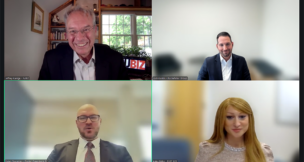
A panel of medical and social service experts and clergy addressed myths associated with organ donation and transplantation at University Hospital in Newark on Thursday.
Joe Roth, president and chief executive officer, NJ Sharing Network, said that among the biggest myths and misconceptions about organ donation is that if someone signs up on the list to be a donor that the doctors won’t treat them to survive when they get to the hospital.
“That is a total falsehood. The doctors who do the transplant don’t even see that patient when they come to the hospital. We don’t even know they want to be a donor when they get to the hospital,” said Roth.
Another common myth noted Roth is that religion forbids transplants.
“There is no major religion in the world that forbids organ donation. There are sects within religions that have different viewpoints about things like brain death,” said Roth who added that some people are just superstitious.
“There is a lot of it is misinformation and the realization that this is a righteous thing as a gift of charity to be an organ donor to save other people’s lives.”

Dr. James Guarrera, professor and chief, Division of Transplant and HPB (Hepatopancreaticobiliary) Surgery at New Jersey Medical School and program director, Center for Liver Disease and Transplantation at University Hospital Newark, said that among the fears of recipients is that people believe that the operation is so big and complicated that their chances of surviving are relatively small or that it’s going to be so painful.
“I think what we need to get out there is that transplant operations, although they are big surgeries, the recovery is very smooth,” said Guarrera.
For example, Guarrera said that with a liver transplant, some patients go home within five to six days and with kidney transplants, most people are going home in three days.
Guarrera said that the recovery and the process of going through a transplant operation sometimes scares people. He said that it’s important to engage prospective patients that might need a transplant.
“We would link them up with patients who have had transplants to describe to them what the process is like and alleviate some of those fears.”
Dr. Nikolaos Pyrsopoulos, professor of medicine and chief of Gastroenterology & Hepatology at New Jersey Medical School said that there are 7,000 people waiting for a liver graft and about 25 percent of them will die without having this gift given to them.
“It is unfortunate that 25 percent of the 7,000 people will not be able to get a second chance in life,” Pyrsopoulos said.
Dr. Dorian Wilson, associate program director for General Surgery Residency and director of the Healthcare Foundation Center for Humanism and Medicine at New Jersey Medical School said that transplant patients don’t necessarily exhibit the common fears that you might expect.
“Patients are so interested in survival, they have that survival instinct and the whole idea of resilience after recovery after the transplant. All they want to do is get the organ. What I have noticed is the reliance and stamina of patients who are on the waiting list and are going to receive organs,” said Wilson.
Roth said that NJ Sharing Network focuses on underserved areas including Hudson County, Newark and other areas that have the highest waitlist.
“We are developing a program that is going to target Newark more aggressively in terms of getting the word out about becoming an organ donor,” said Roth.
Formed in 1987, NJ Sharing Network works closely with hospitals and transplant centers to increase awareness with education tools and through the media. Since it’s inception, the number of organs recovered in New Jersey for transplant has quadrupled.