Sign In
 Free Newsletter

Ascend Wellness supports social equity with new Eatontown dispensary
Kimberly Redmond//June 1, 2026//
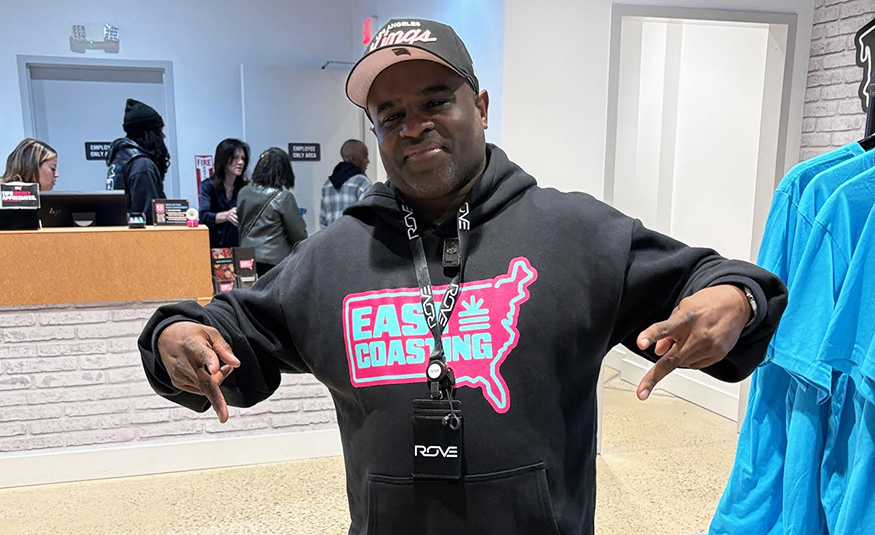
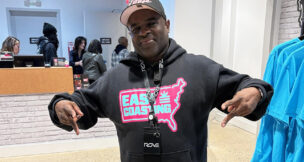
East Coasting owner Kyle Page - PROVIDED BY EAST COASTING
East Coasting owner Kyle Page - PROVIDED BY EAST COASTING
Ascend Wellness supports social equity with new Eatontown dispensary
Kimberly Redmond//June 1, 2026//


 Listen to this article
The basics:
- Kyle Page opened East Coasting dispensary in Eatontown
- Ascend Wellness supported the venture through its social equity program
- Page received clemency after serving time for cannabis-related offenses
- Dispensary employs 22 workers and promotes cannabis equity initiatives
Five years ago, Kyle Page was sitting in a cell at a maximum-security prison serving a lengthy sentence for cannabis-related charges. Now, he’s celebrating the launch of a dispensary in Eatontown.
As part of a collaboration with Ascend Wellness Holdings, the North Jersey native recently opened one of the first dispensaries under a state law that encourages expanded investment opportunities for diversely owned businesses in the legalized industry.
Backed by the multistate operator’s social equity program, East Coasting received funding, operational support and product access to grow into a sustainable, community-driven business.
‘A little surreal’
As someone who endured not one, but two, stints behind bars related to possession and distribution charges, Page said, “This is all a little surreal for me.”
“When I was released from prison, this is the farthest thing from my mind. This was actually a fantasy that I used to talk about with my cellmate. But of course, we would just talk about these fantastic things that we would make up just to have some imagination and have some fun while sitting in there. But I never took it to the point where I was like, ‘Yeah, this is going to happen when I get out.’ So, it is my wildest dream and it came true,” he said.
After being arrested in 1997 at 18 years old for possessing small amounts of cannabis, he received a two-and-a-half-year prison sentence.
Following his first term, Page moved to Kansas City, Mo., where he wound up getting a job offer from an entity in California that owned three licensed cannabis farms. As a cultivation worker, Page said he became very passionate about growing and tending to the plant.
However, while in the Golden State, Page wound up getting involved in the legacy market. After participating in an interstate trafficking operation for several years, Page was arrested and given 82 months for non-violent marijuana and distribution-related charges.
A new path
Thanks to the advocacy of cannabis reform nonprofit Last Prisoner Project, he received clemency from Kansas Gov. Laura Kelly in December 2021 and was home in time for Christmas.
Page then returned to New Jersey, enrolled in a reentry program and reconnected with his daughter and family. However, Page still had to serve two years of post-release supervision. And he was unsure of a career path.
That changed when he met Chirali Patel, founder and managing partner of New Jersey-based Blaze Law Firm. Patel also heads up Blaze Responsibly, a cannabis business consulting, services, advocacy and education platform.

After Patel referred him to Ascend, Page was hired through the MSO’s efforts to recruit citizens reentering society following incarceration. He initially started as a cultivation associate before progressing to a supervisor role.
Advocating for others
Page also became an advocate for the Last Prisoner Project in a bid to spur change. As an ambassador of LPP, he focuses on expungement efforts, supporting individuals disproportionately affected by cannabis laws and promoting greater inclusion of Black entrepreneurs in the industry.
Driven by his personal experiences and a commitment to ending injustices associated with cannabis criminalization, Page works to raise awareness, support legislative changes and help former prisoners reintegrate into society.
By sharing his story, he aims to highlight the systemic injustices that persist in both the criminal justice system and the cannabis marketplace. He hopes his experiences will underscore the need for reforms such as record expungement, social equity programs and policies that meaningfully reinvest in communities long harmed by prohibition.
Page’s journey was also the subject of an award-winning documentary by Maplewood filmmaker Howard Ellis.
Released in 2025, “Bar None: Cannabis Redemption” features activists, social justice leaders and lawyers who work passionately to change how the justice system views usage of cannabis.
Watch the trailer for ‘Bar None: Cannabis Redemption,’ courtesy of Howard Ellis:
Investor support
East Coasting’s launch comes about two-and-a-half years after the state enacted a law allowing certified minority-, women- and disabled veteran-owned cannabusinesses to receive financial or technical support from investors while keeping control of their companies.
Under the law, investors can own a limited stake under fair terms. However, ownership cannot revert to them if the venture defaults. By setting clear repayment timelines and terms, the measure seeks to expand equitable participation in the state’s legalized industry.
For Ascend, the shop marks the second dispensary in New Jersey supported through its CO-LAB for Social Equity initiative. In December, the company helped longtime cannabis advocate Lerone Jones unveil an adult-use outpost in Little Falls.

The New York-based operator’s footprint of nearly 50 dispensaries across seven states also includes its traditional branded sites in Fort Lee, Rochelle Park and Wharton.
Ascend Vice President of Social Equity Danielle Drummond described the model as a “unique and great opportunity” for small and large businesses to “work together, partner and figure out where the win-win is.”
“For us, New Jersey allowed us to have that partnership model where you could have the relationship with the smaller business. You can be an investor in their business and that person really maintains the ownership, the operation, the vision of what their company is supposed to be,” she said. “That’s often a delicate dance in this space.”
“We really wanted to be intentional … with how do we do it in a way that feels really true to what this is supposed to be about? We really wanted to make sure that we partnered with whoever the small business was to create their vision,” she explained.
Off and running
Ascend provides “capitalization, we could provide operational support, mentorship for them, education so that they understand how to run a really successful business. And we get the opportunity to have that investment,” Drummond said.
NJ cannabis industry:
by the numbers
- 270+ adult-use cannabis dispensaries open in NJ
- $1.2B in recreational and medical cannabis sales in 2025
Drummond added, “It’s also something that then thereafter, they can use whatever skills they’re learning there to then go and do off whatever else they want to do. They’ll have this and then they can build on their entrepreneurship. And so really wanted to make sure that one, we were choosing folks who this program was intended for – the social equity, MBE, veteran or women owned – and two, that we were giving them the education and support that was needed to be able to learn how to do this business well, and then be able to take that and do whatever they would want to do with that afterwards.”
According to Drummond, a big part of the effort involved “really looking at what are the struggles of the small businesses and how can we as a larger operator come in and be a support to that.”
Since New Jersey launched legal adult-use sales in April 2022, more than 270 dispensaries have opened across the state. In 2025, the Garden State recorded nearly $1.2 billion in recreational and medical cannabis sales.
Setting up shop
Because the majority of the 53 municipalities in Monmouth County opted out of allowing cannabis retail, there’s only about 10 dispensaries open in the area. Those shops are mainly located in the region’s urban or redevelopment-focused communities, like Neptune, Asbury Park and Red Bank.
When it comes to opening a cannabis-related business in New Jersey, Drummond said real estate was “one of the major hurdles.”
More from Monmouth County
This complimentary section features everything you need to know if you’re thinking about starting, expanding or relocating a business in Monmouth County. Read more here.
“Also, choosing the right municipality for you to be in. Is there one that’s opted in that’s near you that has the right amount of dispensaries in it so it’s not too much competition? All of those things you need to weigh and consider, and then you need to build relationships in that municipality,” she explained.
“And definitely the capitalization part of it and just not getting enough money … That is one of the things that I think really hurts folks in the long run because you have to have enough cash on hand through delays in licensing, delays in construction and everything else that it then takes to run a business,” she said.
It was unclear how much funding Ascend invested in East Coasting.
“I think what is unique about cannabis is the heavy compliance aspect of it, as well. And so learning and understanding all of those compliance rules to make sure that once you do all of the hard work of building this business, you can actually maintain it,” Drummond said. “I think is another huge piece of it … Operating a cannabis business is unlike operating any other kind of business just because of that unique regulatory space.”
‘Unmatched’ support
Page said, “To do this on your own, it’s an extremely daunting task. Just compliance alone could overwhelm the average person. But having the support of Ascend Wellness Holdings along with the education that they gave me, it’s unmatched. You cannot put a dollar sign on education and knowledge.”
“It would’ve been impossible for me to do it without Ascend. I always give credit where credit is due and I have to give credit to Ascend because they didn’t have to take a chance on somebody who was fresh out of prison on parole,” he said.
You cannot put a dollar sign on education and knowledge.
– Kyle Page, East Coasting founder
In partnering with Ascend about two years ago, Page said he sought to create “a destination and a brand that stands for inclusion, advocacy and hope for what this industry can become.”
“East Coasting represents everything I’ve learned through my journey, including the setbacks, the growth and the responsibility that comes with leadership,” he said. “This is about building a dispensary that people are proud to visit, leading a team with care and creating a space that reflects community, opportunity and progress.”
’90s inspiration
Located at 178 Route 35, the 4,080-square-foot space was inspired by Page’s love of skateboarding. A self-described “old school skateboarder,” Page said, “I skated in the 90s, which means I’m pretty old, but they were able to take my vision of what 90s skateboarding on the East Coast meant to me and put it forward.”
“To learn that trick, you have to hurt yourself and you have to fall down. But, you have to get back on that board. And so that’s what, to me, life is a lot like that,” he said. “When I explained that to them, they saw exactly what I was saying and were able to take my vision of what 90s skateboarding on the East Coast means to me and manifest it into reality.”

“When you walk in, you are walking into a street skateboard scene from 1995. We have a halfpipe in here and we have old skateboards that were really used by me and my friends,” he said.
“And then on top of that, the customer assistance that you get here, it’s authentic. And I would never kick dirt on any other dispensary, but it’s not a boost store. When you talk to an East Coasting person, its authentic, it’s real and it’s hard,” Page went on.
‘A labor of love’
At East Coasting, Page has 22 workers.
“It’s so cool to be able to bring employment to people and also to bring them into a place where … it’s a labor of love,” he said. “I know when I walk through these doors, I don’t feel like I’m at work. Even though I’m running around all over the place, it’s something I love so much that it’s not work for me. And I pass that down on my staff as well. I want my staff to come in and enjoy being here because you can spend a lot of your time here.”
In Eatontown, the dispensary took over a property that previously served as an office. It’s located near several popular destinations, including the Monmouth Square redevelopment project, The Crossroads at Eatontown and Eatontown Plaza.
“I’m in the middle of everything and I’m right before the shore. So, if anybody’s going down the shore, you can always stop at East Coasting,” Page said.
Drummond believes Ascend met its goal of developing a concept that “felt like what he set out to do.”
“This was so fun working with Kyle to bring his vision to life. A lot of heart, soul and energy was put into it. And this is what I hope comes through in this, is that it is not some stale or cold corporate relationship. This is truly a labor of love. And the folks who are working with Kyle are inspired by him,” she said.
‘Economic empowerment’
East Coasting is the latest project coordinated by Ascend’s CO-LAB for Social Equity. Founded in 2024, the program seeks to provide learning opportunities, mentorship, legal support and funding to social equity license holders and social equity candidates.
Rooted in the vision of an inclusive and sustainable industry, the CO-LAB focuses on advocating for the rights and participation of all — particularly those historically affected. It also aims to address past injustices through actions such as expungement and decriminalization, according to Ascend.
Drummond said, “Overall, our three pillars are restorative justice, economic empowerment and community reinvestment. So, it’s about how are we showing up alongside our communities? This is about economic empowerment and how do we make sure that we can impact our communities but also make sure that folks like Kyle who have been impacted by the war on drugs get the opportunities that they deserve.”
East Coasting represents exactly what our social equity partnerships are designed to achieve by creating meaningful ownership opportunities for individuals who were once excluded from this industry.
– Danielle Drummond, VP of social equity, Ascend Wellness
“Kyle’s story reflects both the harm caused by prohibition and the promise of a more equitable cannabis industry,” she went on.
“He has demonstrated resilience, leadership and a deep commitment to community throughout his time with Ascend. East Coasting represents exactly what our social equity partnerships are designed to achieve by creating meaningful ownership opportunities for individuals who were once excluded from this industry,” Drummond said. Drummond got to know Page after he started doing speaking engagements at Ascend-hosted expungement clinics.
“Then this opportunity comes down to be able to build partnerships and Kyle’s here. For me, this is what these partnerships are supposed to be … it came out of the community work very authentically, and we’ve been able to just build on top of that,” she said.
Page said, “I always get choked up when I think about this thing, where I’m at and how much it means to me and how much it’s changing my life and my daughter’s life.”