Sign In
 Free Newsletter

Everything old is new again
Well, not everything. But transforming NJ's aging buildings can solve several problems simultaneously.
René Cruz//October 23, 2023//

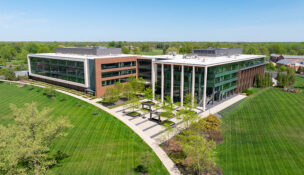
When Genmab relocated to Plainsboro in 2021, the company converted two floors of the corporate office building into lab space for research and development. - PROVIDED BY CONNIE ZHOU/GENSLER
When Genmab relocated to Plainsboro in 2021, the company converted two floors of the corporate office building into lab space for research and development. - PROVIDED BY CONNIE ZHOU/GENSLER
Everything old is new again
Well, not everything. But transforming NJ's aging buildings can solve several problems simultaneously.
René Cruz//October 23, 2023//


It’s no secret the commercial real estate sector is experiencing a decline in leasing rates. The rate of Class C office buildings, corporate campuses, malls, and big box stores that have shuttered continues to climb—and it’s not hard to understand why. The pandemic accelerated a downward trend in in-person shopping, which has become even more apparent in a state like New Jersey, which has more malls per square mile than any other state. Meanwhile, hybrid workstyles are encouraging companies to reevaluate their real estate strategies. How much do we need? Should we upgrade our office experience. Are we in a good location?
It’s safe to say older, underutilized office buildings are suffering the most. According to JLL, 72% of suburban office space in New Jersey is functionally obsolete, one of the highest figures in the nation. In 2021, the New Jersey Economic Development Authority and Gov. Phil Murphy announced the 21st Century Redevelopment Program, which awarded grants for the redevelopment or regreening of stranded assets to productive and economic uses. With major public issues like density, affordable housing, excess office real estate and a growing desire for live-work, mixed-use neighborhoods with public spaces, adaptive reuse and building transformations serve as a potential fix to current commercial real estate woes.
In the last five years, conversions have emerged as a go-to solution for the unprecedented demand for lab space as venture funding surged in response to vaccines and treatments. While leasing has rightsized over the last year, the combination of expiring office leases and low lab vacancy created the need for office to lab conversions during this turbulent time.
Compared to typical workplace design, lab design comes with more complexities for mechanical and structural systems to accommodate lab requirements for exhaust, servicing, and lab equipment. Working within an existing building offers speed to market in what would otherwise be a lengthy project timeline. Speed to market is critical to organizations like Genmab, a rapidly growing biotech firm. In 2021 the company decided to relocate to a corporate office building in Princeton. To better meet the needs of the fast-growing organization, they converted two floors of labs for research and development, eventually earning LEED Gold certification.
Conversions have played a huge role not only in the life sciences ecosystem, but also the U.S. health care sector. To address patient experience and access, health care providers are turning to shuttered big box real estate, which has several attractive features: an easy-to-access geographic location, ample parking and proximity to transportation.
The retail conversion of a former Crate & Barrel into a 34,000-square-foot ambulatory care center in Bridgewater illustrates this solution. The existing building did not support patient flow, so an elevator and connecting stairs were added to the arrival, but the main façade of the building allows for ample natural lighting to welcome visitors. From Bed Bath & Beyond to Lord & Taylor to Kmart, New Jersey’s presence as a major retail market offers endless opportunities for its thriving health care systems.
While conversions may seem like an easy solution to revitalize obsolete or underperforming office assets, not all buildings are created equal and, therefore, many are not viable. It must also make sense financially. Office-to-residential incentives across major U.S. cities like New York, Boston and San Francisco are becoming more commonplace as a catalyst for urban transformation. But this type of conversion requires significant analysis to understand if a bad office building can make for good residential, which is why Gensler developed a scoring algorithm that evaluates five key criteria: site context, building form, floor plate, envelope, and servicing.
Innovative approach
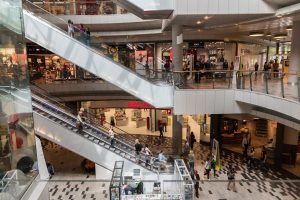
To battle reduced foot traffic in retail spaces, shopping mall property owners are bringing in health care facilities, dental offices and hospitals to fill vacant spaces. Click here to read more.
To do this, we ask questions critical to residential building needs such as access to transit, access to sunlight, core to window depth, ceiling heights, façade reuse and replacement, and central mechanical systems, to name a handful. Ironically, the older the building, the better. Class C office buildings typically have 11-foot floor-to-floor heights, but with ducts and cabling that figure is closer to 8 feet, which is undesirable in today’s workplace. However, after removing ceiling tiles and ductwork, a generous 10-foot ceiling allows ample daylight and space for the modern residential unit.
More than 800 office buildings have been evaluated for conversion using this tool. Yet only 25% to 30% of buildings are optimal for conversion. For a state like New Jersey with a significant percentage of outdated building stock, this equates to millions of square feet that can be allocated to housing. This figure also represents an immense amount of carbon saved from demolition and new construction. To put this in perspective, construction contributes to 11% of global carbon emissions and adaptively reusing buildings can trim that by 80%.

In today’s real estate landscape, conversions offer a strong alternative to tearing down and building new, which comes with significant environmental repercussions. Architecture 2030 shows that the building industry generates nearly 50% of annual global CO2 emissions. By converting original structures to new uses, we can make the most of New Jersey’s aging building stock and revitalize these properties into a mix of uses that benefit our communities.
Rene Cruz is a senior associate and studio director in Gensler’s Morristown office.