Sign In
Upcoming Event
 Free Newsletter


PHOTO: DEPOSIT PHOTOS
PHOTO: DEPOSIT PHOTOS
Fractional CFO services gain traction with small, growing businesses
Martin Daks//April 6, 2026//


The basics:
- Demand for fractional CFO services is rising among small and mid-sized businesses
- Part-time CFOs provide strategic financial insight without full-time costs
- Services help companies improve cash flow forecasting, real-time decision-making
- Model is popular for growing companies not ready for a full-time CFO
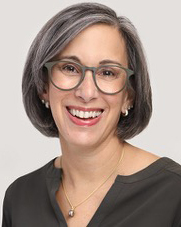
Back in the day, a restaurant owner would show up show up once a year at Smolin Lupin with a pile of bank statements and receipts. “We would crunch the numbers and report back — but by then, the information was already history,” recalled Lori Kudish, a manager at Smolin’s Parsippany office. “There was no way to spot a problem in June or seize an opportunity in September. But that all changed when he asked us to step in to provide fractional CFO services. Now we’re able to give him current information.”
Many small and growing businesses need a good CFO, but can’t afford a full-time position. In response, more organizations are offering part-time, or fractional CFO services.
By leveraging technology, Kudish and her colleagues now deliver monthly updated financials, enabling the restaurant owner to make real-time decisions on tax planning and other critical business matters throughout the year.
That kind of hands-on, customized support is at the heart of what fractional CFO services – also known as outsourced CFO services – are all about, explained Smolin Member Christopher Barchetto. And while the terminology may be relatively new, the underlying concept is not.
“Accountants have been advising their clients on a high level for years,” he noted. “We just never titled it.”
What’s changed?
What has changed is how firms like Smolin are positioning these services. Traditionally, tax preparation was the “front door” of an accounting relationship, with bookkeeping and CFO-level support serving as the back door. Today, Barchetto said, firms are flipping that model — often leading with advisory and financial management services and treating tax work as a secondary offering.

“You need the talent of the $100,000 person,” Barchetto said, “but you can’t always afford that level of talent on your payroll for 12 months out of the year.”
Demand cuts across industries and company sizes. Shannon Mosier, a manager at Smolin, noted that the firm is seeing more inquiries from professionals such as attorneys and physicians, “whose record-keeping needs have grown too complex for a nurse or family member to handle.”
And Kudish described working with an engineering firm that is leaning more heavily on Smolin as it grows rapidly — a testament to the scalability of the model.
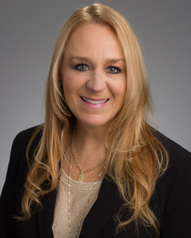
The approach is also highly flexible. Barchetto explained that some engagements are temporary – like filling a gap after a key employee departs – while others evolve into permanent arrangements when the client realizes the fractional model works better than hiring in-house. Mosier put it simply: “We customize our services in a concierge style to make sure we provide what the client needs at the best price point.”
The bottom line, Barchetto said, is that business owners can stay in their lane and focus on running their business — while their CPA firm handles the rest. “Let’s not be reporters of history,” he said. “Let’s deliver information timely to help business owners make real-time decisions.”
Healthy prescription
In another case, a privately held company with 90 consumer-facing locations across the country was doing well by most measures. The owner was successful; the business was growing, but something was missing from managing the locations. Where were the profits actually coming from? Which locations were pulling their weight, which were excelling, and which were quietly dragging down the bottom line?

That’s where CPA Brian Fern stepped in. The president of Livingston-based Fern Consulting & Associates LLC segregated the company’s profit-and-loss statements location by location, allocating salaries and all other direct expenses accordingly. The result: he identified which locations were thriving and which weren’t.
The company considered underperforming locations for closing and showcased better-performing locations as an example for weaker ones. With the updated P&L as a base, location-based budgets were also crafted, enabling the corporate office to create individual incentive plans for managers.
Fern further noticed that the current finance lead didn’t understand the benefits derived from this management information. Fern then suggested finding a replacement — and assisted in sourcing, identifying and interviewing the proper finance professional who “got it.”
“I turn CFOs into profit centers,” Fern said. “I offer non-disruptive and highly effective savings ideas that help companies improve their bottom line.”
Growing trend
He sees the trend accelerating. “There are more companies looking for fractionals,” he said. “The model brings fresh perspective, including insights from other industries, that an internal hire often can’t match.”

Fractional CFO services run the gamut of assignments. Seth Kamens, managing member of Kamens & Associates, recalled the time a prospective buyer was eyeing the buyout of a northern New Jersey restaurant. The price tag was based on the eatery’s mid-six figure annual sales, and the potential purchaser knew he needed more than gut instinct before signing on the dotted line. The entrepreneur turned to Kamens’ CPA firm for an analysis — and the results may have saved him from a costly mistake.
“We asked for tax returns and a general ledger, then gave them about 10 questions focused on material issues,” Kamens detailed. “We did a deep dive on the balance sheet — debt, number of owners, high-level expenses.”
The conclusion: the asking price seemed high, and Kamens recommended against the purchase. He said the deal eventually fell through.
“Fractional CFO work goes above and beyond the tax return,” Kamens added. “It’s about strategy — where the company can go.”
Across industries
It’s also a balancing act. The typical client is past the stage where a bookkeeper suffices, “but isn’t large enough to justify a full-time finance executive,” he explained. “Startups are common candidates, particularly those founded by entrepreneurs with deep expertise in their field but little background in finance. Growing companies also seek out these services as their complexity increases.”
Kamens is not worried about getting replaced by artificial intelligence. “AI may handle routine tasks more efficiently, but it won’t replace the human element,” he noted, especially when things get complicated. “If someone gets an IRS demand letter for $38,000, they don’t want to discuss it with an AI application. They want a human being on the other end.”
Outsourced finance executives can assist across a variety of industries. A small health care company in South Jersey had two business owners – one focused on clinical operations, the other on the business side – but no real financial leadership. Cash flow was unstable, government reimbursements were slow to arrive, and growth felt out of reach. A little over a year after bringing aboard a fractional CFO, though, the picture had changed dramatically,
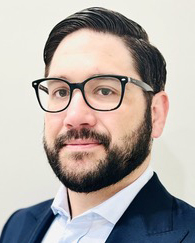
“We stabilized cash flow, ensured working capital through government shutdowns and slow state fund disbursements, and built out a cash flow forecast so the company could plan for growth,” said Cameron Wade, South Jersey-Philadelphia Area president of FocusCFO. “Today, the company is self-funding and looking to double its business. Automated accounting processes have also reduced the firm’s billable hours, meaning the client pays less while receiving more strategic advice.
Long-term, part-time
That kind of embedded, long-term engagement is central to what FocusCFO delivers. And Wade is careful to distinguish it from what he sees as a related but distinct concept.
“An outsourced CFO implies detached,” he explained. “At FocusCFO, we are embedded. We stand by clients for the long term. A typical engagement involves a seasoned CFO working four to eight days per month — at a fraction of the cost of a full-time hire.”
The sweet spot for these arrangements, Wade noted, is companies generating between $2 million and $40 million in annual revenue. “These businesses have outgrown basic bookkeeping and tax support but aren’t ready – or willing – to commit to a full-time CFO carrying a $250,000 salary. Our model fits a wide range of industries and stages, from growth-mode companies to those eyeing an exit.”
Demand is rising, he added. Since its founding in 2001, Wade said name recognition has grown significantly — and the current economic climate is accelerating interest. “Business owners want an experienced financial partner, not just someone to report the numbers.”
Guiding growth
Growing a business is hard enough. Understanding whether you can actually afford to grow it is another challenge entirely. And for many small and mid-sized companies, that’s where things can go sideways fast. But senior-level financial expertise doesn’t have to come with a full-time price tag anymore, thanks to outsourced CFO services.

“We worked with a growing, mid-market technology company, located in central New Jersey, that had strong revenue but limited visibility in cash flow and decision making,” said Nicola Ellam, CLA managing principal of New York and New Jersey offices. “They chose CLA because they wanted cleaner, quicker data along with senior level financial leadership without hiring a full-time CFO and accounting team; and they valued our seamless approach. We helped them shift from looking backward to planning forward — improving cash flow forecasting, strengthening financial processes, and giving leadership clearer insight to make confident growth decisions. The result was greater stability, better alignment, and the ability to grow more strategically.”
That kind of outcome “is exactly what we aim to deliver,” she added. “Companies can’t always justify a full-time CFO, but a part-time consulting model can provide senior-level financial leadership and timely, reliable insights.”
Demand for this kind of service has been climbing. “We’re definitely seeing more companies leaning into part-time CFO-level support,” Ellam said. “The demand is being driven by issues like economic uncertainty, margin pressure. Leadership teams want better visibility into cash flow and decision-making — without committing to a full-time C-suite hire.”
This model tends to resonate across professional services, nonprofits, technology, health care, and closely held businesses, she added. But Ellam said demand is less about industry or company size than it is about need. “It’s more need-based — a need for strategic, forward-looking financial insight, without building out that full internal role too early,” she detailed.
The model is particularly valuable during inflection points: rapid growth, new investors, acquisitions, or cash flow challenges. And don’t expect artificial intelligence to make these advisors obsolete anytime soon. “AI can automate the what and the when,” Ellam noted, “but it can’t explain the so what. Leaders need experienced advisors to interpret data, apply judgment, and help make real decisions.”