Sign In
Upcoming Event
 Free Newsletter


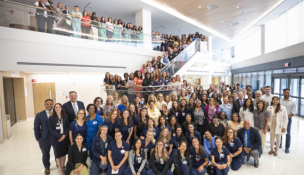
Gov. Mikie Sherrill gave the keynote address at the Health Care Institute of New Jersey’s Life Sciences Summit, which focused on New Jersey’s pharma and medical technology future. The event took place March 13, 2026 at Middlesex County College in Edison. - PROVIDED BY NJ GOVERNOR'S OFFICE/TIM LARSEN
Gov. Mikie Sherrill gave the keynote address at the Health Care Institute of New Jersey’s Life Sciences Summit, which focused on New Jersey’s pharma and medical technology future. The event took place March 13, 2026 at Middlesex County College in Edison. - PROVIDED BY NJ GOVERNOR'S OFFICE/TIM LARSEN
HINJ forum highlights NJ life sciences, innovation economy
Matthew Fazelpoor//March 25, 2026//


The basics:
- HINJ Pulse forum convened industry leaders, policymakers, researchers
- Event highlights NJ’s life sciences sector, global health impact
- Panels focus on patient innovation, federal/state policy effects
- Forum emphasizes collaboration to sustain NJ’s innovation ecosystem, economic growth
The HealthCare Institute of New Jersey convened industry leaders, policymakers and stakeholders for its Pulse: Saving Lives Globally, Driving Our Economy Locally forum March 13. Held at Middlesex College in Edison, the event highlighted the state’s leadership in life sciences innovation, as well as its impact on both global health and the local economy.
HINJ Pulse brought together leading voices from across the sector, including government, academia, business, workforce development and patient advocacy. Attendees gathered for discussions on advancing medical breakthroughs and strengthening New Jersey’s innovation ecosystem.
The forum also featured keynote remarks from Gov. Mikie Sherrill.
“We are honored to have such a distinguished group of professionals, industry leaders, and innovators with us today,” said HINJ President and CEO Chrissy Buteas at the outset.

“We’re all part of New Jersey’s world-renowned innovation ecosystem – at the heart of which sits our life sciences community,” she continued. “HINJ serves as the voice for our state’s life sciences – the biopharmaceutical, medtech, and diagnostic companies that for well over a century have been saving lives around the world by finding new treatments and cures right here in the State of New Jersey.
“And that’s why our state is known as the ‘Medicine Chest of the World.’”
Staying power
Buteas stressed the Pulse gathering was about discussing how New Jersey sustains that “vital designation.”
“In a rapidly changing industry, collaboration and innovation are critical for advancing progress,” she said. “These and other life sciences companies have driven remarkable medical advances for generations.”
She highlighted advances such as curing hepatitis C for the first time; developing vaccines against cervical cancer, Ebola and COVID-19; as well as creating the first treatment to delays the onset of Alzheimer’s, pioneering the first gene therapy for sickle cell disease, and extending the lives of cystic fibrosis patients for decades.

“These companies serve as the beating heart of New Jersey’s workforce and economy. With 2,400 life sciences facilities across the state, supporting over 350,000 jobs, and contributing a staggering $120 billion to our state’s economic activity each year – this industry represents between 15% and 20% of our state’s gross domestic product,” said Buteas. “This is because New Jersey has a legacy. A legacy spearheading innovation in America and around the world.
“We have more scientists and engineers per square mile than anywhere else. All working on pharmaceuticals, telecommunications, medical technology, nanotechnology, and so many other scientific endeavors.”
Buteas said the discussion comes at a critical moment. The sector is navigating rapid technological change, new policies and the growing influence of artificial intelligence.
“New Jersey is known as the Garden State – but also the ‘innovation state.’ And that reputation exists because of people represented here today, men and women who build the complex research and manufacturing facilities that drive modern science – from clean rooms and laboratories to advanced cell and gene manufacturing plants,” Buteas continued. “Their expertise helps make our workforce one of the most valuable in the world.”
Cross-sector collaboration
She pointed to the vital importance of the state’s academic institutions and how critical those partnerships are.
“Many of these topics discussed today will likely include the complex partnerships between so many of the key components of our innovation ecosystem – our world-class manufacturing sector; the training offered at our community colleges and vocational schools; the collaboration between communities, industry and the business community; and our state and county economic development agencies, as well as our collective efforts to strengthen this powerful workforce as we embrace a new era of highly advanced technological manufacturing,” Buteas continued.
“These partnerships all operate within the framework of our state’s legislative and policy thought leaders.”
We are honored to welcome our keynote speaker, @GovSherrillNJ, who has demonstrated a strong commitment to innovation & protecting NJ’s status as the “Medicine Chest of the World.” We’re excited to hear from her as she addresses leaders & innovators in the #LifeSciences industry! pic.twitter.com/QRXBOpMYnu
— HINJ (@HINJ_ORG) March 13, 2026
Introducing the governor, Buteas said, “Gov. Sherrill continues to emphasize the need to grow New Jersey’s innovation ecosystem and bolster scientific progress and maintain New Jersey as the ‘Medicine Chest of the World.’ Governor, we are so pleased to have you here today. HINJ has had a fantastic working relationship with you when you were a congresswoman – and I know that will continue as you are governor. We’re thrilled that you are here to join us today.”
Sherrill started her remarks by applauding the work of HINJ. She also echoed Buteas’ note about working with HINJ first during her time in Congress.
“I think I took you a little for granted,” said Sherrill. “I just assumed that a lot of states had great organizations like this. And as I became a little more sophisticated in my legislative work, I realized that that is not the case. And that an organization like HINJ – really being a direct conduit to government about what the needs are in business and the community – is really a gift.
“So, thank you for everything you do.”
High-touch industry
The governor highlighted how life sciences are central to the DNA of New Jersey.
“And it really touches just about everything and is at the heart of the innovation economy that we want to continue to build here in New Jersey,” said Sherrill. “And at the heart of that opportunity we want to see for our kids.”
She emphasized the scale of the state’s impact. “It is amazing that nearly half of all of the nation’s new treatments and cures come from right here in New Jersey,” she said. “That’s something to be incredibly proud of.” Sherrill added that the work done by those in the room has real, immediate consequences for patients.
“You here in this room are the source of life, of hope for so many people,” she noted.
Sherrill also echoed some of the notable top-line numbers that Buteas highlighted. The governor underscored that life sciences are deeply embedded in the state’s identity and long-term strategy for growth.

‘Creating the opportunity economy’
“As I said, the life sciences are central to our DNA, and I do not take that for granted, as we are creating the opportunity economy,” she said.
Sherrill framed the sector as a cornerstone of both innovation and economic opportunity, as she mentioned her first budget proposal. She connected it to her broader policy priorities, adding, “I want to deliver a more affordable, a more accountable New Jersey for people here,” while acknowledging ongoing concerns and challenges from the business community.
Addressing those issues directly, Sherrill said, “People tell me again and again how hard it can be to do business here, with the red tape and the bureaucracy and the fees and the uncertainty, too many promising companies have decided to move to other states.
“I’m committed to changing that and delivering on cutting through that red tape. I paused all new, impending regulations for review for 90 days. We’re streamlining permitting, including with a live dashboard where businesses can track applications. I promise to slash business registration fees. This budget does that.”
[T]he life sciences are central to our DNA, and I do not take that for granted, as we are creating the opportunity economy.
– Gov. Mikie Sherrill
New Jersey at the forefront
As she pointed to grant and funding cuts at the federal level, and what she described as a pullback from innovation, Sherrill highlighted the importance of regional programs with states like Delaware and Pennsylvania.
And she made the connection with talent attraction and retention to affordability.
“Affordability, it’s not just a slogan to me. It’s a basic measure of whether or not people can live their lives here in New Jersey,” she explained. “I know it’s a big part of what all of you need to attract and retain talented workforces that you deserve and that will thrive here in New Jersey.”
The governor also pointed to the broader economic and policy landscape. She described the current moment as one of both challenge and opportunity. “I think we’re at a unique moment in history, a time of enormous change,” Sherrill said, arguing that New Jersey is uniquely positioned to lead.
“We are the 22nd largest economy in the world, the best entrepreneurs and builders … we have assets that other states don’t. And I take this work seriously because I know that we have the opportunity to build something special in our state. We just have to have the courage to face the future make the hard choices to develop opportunities here in New Jersey.
“That’s what I’m intent on doing. And I’ll tell you, after running a really hard election for over a year – that’s what the people of New Jersey want to see,” Sherrill continued. “So, all of you here, as part of the innovation ecosphere that we build in this state. Are key to what we can develop for our future, for our kids, for opportunity, for our economy, and for the state of New Jersey.”

The event also featured two informative panels with notable thought leaders participating.
Panel 1: “Innovating for Patients: The Next Generation of Treatments and Cures”
- Moderator: Kyle Sullender, director of government and external relations, HINJ
- Peter Mesenbrink, executive director biostatistics, Advanced Quantitative Sciences Development, Novartis
- Emily Meyers, executive director, Arthritis Foundation NJ Chapter
Panel 2: “Growing NJ’s Innovation Economy: Federal and State Policy Impacts”
- Moderator: Michele Siekerka, president & CEO, New Jersey Business & Industry Association
- Ali A. Houshmand, president, Rowan University
- Dan Leonard, executive director, We Work For Health
- Christopher Paladino, president, New Brunswick Development Corp. (DEVCO)
- William Tate IV, president, Rutgers University
- Cyndie Williams, executive director, Carpenter Contractor Trust
“New Jersey is truly the Innovation State, and our life sciences companies are the backbone of our workforce and innovation economy,” said Siekerka. “The collaborations between our companies, academic institutions, construction workforce, vendor network, research institutions and policymakers make us a key global leader in advancing human health.
“To maintain that leadership, it is essential that federal and state policymakers pursue smart, forward-looking policies that encourage research, investment, and innovation. The right policy environment will ensure New Jersey remains the premier hub for life sciences and ensures our continued economic growth.”
The forum underscored the importance of collaboration across sectors – from research institutions and universities to policymakers and private industry – in sustaining New Jersey’s role as a global hub for life sciences innovation while continuing to drive economic growth at home.