Sign In
Upcoming Event
 Free Newsletter

How should NJ use opioid settlement funds? The state wants to hear from you
Matthew Fazelpoor//September 1, 2022//
How should NJ use opioid settlement funds? The state wants to hear from you
Matthew Fazelpoor//September 1, 2022//


In an announcement made on Overdose Awareness Day, Gov. Phil Murphy signed an executive order and outlined new efforts to receive input on how the state should best use opioid settlement funds.
With the establishment of a new online portal, along with Executive Order No. 305, Murphy said Aug. 31 that his administration is offering multiple methods to hear from the public and stakeholders on how to divide some $641 million in 2021 settlement agreement dollars over the next two decades.
Earlier this month, New Jersey signed on to another $450 million opioid settlement, as reported by NJBIZ.
Lessons learned
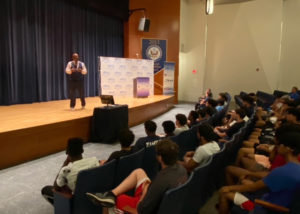
Harrison native and former NFL quarterback Ray Lucas speaks to high school student-athletes in his hometown about the risks of prescription opioids. Click here to read the story.
“On Overdose Awareness Day, we not only commemorate the lives tragically lost to overdoses, we also honor their memories by renewing our efforts to help those struggling with substance use disorder and prevent further tragedies from taking place,” said Murphy. “With the funds our state will receive through these settlement agreements, we have a meaningful opportunity to improve and save the lives of countless New Jerseyans.”
The settlements call for funds to go toward initiatives such as treating opioid use disorder, addressing the needs of criminal justice-involved individuals, offering harm reduction services, preventing overdose deaths, and supporting relevant research and training.
Submissions will be accepted via the portal, which can be found here, now through Oct. 31, 2022.
Taking the lead
Executive Order 305 establishes an Opioid Recovery and Remediation Advisory Council, which will be chaired by Commissioner of the Department of Human Services Sarah Adelman, to recommend how the funds will be prioritized and used. It also establishes the Department of Human Services as the lead agency for directing the use of the funds while performing the required reporting, disclosure and compliance obligations of the settlements.
“These efforts will save lives and help us end the devastating scourge of overdose and the pain it leaves behind,” said Adelman. “There is more work to do, and the creation of the Opioid Recovery and Remediation Advisory Council and the Opioid Settlement Portal are critical next steps to inform how the state will use opioid settlement funds. We look forward hearing this input and working with our partners to help individuals and families impacted by addiction and overdose.”

“The use of these settlement funds will help us expand and create programs that will restore lives and help save lives,” said New Jersey Health Commissioner Judith Persichilli.
The new portal, which will offer the public the chance to weigh in on how these funds should be used, will be available in multiple languages and open for an initial 60-day comment period to inform planning. It will be reopen annually to facilitate ongoing input.
“As we determine the best use of these funds to help combat the opioid crisis here in New Jersey, my Administration wants to hear from members of the public,” said Murphy. “The input we receive from the Advisory Council that will be created through my Executive Order and online portal will provide valuable insight into how our state can use these funds to further bolster and expand our ongoing support for the many families and communities impacted by this crisis.”