Sign In
Upcoming Event
 Free Newsletter


PHOTO: DEPOSIT PHOTOS
PHOTO: DEPOSIT PHOTOS
Lawmakers shine a light on study of contracting disparity in NJ
Matthew Fazelpoor//June 10, 2024//


A pair of hearings in Trenton last month elicited testimony highlighting a report released earlier this year by the Murphy administration that revealed significant differences in public contracting opportunities for minority- and women-owned business enterprises in the Garden State.
The Murphy administration commissioned the study in 2020 — the state’s first since 2005. Mason Tillman and Associates conducted the research, and the findings were released in January.
In compiling the report, MTA reviewed more than 1.2 million records and 240,000 contracts from over 60 contracting agencies, authorities, commissions, state colleges and universities between July 1, 2015, and June 30, 2020. The aim was to evaluate the participation of MWBE‘s in the state’s multibillion-dollar contracting space while determining other actions and programs to create a more equitable environment here in the Garden State.
Among the key findings and disparities:
- Minority-owned businesses represented 27.97% of the available construction businesses but received only 3.69% of the dollars for prime construction contracts valued from $65,000 to $5.71 million
- Minority-owned businesses represented 23.56% of the available goods and services businesses but received only 4.24% of the dollars on prime goods and services contracts valued from $40,000 to $360,000
- Women-owned businesses represented 37.75% of the available professional services businesses but received only 9.91% of the dollars on prime professional services contracts valued from $40,000 to $800,000
- Significant overutilization of businesses owned by non-minority males across all areas studied
“In New Jersey, our diversity is our greatest strength, and it is imperative that our procurement processes reflect these values,” said Gov. Phil Murphy in January. “The critical findings from this study will ensure the state is well equipped to address the inequities in public contracting opportunities faced by Women-owned, Minority-owned businesses, and service-disabled Veteran-owned businesses. I look forward to the work ahead as we identify responsive state action while launching initiatives to promote equitable contracting practices with the support of our lawmakers and the business community.”
To that end, the Assembly Community Development and Women’s Affairs Committee held a May 13 hearing on the issue of contracting opportunities for goods and services, professional services and construction.
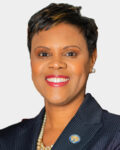
“For far too long, minority-owned businesses in New Jersey have encountered substantial barriers in accessing equitable opportunities within the state’s procurement process,” said Assemblywoman Shavonda Sumter, D-35th District, chair of the Assembly Community Development and Women’s Affairs Committee. “As we further explore the insights from the New Jersey Diversity Study, we have a duty to renew our dedication to cultivating a more inclusive and fair environment, ensuring every business owner has the opportunity to flourish.”
‘We are truly at a defining moment’
The hearing included a testimony from a number of business and government leaders including: Newark Mayor Ras Baraka; African American Chamber of Commerce of New Jersey Founder, President and CEO John Harmon; Statewide Hispanic Chamber of Commerce of New Jersey President and CEO Carlos Medina; Council of Black Architecture and Engineering Companies Co-Founder Julie Harris; and others.
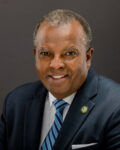
“We are truly at a defining moment in our state all about our equitable co-existence,” said Harmon. “The recent disparity study shows that Blacks were last in all procurement categories – and received less than one-and-one-half percent of public contracts.”
“Diversity adds value,” said Medina. “We all know that.”

“Minority-owned businesses, including our Black, Asian and Hispanic American entrepreneurs are shockingly underrepresented in crucial sectors like construction, professional services, and goods and services,” said Baraka.
“Public procurement is a job creator – and that money circulates within our communities,” said Harris. “I hire my engineers. They go home. They go to the bodega. They go to the grocery store. They create jobs for folks who work there.”
Harris described these jobs as economic equalizers.
“As you look at this disparity study; as you look at putting together this program, understand that it is economic development,” Harris stressed. “It’s not a social program.”
Just over a week later, a second hearing was held – this one by the Joint Committee on Economic Justice and Equal Employment Opportunity – which heard from more business leaders and other stakeholders about the issue.
“We are on the cusp of a pivotal moment in our state’s journey toward equity and justice. With the release of the long-awaited disparity study, we now have a clearer understanding of the systemic inequities that persist in the allocation of government contracts,” said Assemblyman Benji Wimberly, D-35th District, co-chair of the Joint Committee on Economic Justice and Equal Employment Opportunity. “The study’s findings provide valuable insights into the challenges and barriers that have hindered equitable access to opportunities for far too long. Together, we have the power to change the paradigm and create a community where every individual, regardless of race or ethnicity, has an equal opportunity to thrive.”
Sumter, who also chairs the state’s Legislative Black Caucus, testified at the Joint Committee hearing. She passed along insights learned from the hearing she chaired – noting that the MWBEs discussed challenges they faced, such as onerous paperwork, calls by prime contractors for work that they could not do – just to check a box, and forced waivers for prompt payment.
“MWBEs employ individuals locally, who will spend within their communities and throughout New Jersey,” said Sumter. “Our MWBEs are not looking for a social handout but an economic opportunity to work and deliver. It is up to us to deepen our work and create target procurement awards for state contracts in all areas. This is a Legislative Black Caucus priority for this session.”
“The statistics presented in the report are not just numbers; they represent the lived experiences and aspirations of countless individuals and families in our community,” said Wimberly. “They underscore the urgent need for action to address these disparities which have a domino effect on employment, homeownership, poverty rates, health care, education, and the economic fragility of our overall community infrastructure.”