Sign In
Upcoming Event
 Free Newsletter


The second annual NJ Film Expo took place April 30, 2026, at the Meadowlands Arena in East Rutherford. - MATTHEW FAZELPOOR/NJBIZ
The second annual NJ Film Expo took place April 30, 2026, at the Meadowlands Arena in East Rutherford. - MATTHEW FAZELPOOR/NJBIZ
NJ Film Expo highlights New Jersey film industry surge
Matthew Fazelpoor//May 4, 2026//


The basics:
- Second annual NJ Film Expo draws 4,000+ attendees, 90+ exhibitors
- Event gathers studios, financial institutions, vendors, workforce programs & more
- Reflects industry’s surge in NJ, as production spending hits $833M in 2024
- Covered tax credits, infrastructure, workforce development, job creation
“Whatever your production needs, Jersey’s got you covered” landed as more than a tagline at the second annual NJ Film Expo. It captured a state with deep film roots that has rapidly scaled in recent years.
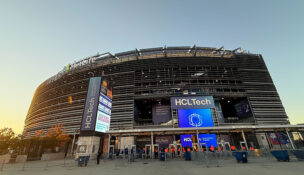
The Expo took place inside the former Izod Center at the Meadowlands Sports Complex. The shuttered arena that once stood as a major sports and entertainment hub here in New Jersey provided an unexpected, but fitting, backdrop. Now repurposed for events and production, the venue still carries the feel of another era. Lingering touches, like “Xanadu coming soon” signage, help establish a nostalgic setting that contrasts with a surging state industry as New Jersey emerges as one of the top production hubs nationwide.
In 2024, production spending hit record levels of $833 million. The momentum showed in the turnout. The NJ Film Expo drew more than 4,000 attendees and over 90 exhibitors. Attendees spanned the full production ecosystem, from major studios and financial institutions to vendors, workforce programs and public agencies.
Big names
The floor brought together major industry players and financial institutions such as Netflix Studios Fort Monmouth, Valley Bank, Withum, Genova Burns and Prudential Advisors. Production vendors in attendance included Cinelease, Universal Production Services, AbelCine, B&H Photo, Rose Brand, Rosco, Edge Auto, Herc Rentals and Eastern Effects.
The NJ Film Expo also featured workforce and training pipelines through organizations like the New Jersey Film Academy, Rowan University, Montclair State University’s Broadcast & Media Operations program and Weist-Barron-Ryan Acting & Casting. Union representation at the expo included Teamsters Local 817 and Motion Picture Studio Mechanics Local 52.
State and regional infrastructure was heavily on display, as well. Representatives included the New Jersey Economic Development Authority, Atlantic City Film Office, Liberty State Park, the City of Newark and Hudson County Cultural & Heritage Affairs, along with a network of studios, location services, and production support companies.
The presence of emerging and independent-focused organizations – such as Montclair Film, Indie Street Film Festival, Lighthouse International Film Festival and Palisades Post – reinforced the breadth of the state’s film ecosystem.
New Jersey leaders in attendance
At the center of it all, leadership from across government, including Gov. Mikie Sherrill and Lt. Gov. Dale Caldwell, and industry emphasized coordination and continuity.
Nick Day is co-CEO of Edge Auto and president of the Screen Alliance of New Jersey. The group organized the event in partnership with the New Jersey Motion Picture and Television Commission and the NJEDA.
Day said, “This project is designed to showcase the infrastructure that New Jersey has that supports the film and production industry. So, the more you can learn about the vendors that are here, how they connect to the industry, how you might collaborate with them in terms of your personal goal, your company’s goals – that’s mission number one.”
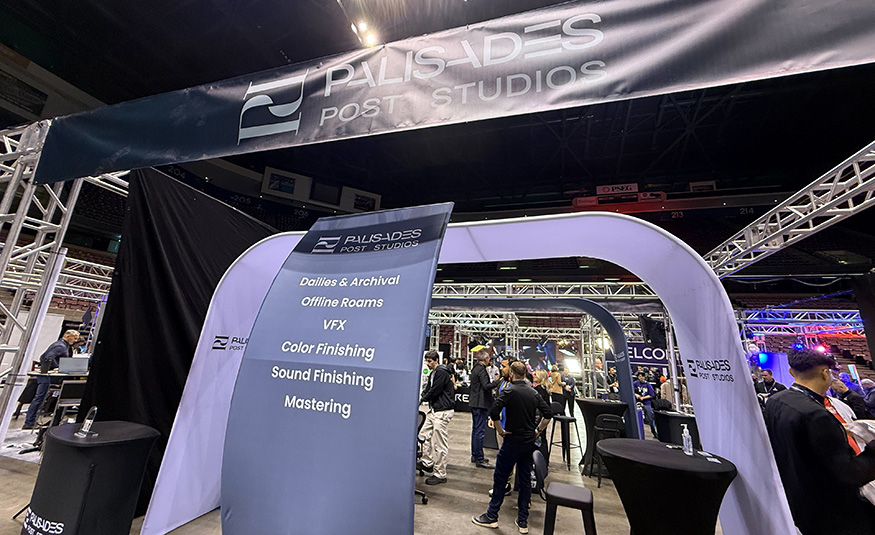
He also emphasized the event’s panel discussions. Five took place throughout the day.
“We have educators; we have union representatives; we have industry leaders,” said Day. “We have government representatives. And I think as you listen to all the different panels and get all those different perspectives, you can draw your own conclusions about the future of the industry — where it’s going and how you want to fit in.”
Call it a comeback
Day said the goal was for attendees to engage and make connections.
“One of the themes of the day today is that New Jersey is really writing one of the greatest comeback stories in the industry,” said Day. “This is where it all began, right here in New Jersey. Thomas Edison and his team pioneered motion picture at the Black Maria Studio in West Orange. So, the industry is not just arriving here – it was born here. Then it moved west and for decades it was out there.
“Now, we’re back in New Jersey, stronger, smarter, and more dynamic than ever,” he continued. “And productions aren’t here because it’s a nice option. They’re coming here because it’s a strategic decision driven by world-class talent, a growing infrastructure that you see here today, diverse locations, a strong tax credit and a collaborative ecosystem – an ecosystem that is sitting right here in this room.
“Unions, studios, technicians, sustainability leaders, government leaders, vendors, service providers all working together to make this growth happen. And we’re joined today by government leaders who recognize that this industry is more than entertainment – it’s bringing economic growth, workforce development, and long-term investment to New Jersey.”

‘This is the place to be’
NJMPTVC Executive Director Jon Crowley echoed those sentiments. During a listening tour he embarked on when he took the helm of the commission two years ago, Crowley said he discovered a sense that the state’s film infrastructure and workforce sometimes didn’t always feel seen or heard.
“And this is a way to be able to under one roof on one day, put on display everything that Jersey has to offer,” Crowley explained. “Because this is the place to be. What is the slogan for this event today – ‘Whatever your production needs, Jersey’s got you covered.’ And that’s the truth.”

He reiterated those assets, ranging from soundstages – with more on the way, including Netflix, Lionsgate and 1888 Studios – to a deep talent pool, along with cameras, lumber and other set materials; key production infrastructure; and a wide range of locations. Crowley stressed that New Jersey has what productions need from start to finish.
Ahead of the rest of the nation
The NJMPTVC leader moderated the expo’s first panel, Powering Production from Script to Screen. The session featured members of the commission and Caldwell.
As he introduced the panel, Crowley pointed to a recent Hollywood Reporter article that highlighted how film shoots are down in the U.S. this year — except here in New Jersey. “And now we’re going to find out exactly why,” said Crowley.
The conversation continued on stage, where panelists drilled into the mechanics behind that growth, from workforce development to tax incentives and the broader economic ripple effects, as well as ongoing and upcoming areas of focus.

Caldwell pointed to job creation as central to the state’s strategy. “Workforce with Gov. Sherrill and I is one of our top priorities,” he said. “Working with the Film Commission, the thousands of jobs this can or has and will create, we want to be a partner in making sure that there are more opportunities for folks to find jobs.”
Using the upcoming World Cup to highlight his point, Caldwell stressed that big things happen in New Jersey. He said the booming film industry is just another example.
“And so, as we look on building on that to let the world know about our film, our job opportunities and why New Jersey is the best place to do virtually anything, especially with film,” said Caldwell. “But jobs are No. 1 for us, so that we can really grow this and have more people moving into the state.”
‘Jersey attitude’
He added that accessibility is a key differentiator. Caldwell noted, “It’s easier to do business and film in New Jersey than anywhere else in the United States of America.”
Longtime Commission Chair Michael Uslan framed the moment in broader terms. He pushed back on comparisons to other markets while emphasizing the state’s legacy. “You may be reading in a lot of publications these days and online that New Jersey is Hollywood East,” he said. “That’s BS. Nobody from Jersey is going to accept that. California is New Jersey West.”
Instead, he pointed to what he sees happening in real time.
You may be reading in a lot of publications these days and online that New Jersey is Hollywood East. That’s BS. … California is New Jersey West.
– Michael Uslan, chair, NJ Motion Picture and Television Commission
“There is a film community being born here today for New Jersey,” Uslan said. “It involves Jersey attitude, no entitlement, no ego, and it’s up to you to move around, see all these vendors, talk to them, talk to the people sitting next to you and that you run into, and start to bond. Because together we are going to reclaim New Jersey from its place as the birth of the movie industry to the place where the future of the movie industry lies.”
Bringing back productions
Crowley also referenced Edison and how he invented the camera and the projector. When he started charging a tax, filmmakers headed west until they hit the Pacific Ocean, which led to the rise of Hollywood.
“There’s a full circle moment here where taxes drove them away, but tax incentives are bringing them back,” said Crowley, pointing to New Jersey’s Film and Digital Media Tax Credit Program. The incentive is widely regarded as one of the nation’s most competitive. “There’s a bit of irony there.”
Better than the original
Vice Chair David Smith highlighted how far the state’s incentive program has come. He recalled early limitations before its expansion into a cornerstone of the industry’s growth.
“It was $10 million—‘Jersey Shore’ was going to use it up and ‘The Sopranos,’” Smith said. Today’s program, he emphasized, is structured around accountability and impact. The current initiative took shape during the Murphy administration and now has a cap of $300 million. “It has a net economic benefit to the state for taxpayers. It’s not giving money away. You have to spend the money, you have to create the jobs, you have to stimulate the economy. And then after you get a CPA to certify you spent the money, then you get the tax credit,” Smith said.
For Tom Bernard, co-president of Sony Pictures Classics and a state film commissioner, the strength of that program – and how it was built – has been key to attracting productions.
“I think Jersey was the last to really put in a really extensive incentive program,” he said. “They took from all the other places where they had problems and made one that I thought is pretty perfect.”
Spielberg was here
Bernard added that beyond policy, the state’s versatility remains a major draw. “I think they’ve got every location from the beginning of time here,” he said.
He also highlighted how the production activity and the work of the film commission is changing the perception of Jersey around the world. Bernard pointed to Steven Spielberg’s upcoming new movie, “Disclosure Day,” which filmed in New Jersey last year.
Watch the ‘Disclosure Day’ trailer, courtesy of Universal Pictures:
“Steven Spielberg is probably going to have one of the biggest movies coming out this summer,” said Bernard. “The fact is that Oscar movies are now being made in New Jersey. They’re not being made somewhere else about New Jersey. And so in terms of the perception of that for the state, I think it’s bringing a different point of view to show the diversity of what happens in New Jersey.”
Local effects
Local impact was a recurring theme, particularly from Clinton Mayor and Film Commission Treasurer Janice Kovach. She emphasized how production activity translates directly to communities, highlighting the Film Ready NJ Program. The initiative helps towns prepare for a production shoot.
“It’s a great opportunity for the productions, but also for the municipalities,” said Kovach. “Because it’s a what to expect when you’re expecting. Not all of us deal with film productions every single day, so to have an understanding of what to expect when the circus comes to town is a great opportunity. And we built this community of municipalities and all the others that are joining us to really come together and engage together on it.”
Commissioner Carol Cuddy, a veteran production manager, also spoke about the importance of the program.
“The idea that you have 564 towns in New Jersey and if you’re filming you want to go from all these different towns into their variety of looks, everybody has different rules,” she said. “The idea of Film Ready is you get these towns all to have the same rules. So as a filmmaker, if you want to go someplace, you know that if it’s a Film Ready town, you already know what the parameters are. It makes it easy.”
New Jersey currently has about 60 Film Ready towns across the state.
Sherrill: ‘Film is in our blood’

Gov. Mikie Sherrill spoke in the afternoon, highlighting that theme of legacy and future growth.
“Film is in our blood here in New Jersey,” said Sherrill. “It’s part of our history – and now it’s going to be a big part of our future. Our state has seen 5,500 film and TV projects shot here since 2017; $3.3 billion invested to produce them; $2.3 billion in investment from Netflix, Paramount, and Lionsgate for studios; 31,000 crew members hired in 2024 alone, 10 Oscar nominations this year for films made here like ‘Song Sung Blue’ and ‘Marty Supreme.’
“We’re the only state in the nation where film shoots are up this year, by far, 45%. They’re filming everywhere from Belleville to Denville, Kearny to Keansburg, Wayne to West Orange. We’re on track to pass Georgia as the No. 3 state for film and TV production.”
Sherrill said that the progress is the result of smart, targeted investments and strong partnerships.
“Those partnerships include industry, government, and labor,” said Sherrill. “We’re going to keep building, keep filming, and keep making it easier for companies like yours to grow and to thrive here. New Jersey is open for film business.”
If the Expo proves anything, it’s that New Jersey’s film industry has moved past comeback to leveling up.