Sign In
 Free Newsletter

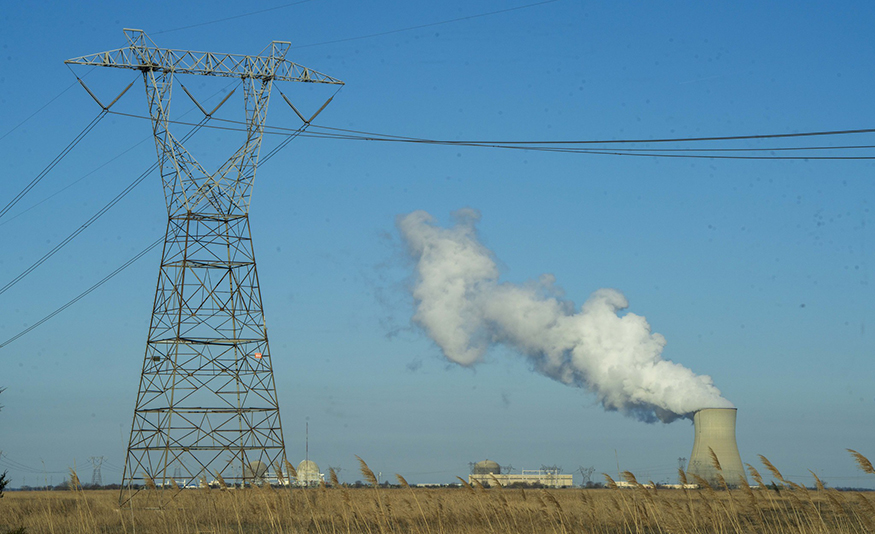
PSEG Salem Nuclear Power Plant in Lower Alloways Creek. - PROVIDED BY NJ GOVERNOR'S OFFICE/TIM LARSEN
PSEG Salem Nuclear Power Plant in Lower Alloways Creek. - PROVIDED BY NJ GOVERNOR'S OFFICE/TIM LARSEN
NJ lawmakers advance nuclear, gas and storage bills
Matthew Fazelpoor//June 2, 2026//


 Listen to this article
The basics:
- Lawmakers advance Power NJ Act to support advanced nuclear energy projects
- Another bill would streamline permitting for natural gas infrastructure upgrades
- Third measure targets 2,000 megawatts of energy storage capacity by 2030
- Legislation aims to improve grid reliability, affordability, energy supply
The Assembly Telecommunications and Utilities Committee advanced legislation May 28 that would establish a pathway for advanced nuclear energy development in New Jersey. The panel also approved measures aimed at modernizing natural gas infrastructure and expanding energy storage capacity.
Assembly Bill 4881 – known as the “Powering Opportunity, Workforce, and Energy Reliability for New Jersey Act” or “Power NJ Act” – is sponsored by committee Chairman Assemblyman Wayne DeAngelo, D-14th District. The centerpiece of the measure would direct the New Jersey Board of Public Utilities, in partnership with the New Jersey Economic Development Authority, to create a program for procuring advanced nuclear energy facilities in the state.
Under the bill, developers would submit proposals for advanced nuclear projects that would be evaluated based on their ability to improve grid reliability and resilience, address future capacity needs and provide value to ratepayers. The legislation would also establish a Reliability Capacity Certificate program, creating a mechanism to support approved projects while returning certain revenues generated by those facilities to New Jersey consumers.

“As New Jersey strives to meet growing energy demands, we need to be proactive in pursuing reliable and forward-looking solutions,” said DeAngelo. “Advanced nuclear technology has the potential to strengthen our energy infrastructure, support good-paying jobs, and provide a stable source of power that can meet future needs. This bill is about building a strong energy future while making sure we are creating opportunities and protecting ratepayers.”
Also advancing
The committee advanced two other energy measures sponsored by DeAngelo, as well.
A4882:
The “New Jersey Natural Gas Modernization Act” would require the Department of Environmental Protection to establish expedited permitting pathways for certain qualifying energy projects. The legislation is intended to accelerate reliability-focused infrastructure upgrades, including modifications to existing natural gas-fired generation facilities, replacement generation projects, and projects that incorporate co-located energy storage or renewable energy resources.
Among its provisions, the bill would require the NJDEP to meet specific review timelines, coordinate with PJM Interconnection LLC on interconnection requests, and prioritize projects that support grid reliability and reduce carbon emissions intensity.
A1072:
The third measure approved by the committee would require the NJBPU to establish a distributed energy storage incentive program designed to support at least 2,000 megawatts of installed energy storage capacity by 2030. The program would provide incentives for both customer-sited and front-of-the-meter storage systems, with the broader goal of helping New Jersey reach 3,000 megawatts of new energy storage capacity by the end of the decade.
The legislation would create a long-term incentive structure for battery storage projects, reserve a portion of incentives for low- and moderate-income customers and overburdened communities, and encourage energy storage systems to participate in PJM wholesale markets while providing reliability benefits to the electric grid.
As New Jersey strives to meet growing energy demands, we need to be proactive in pursuing reliable and forward-looking solutions.
– Chairman Assemblyman Wayne DeAngelo, D-14th District
A charged issue
The measures advance as energy affordability, reliability and supply remain central issues in Trenton amid rising energy prices.
Since taking office, Gov. Mikie Sherrill has made expanding in-state power generation a key priority, advancing what she has described as an “all-of-the-above” energy strategy that includes solar, battery storage, natural gas infrastructure upgrades and future nuclear development. She also recently signed legislation removing a longstanding barrier to new nuclear projects in New Jersey.
An April Fairleigh Dickinson University poll found broad voter support for expanding generation capacity through a mix of natural gas, renewable energy and nuclear power.