Sign In
Upcoming Event
 Free Newsletter

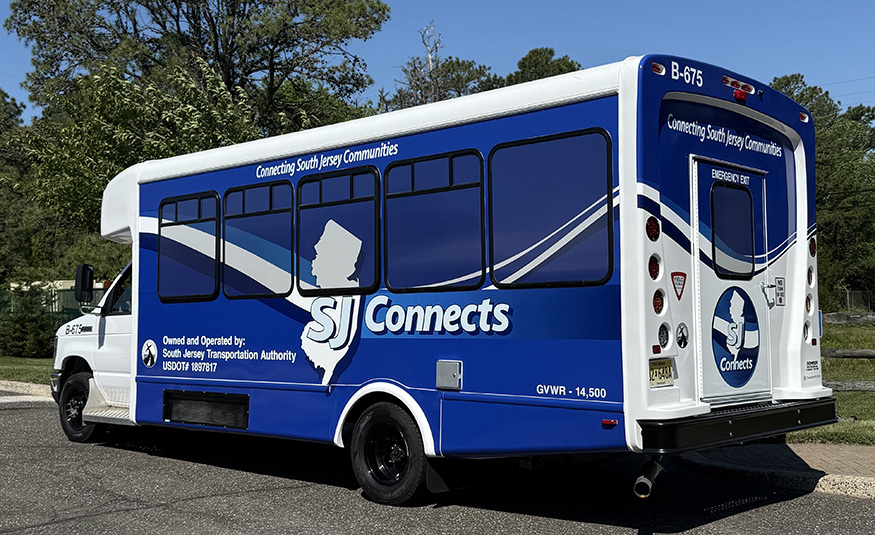
SJ Connects began service across seven South Jersey counties June 1, 2026. The initiative will provide free transportation during its pilot phase to employment centers, educational institutions, healthcare facilities, government offices, retail destinations and NJ TRANSIT connections throughout the region. - PROVIDED BY SOUTH JERSEY TRANSPORTATION AUTHORITY
SJ Connects began service across seven South Jersey counties June 1, 2026. The initiative will provide free transportation during its pilot phase to employment centers, educational institutions, healthcare facilities, government offices, retail destinations and NJ TRANSIT connections throughout the region. - PROVIDED BY SOUTH JERSEY TRANSPORTATION AUTHORITY
SJ Connects launches free shuttle service in South Jersey
Matthew Fazelpoor//June 2, 2026//


The basics:
- SJ Connects launches free shuttle service across 7 South Jersey counties
- Pilot program backed by $5M NJ Transit investment
- Routes connect residents to jobs, schools, healthcare, transit hubs
- Ridership data will help determine expansion opportunities
Transportation has long been one of South Jersey’s biggest economic challenges — and limited public transit options often make it difficult for residents to reach jobs, colleges, hospitals and other essential destinations.
According to state, business and community leaders, a new regional shuttle service launched June 1 intends to help close those gaps. SJ Connects began service across seven South Jersey counties.
During its pilot phase, the initiative provides free transportation to employment centers, educational institutions, healthcare facilities, government offices, retail destinations. It also offers NJ Transit connections throughout the region.
$5M support
A $5 million investment from NJ Transit backs the program. SJ Connects features a fleet of ADA-compliant shuttle buses. The initiative also includes funding for infrastructure improvements along with operations over the next 18 to 24 months.

“For too many South Jersey families, transportation challenges limit access to opportunity,” said Gov. Mikie Sherrill. “SJ Connects is an important step toward changing that reality by creating stronger connections … that help residents succeed. This free service reflects our administration’s commitment to ensuring South Jersey continues to receive the investment and attention it deserves.”
The program will operate throughout Atlantic, Burlington, Camden, Cape May, Cumberland, Gloucester and Salem counties. Leaders say the routes connect communities that have historically lacked reliable transportation options.
Former Gov. Phil Murphy announced several initiatives aimed at improving transportation in the region in August 2025, including this pilot program.
Making connections
New Jersey Department of Transportation Commissioner Priya Jain said the initiative improves access to essential services while supporting broader economic development goals.

“[P]articularly in areas that have historically faced transportation challenges,” said Jain. “It represents a systematic approach to improving mobility in a way that supports residents, strengthens workforce participation, and reinforces the broader economic vitality of the region.”
For many supporters, the announcement reflects a growing recognition that transportation infrastructure is critical to South Jersey’s economic competitiveness.

“Communities across South Jersey have long been left behind when it comes to reliable public transit,” said Assembly Majority Leader Louis Greenwald, D-6th District. “That lack of access affects people’s everyday lives and constrains our region’s economic potential.”
Greenwald said South Jersey has built a strong “Eds and Meds” corridor, anchored by hospitals, innovation centers and higher education institutions. However, he added, “those opportunities only matter if people can actually reach them.”
‘Ready to go’
State Sen. Michael Testa, R-1st District, pointed to Vineland’s role as a central hub in the network.

“Four of the six routes originating right here in Vineland is not a coincidence — it’s a recognition of where the need is greatest and where the workforce is ready to go,” said Testa. “This is the kind of practical, community-driven investment South Jersey deserves.”
NJ Transit President and CEO Kris Kolluri said the investment will strengthen regional connectivity and better integrate South Jersey into the wider state transportation system.

“Initiatives like SJ Connects help extend the reach of the broader transit network for residents across the region,” Kolluri said.
Getting to work
Business leaders also emphasized the economic implications of improved mobility.

“A chamber’s job is to remove barriers to economic growth and in South Jersey, lack of access to reliable transportation has been one of the biggest ones,” said Christina Renna, president and CEO of the Chamber of Commerce Southern New Jersey. “SJ Connects puts free, dependable transit on corridors where our employers are hiring and our workforce is trying to show up.”
Healthcare and higher education leaders said accessibility remains a key factor in people’s health.

“Transportation access is closely tied to healthcare access,” said Robin Walton, senior vice president of external affairs and chief philanthropy officer at Inspira Health. “Programs like SJ Connects can help reduce barriers for patients seeking care while also supporting the thousands of healthcare employees who rely on dependable transportation to get to work each day.”
Salem Community College President Michael Gorman said the service could make it easier for residents to attend classes in person.
“With the transportation barrier addressed through SJ Connects, they will be getting to campus,” said Gorman. “This is not simply a bus route, it is a pathway to career and personal success.”
Potential expansion
Officials said ridership data collected during the pilot will help determine future service needs. It will also help inform whether the network can expand in the years ahead.
Find out more
Additional route information, schedules and service details are available at www.SJTA.com
The broader goal aims to address one of South Jersey’s most persistent infrastructure challenges: connecting residents to the institutions and networks that drive the region’s economy.
“SJ Connects represents a major operational investment in regional mobility throughout South Jersey,” said Stephen Dougherty, executive director of the South Jersey Transportation Authority. “From professional drivers and brand-new vehicles to route planning, safety protocols, and day-to-day service reliability, our team has worked diligently to build a system residents can depend on.
“We’re proud of everyone involved in helping deliver this service and committed to providing safe, reliable, and accessible transportation connections throughout the region.”