Sign In
Upcoming Event
 Free Newsletter


PHOTO: DEPOSIT PHOTOS
PHOTO: DEPOSIT PHOTOS
NJ hospitals invest millions in advanced heart care
Martin Daks//August 24, 2026//


The basics:
- NJ hospitals are making multimillion-dollar investments in advanced heart care
- AI, advanced imaging and minimally invasive procedures are expanding treatment options
- Physicians say prevention remains the most powerful tool for reducing heart disease risk
In February, Robert Wood Johnson University Hospital, part of the RWJBarnabas Health system, announced it was the first hospital in New Jersey – and 26th in the nation – to achieve Joint Commission Disease-Specific Certification for Cardiac Care. It’s the latest sign of how seriously Garden State health systems are investing in heart care.

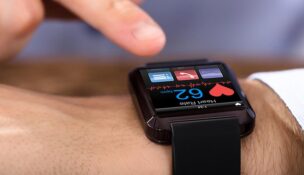
“We’re seeing significant growth in structural heart interventions, advanced heart failure therapies, minimally invasive procedures, and AI-assisted imaging that helps physicians diagnose and treat patients with greater precision,” said Dr. Conor Barrett, chief clinical officer and senior vice president at RWJBarnabas Health Heart & Vascular. “Remote monitoring and digital health tools are also allowing us to identify problems earlier and manage patients more effectively outside the hospital.”
None of that comes cheap. Major cardiovascular investments can run from several million dollars for an imaging platform or cardiac catheterization laboratory upgrade to tens of millions for advanced surgical, transplant and hybrid procedural programs — on top of digital infrastructure, remote monitoring technology and ambulatory access sites statewide. “They include physician recruitment, specialized staffing, research infrastructure, quality programs, and technology integration across multiple hospitals and outpatient locations,” Barrett said, describing a long-term commitment to a full care ecosystem, not just new devices.
Like other healthcare systems, RWJBarnabas is contending with rising costs and tightening reimbursement from Medicare, Medicaid and commercial insurers. Barrett’s response is to reframe the calculus. “Every health system is facing reimbursement pressure, but the answer is not to stop investing in innovation,” he said. “We focus on technologies and programs that improve outcomes, reduce complications, shorten hospital stays, prevent readmissions and expand access.”
On trend
Scale helps. As New Jersey’s largest academic heart and vascular network, RWJBarnabas leans on system-wide standardization, coordinated purchasing and vendor partnerships to stretch its dollars. “That scale allows us to invest in innovation while remaining good stewards of healthcare resources,” Barrett said.
He noted that the biggest trend in healthcare isn’t a single technology — it’s access. RWJBarnabas has invested heavily in its electronic medical record platform and recently rolled out online self-scheduling for cardiology appointments. “Patients deserve easy access to world-class care close to home, regardless of where they live,” he detailed while stressing that prevention, from blood pressure to blood sugar to weight, remains cardiology’s most powerful tool.
Data-driven care

Other New Jersey institutions are also aggressively moving ahead. “Artificial intelligence is increasingly being used to analyze imaging, identify patients at high risk for cardiovascular events, detect heart rhythm abnormalities earlier, and help clinicians make faster, more informed decisions,” said Dr. Irfan Admani, chief of cardiology at Bergen New Bridge Medical Center.
Structural heart procedures, including transcatheter valve replacement and repair, are letting many patients avoid open-heart surgery, Admani explained, reducing the length of hospital stays and speeding recovery. Instead of opening a patient’s chest, during a TVR the doctor makes an entry point in the patient’s leg to the heart and inserts a new tissue valve through a thin tube, or catheter.
“Further, overall cardiac care is becoming more preventive, less invasive, more personalized, and increasingly data driven,” Admani noted, pointing to advances in 3D echocardiography, cardiac CT, MRI and intravascular imaging. He said these kinds of breakthroughs are sharpening diagnoses, while robotic-assisted procedures and home-based remote monitoring help prevent hospitalizations and genetic testing is making personalized medicine more common.
‘Disciplined stewards of resources’
The price tag runs high — Admani said large cardiovascular service line expansions “can easily represent tens of millions of dollars in capital investment over several years,” on top of renovations, IT infrastructure, cybersecurity, staff recruitment and quality programs.
And reimbursement declines mean hospitals “must be disciplined stewards of resources,” he added. “We can’t invest in every new technology, so we should focus on innovations that demonstrably improve patient outcomes, enhance safety, and create long-term value for our patients and communities.”
Reducing readmissions, shifting procedures to outpatient settings, strategic capital planning and philanthropy all help control costs, he notes, but “the biggest advances in heart health still come from prevention. The choices we make every day – staying active, eating well, controlling risk factors and working with our healthcare team – remain the most powerful tools we have.”
Despite advances, heart disease remains the leading killer in the Western world. Though the American Heart Association reports the risk of dying from a heart attack has dropped roughly 89%, someone in the U.S. still dies of cardiovascular disease every 34 seconds.
Seeing like never before

“It’s not just about treating huge heart attacks anymore,” said Dr. Brett Sealove, chair of cardiology at Hackensack Meridian Health’s Jersey Shore University Medical Center and regional chair of cardiology for HMH’s Southern Region. “It’s about preventing that heart attack from the onset.”
JSUMC recently acquired a photon-counting CT scanner – what Sealove calls the “new gold standard” in cardiac imaging – making it one of the first sites in the state with the technology. Paired with coronary CT angiography, fractional flow reserve analysis and advanced plaque imaging, the scanner produces what amounts to a non-invasive coronary angiogram.
The hospital has also built one of the state’s most sophisticated cardiac MRI programs. “It’s not just the technology,” Sealove explained. “You need people to read it, appreciate it, and interpret it. That expertise is really our superpower.”
It’s not just the technology. You need people to read it, appreciate it, and interpret it. That expertise is really our superpower.
– Dr. Brett Sealove, chair of cardiology, HMH Jersey Shore University Medical Center
AI-driven predictive modeling platform DASI (Direct Analytical Surgical Individualization) simulation technology helps surgeons plan procedures like transcatheter aortic valve replacement – a minimally invasive medical procedure where a catheter is used map how valve sizes will fit a patient’s anatomy – before they enter the operating suite.
JSUMC’s structural valve program can now address most valve problems through a small arterial puncture, and its electrophysiology (EP) lab offers pulse field and renal nerve ablation. Sealove says the volumes rival major academic centers in New York and Pennsylvania.
Jersey Shore completed a $45 million cardiac floor just over a year ago featuring 10 operative suites handling 800 to 1,000 cases a month. Facing the same reimbursement squeeze as everyone else, Sealove sees a straightforward answer: “You do the right thing for the patient, and the dollars will follow. People want to come here because they trust us to have the newest, best equipment; with academic cardiologists that do incredible volume with incredible quality.”

But he also points to the American Heart Association’s “Life’s Essential 8:” sleep, hygiene, diet, exercise, weight, blood pressure, blood sugar and smoking cessation, as the true cornerstone of heart health. “If we could optimize all of those, it will dramatically improve your chances of avoiding needing all of these technologies,” he said. “But if by chance you do need us — we are really here for you.”
Closing the gap
Patients in Central Jersey used to face a hard choice: travel to Philadelphia or New York for advanced cardiac care; or settle for what was available locally. Capital Health, though, is closing that gap. Last year the healthcare system opened the $20 million-plus Heart and Vascular Center at Capital Health Regional Medical Center in Trenton. Measuring 12,650 square feet, the facility houses an operating room, a hybrid surgical/catheter suite and a dedicated cath lab.

“Our patients, whether inner-city Trenton, or Bucks and Mercer County, can get the exact same care here that they’d get in Philadelphia or New York,” according to Dr. Joseph Auteri, medical director of the Capital Health Heart and Vascular Institute. “Often in their own backyard, with loved ones able to visit.”
The new facility expanded the system’s minimally invasive offerings, including TAVR, MitraClip and TriClip catheter-based valve repairs; the Watchman device for AFib patients who can’t take blood thinners; and ablation procedures [where abnormal tissue in the body is removed or destroyed] using radiofrequency or freezing energy instead of open surgery. “It’s like using an accurate fly swatter rather than shooting a fly with a bazooka,” Auteri said.
Notably, Capital Health didn’t fund the center with operating revenue. “Our capital expenditures are largely borne out of philanthropic endeavors,” Auteri detailed. “The vast majority was acquired this way — not based on day-to-day reimbursement from procedures.”
He also points back to prevention and urges patients not to avoid care out of fear. “If you can get in early, we can likely fix many health issues,” he said. “Don’t be afraid. Get checked out. If something’s coming, it’s far better for us to find it when it’s small.”
A gift in Morristown
Atlantic Health Morristown Medical Center recently announced a major financial commitment from Morristown-based Crum & Forster to fund the new Crum & Forster Noninvasive Diagnostic Suite. Part of a larger $9 million fundraising campaign, the contribution marks the largest corporate donation in the history of the foundation for Morristown Medical Center.

“This incredibly generous donation will ensure that Atlantic Health Morristown Medical Center will continue to meet the growing demand of cardiovascular care, and we are most grateful to Crum & Forster’s long-standing legacy of philanthropy, innovation, excellence and community partnership,” said Trish O’Keefe, president of Atlantic Health MMC and senior vice president of Atlantic Health.
The new space within the Atlantic Health Gagnon Cardiovascular Institute will support earlier detection of cardiovascular disease with 18 recovery bays, two procedural suites and dedicated charting areas. Nearly 100,000 patients receive cardiovascular care annually at the Gagnon Institute, whose catheterization program is among the largest in the country.