Sign In
Upcoming Event
 Free Newsletter

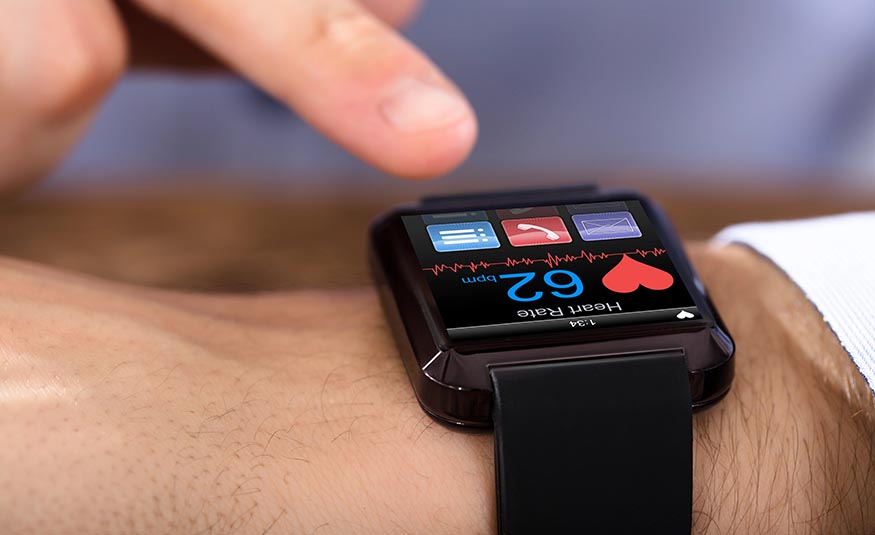
PHOTO: DEPOSIT PHOTOS
PHOTO: DEPOSIT PHOTOS
Remote cardiac monitoring transforms heart care
Martin Daks//August 24, 2026//


The basics:
- Wearable devices can detect silent AFib, potentially prevent strokes
- Medical-grade, implantable monitors provide continuous heart rhythm data
- Remote monitoring is expanding beyond AFib to blood pressure, other conditions
- AI and human oversight are helping doctors turn cardiac data into faster diagnoses
Not long ago, a close friend of Dr. Phillip Koren kept getting alerts on his Apple Watch suggesting he had atrial fibrillation (AFib), a condition where the heart’s upper chambers (atria) beat chaotically and out of sync with the lower chambers, causing an irregular and often rapid heart rhythm. This quivering can cause blood to pool, increasing the risk of strokes and heart failure.

Koren’s friend thought the alerts were false. He’d never been diagnosed with AFib, felt no symptoms, no shortness of breath, no palpitations, nothing. But he reached out anyway.
“I said, do me a favor, send me the records,” recalled Koren, director of the Cooper Heart Institute and medical director of Cooper and Inspira Cardiac Care. “I analyzed it, and he in fact was having AFib. He had no idea.”
Multiple episodes, completely silent. And Koren believes that catching it early likely prevented a stroke.
That’s why remote cardiac monitoring – wearable and implantable devices that track heart rhythms outside the clinical setting – has become one of the most consequential developments in modern cardiology. For a condition like atrial fibrillation, where the biggest risk is stroke and where many patients feel nothing at all, continuous monitoring can be a lifesaver.
Device definitions
Koren classifies remote cardiac monitoring in three broad categories, each offering progressively deeper medical insight. The first is consumer-based devices: Apple Watch, Samsung Galaxy Watch, and similar products that many people already own for non-medical reasons. They can detect irregular heart rhythms and record a single-lead EKG that patients can share directly with their physician.
Koren walks patients through enabling AFib detection during office visits, a process that takes just a few steps. But many users have never done it. “Just because you have an Apple Watch doesn’t mean atrial fibrillation detection is on,” he cautioned.
Also in this category is KardiaMobile, a small device available on Amazon for as little as $69 that patients carry in a wallet or pocket and trigger manually when symptoms arise. More advanced models provide up to six leads, offering greater diagnostic accuracy. The limitation, Koren notes, is that KardiaMobile requires the patient to activate it — meaning fleeting arrhythmias can be missed before the device is ready.
Just because you have an Apple Watch doesn’t mean atrial fibrillation detection is on.
– Dr. Phillip Koren, director, Cooper Heart Institute; medical director, Cooper and Inspira Cardiac Care
The second tier is medical-grade patch monitors, which physicians prescribe and patients wear continuously for anywhere from one day to several weeks. Data is either downloaded after the monitoring period or, in the case of Mobile Cardiac Outpatient Telemetry, is transmitted live to a monitoring center via a smartphone app. MCOT provides beat-to-beat surveillance in real time, making it particularly valuable for stroke patients whose cause is unclear and who may need AFib ruled out over an extended window. Unlike consumer devices, these are billed to insurance with both a technical and physician interpretation component.
The third category is fully implantable monitors, such as the Reveal LINQ — a device roughly the size of a small USB drive, that’s inserted just beneath the skin. “Newer models transmit data via 3G and 4G connectivity, meaning monitoring can continue whether the patient is at home or on the go, around the clock,” Koren explained.
Why it all matters
AFib’s danger lies not just in the irregular heartbeat itself, but in the clots that can form and travel to the brain. “Catching AFib early, before a stroke occurs, is the entire point,” Koren detailed.
As technology continues to improve and blood pressure monitoring via wearables edges closer to clinical viability, he sees remote monitoring becoming an ever more central pillar of cardiac care. “You know, we’re in an era where you can track your phone, you can track your kid, you can track your car,” he noted. “But this is to track your arrhythmias, right? So, we use these devices to save patient lives.”
Elsewhere, RWJBarnabas Health is betting that a small, disposable patch worn for 24 hours can catch what a quarterly blood pressure check in a doctor’s office often misses. The early results have turned what began as a modest pilot with Liberty Science Center’s SciTech Scity into a rapidly expanding piece of the health system’s cardiac care strategy.

“We originally went in with an idea to do 50 patients,” said Michael Prilutsky, executive vice president of RWJBarnabas Health and president and CEO of RWJBarnabas Health Medical Group. “At this point, we’re over 500.”

The initiative centers on Biobeat, an U.S. Food and Drug Administration-approved wearable that takes 96 measurements over a 24-hour period without requiring the inflating cuffs associated with conventional blood pressure monitoring. “The patients don’t really feel it,” Prilutsky said. He noted that the device is disposable and largely eliminates compliance problems that often undermine remote-monitoring programs.
The pilot is led by Dr. Kimberly Skelding, chief of cardiology at Jersey City Medical Center, and Dr. Pragnesh Gadhvi, director of clinical cardiology-ambulatory at Jersey City Medical Center. It began as a hypertension-focused effort but has since expanded to high-risk maternity patients, given the dangers posed by preeclampsia and high blood pressure during pregnancy.
More than ‘a point in time’
The clinical impact has been substantial. Prilutsky said that RWJBarnabas Health has submitted a scientific abstract to the American Heart Association reporting that roughly 60% of patients using the device needed their therapies adjusted based on the data clinicians received. “The typical once-every-whatever-three-months blood pressure check that we do when we go to a physician’s office, it’s just a point in time,” Prilutsky explained, adding that patient anxiety in clinical settings can also distort readings. Overnight monitoring has proven especially valuable, he said, in some cases surfacing undiagnosed sleep apnea and prompting referrals to pulmonary specialists.
RWJBarnabas Health is now evaluating expansion to additional sites across the system, including Cooperman Barnabas Medical Center in Livingston and Newark Beth Israel. The work is part of a broader innovation push tied to the system’s academic partnership with Rutgers University, including the Helix NJ (Health & Life Science Exchange) hub in New Brunswick, which Prilutsky described as poised to become the state’s largest innovation center.

He was careful to note that reimbursement often lags behind innovation — meaning newer devices can cost providers money even as they improve outcomes. Still, he says remote monitoring will pay off in the long term by keeping patients out of costly emergency rooms and inpatient beds, ultimately benefiting the broader health system, even if the exact savings are difficult to trace across payers.
With roughly 8,000 affiliated providers and more than 5 million patients served annually, Prilutsky said RWJBarnabas Health’s scale and academic infrastructure position it to test emerging technologies and determine “if it lands with what innovators want” — a device that’s both clinically effective and commercially viable.
Symptom to diagnosis
A Mount Laurel-based leader in cardiac monitoring is helping transform how heart conditions are monitored, bringing advanced technology and clinical expertise directly into patients’ everyday lives. RhythMedix recently launched the RhythmStar SL, the third generation of its FDA-cleared wearable cardiac monitoring system.
The device allows physicians to continuously track a patient’s heart rhythm outside a clinical setting. It automatically transmits cardiac data to the company’s monitoring center via built-in cellular connectivity — no separate phone or transmitter required.

“Unlike traditional monitors that require a separate phone or transmitter, RhythmStar has cellular connectivity built directly into the device, allowing cardiac data to be automatically transmitted to our monitoring center for review,” said RhythMedix President and CEO Brian Pike. RhythmStar is currently used by hundreds of healthcare providers nationwide and the company has monitored more than 2 million patients to date, Pike detailed.
“We’re headquartered in Mount Laurel, and New Jersey has been an important part of our development from the beginning,” Pike said. “We have worked with healthcare organizations in the state and continue to see New Jersey as an important market for innovation in cardiac care.”
Diagnostic blind spot
The clinical case for wearable monitoring, Pike explained, comes down to timing. Heart rhythm abnormalities are often intermittent, meaning a patient can have a completely normal ECG during an office visit even if a dangerous event occurs hours or days later.
“Wearable cardiac monitors allow physicians to observe the patient’s heart over a much longer period and capture events that might otherwise be missed,” Pike said. He added that RhythmStar pairs continuous ECG monitoring and automatic transmission with 24/7 professional review, aiming to shorten the time between an unexplained symptom and an actionable diagnosis.
Wearable cardiac monitors allow physicians to observe the patient’s heart over a much longer period and capture events that might otherwise be missed.
– Brian Pike, president and CEO, RhythMedix
Beyond the clinical benefits, Pike positioned RhythmStar as a tool for healthcare institutions under pressure to control costs. By shifting appropriate monitoring out of hospital settings and into patients’ everyday routines, providers may reduce unnecessary office visits, hospital-based monitoring and repeat testing.

Spotlight on cardiac healthcare
also in this section:
- NJ hospitals invest millions in advanced heart care
- New Jersey hospitals turn to AI to advance heart care
“That combination of technology and expert human oversight can help healthcare providers deliver the right level of monitoring without adding unnecessary complexity for patients or clinical staff,” Pike said, adding that RhythMedix’s U.S.-based monitoring team reviews transmitted data and delivers timely reports to physicians.
Instead of chasing new wearable form factors, RhythMedix is investing further in its existing platform, including its proprietary Augmented Arrhythmia Intelligence technology, which combines algorithmic analysis with layered human review. The company is also expanding its capabilities into cardiac implantable electronic devices (CIEDs), a natural progression that extends its cardiac monitoring expertise from ambulatory ECG into the long-term management of patients with implanted devices.
“Our goal is to make remote cardiac monitoring increasingly seamless, intelligent and always clinically impactful,” Pike explained.
With national scale already established, RhythMedix’s next chapter will test whether continuous innovation – not just initial adoption – keeps a homegrown New Jersey medtech company at the forefront of cardiac care.