Sign In
Upcoming Event
 Free Newsletter

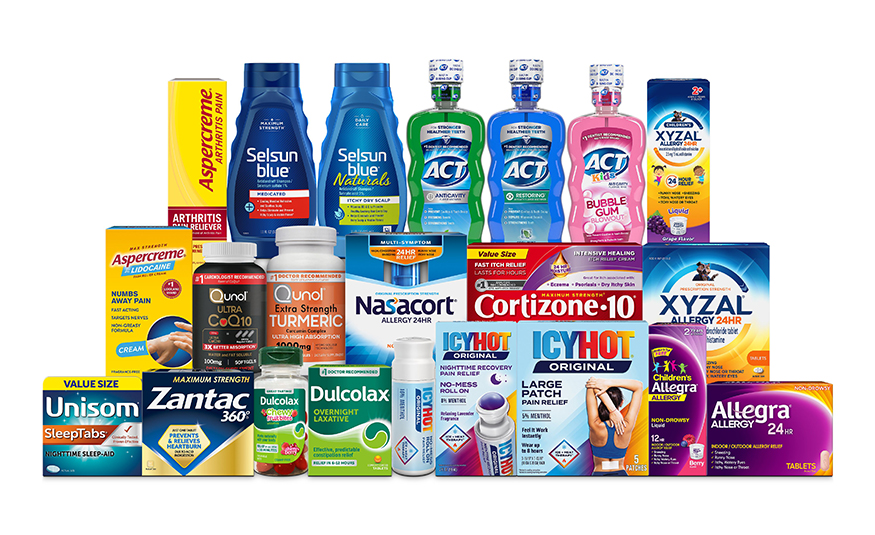
Opella's portfolio includes Allegra, Icy Hot, Aspercreme, Selsun Blue, Nasacort, Dulcolax, Zantac, Unisom, Xyzal, Qunol and Cortizone-10. - PROVIDED BY OPELLA
Opella's portfolio includes Allegra, Icy Hot, Aspercreme, Selsun Blue, Nasacort, Dulcolax, Zantac, Unisom, Xyzal, Qunol and Cortizone-10. - PROVIDED BY OPELLA
Opella builds consumer health business after Sanofi split
Kimberly Redmond//June 29, 2026//


 Listen to this article
The basics:
- Opella marks one year as an independent company after Sanofi spinout
- Morristown serves as North American headquarters for consumer healthcare business
- Company is expanding self-care innovations across trusted OTC brands
- Leadership says independence enables faster innovation, consumer focus
One year after spinning off from French pharmaceutical giant Sanofi in a $11.4 billion deal, consumer healthcare company Opella is building out its identity as an independent global leader in self-care. Since separating in April 2025, Opella – which has its North American base in Morristown – has been doubling down on its mission of making everyday health more accessible through a broad portfolio of trusted over-the-counter medicines, vitamins and wellness products.
A mashup of the words “open” and “wellness,” Opella is the company behind a suite of household-name brands that more than half a billion consumers worldwide rely on to treat everyday ailments such as allergies, pain and digestive issues. Its portfolio includes Allegra, Icy Hot, Aspercreme, Selsun Blue, Nasacort, Dulcolax, Zantac, Unisom, Xyzal, Qunol and Cortizone-10.
Even before the spinout, the France-headquartered firm had already positioned itself as one of the world’s largest consumer healthcare companies, and the third-largest player in the over-the-counter and vitamins, minerals and supplements market.
Under the terms of the separation, private investment firm Clayton, Dubilier & Rice gained a controlling 50% stake while Sanofi retained a significant ownership interest.
Growing trend
The move made Sanofi one of the latest pharma giants to spin off or divest consumer health units as part of broader efforts to sharpen strategic focus on prescription medicines and vaccines. Novartis, Johnson & Johnson, Pfizer and GSK have made similar moves in recent years.
“I think where there’s still consumer pharma companies combined, I think we’ll still continue to see this trend of separation down the road simply because the business models are just so vastly different between FMCH [fast-moving consumer healthcare] and traditional pharma,” said Greg Ross, Opella’s president for North America.

“For us, it has unlocked so much opportunity and growth for us just being able to design our entire organization around the business model of fast-moving consumer healthcare … We weren’t the first to do this and in many, ways we’ve learned from those that went ahead of us, but we also, I don’t believe we’ll be the last,” he added.
The transaction marked the beginning of a new chapter at Opella as a focused, consumer-driven company in a market increasingly shaped by convenience, wellness and preventive care.
To capitalize on the flexibility that comes with operating independently, the company says it spent the past year building an agile, innovation-led organization designed to respond more quickly to evolving consumer needs.
Executives say the standalone structure has also enabled Opella to invest more strategically in categories where demand for accessible, everyday health solutions continues to grow.
Around the world
Globally, Opella’s workforce of roughly 11,000 employees is spread across 13 manufacturing sites and four research & development centers.
Ross leads operations in the U.S. and Canada from Morristown. He oversees roughly 800 workers. In addition to its division headquarters in Morristown, Opella’s local footprint includes a facility in Totowa focused on Qunol supplements. Opella also has a manufacturing site in Tennessee and regional sales offices in Arkansas and Canada.

Ross joined Opella in 2024 to help guide its shift into an independent company. Before that, he was chief operating officer of North America personal care at Unilever. And he spent 13 years at Colgate-Palmolive in a variety of roles across marketing and general management.
“The last year has been an incredible journey for, I think, the entire organization,” Ross said. While it was “quite the undertaking,” he went on to say, “We were well prepared … and overall, it’s been quite seamless.”
“Sanofi was a terrific partner in that process of that separation and we’re very fortunate to have an exceptional private equity company CD&R as our primary shareholders that have really also helped to provide us the support we needed throughout this first year,” he said.
Without interruption
“I think the first biggest accomplishment is actually completing the separation successfully and being able to really start the separation of everything from our infrastructure or processes or ways of working without really creating any business disruption,” he said.
“And that’s usually the first big milestone — to really start to stand it up in a way that can operate fully independently. Everything from creating new organizations that previously were shared with the parent company to negotiating with healthcare benefits providers and IT providers, etc.,” he said.
“And then after that, it’s the continued growth that we’ve been able to drive on the business, really continuing to step up our innovation efforts on our brands, being able to drive the month-on-month performance within market share and driving our category growth,” Ross said.
‘The speed of TikTok’
While large pharmaceutical companies can spend years developing drugs that can only be obtained by prescriptions, Ross said, “In our world, we need to be extremely consumer-centric, and we need to be able to respond to the evolving consumer needs as they happen.”
“We talk about moving at the speed of TikTok and for us it’s that operational intensity, the innovation intensity and bringing that forward to be able to respond on the dime to what our consumers are asking for and making sure that we’re continuing to deliver against our needs and build our brands behind loved kind of consumer experiences,” he said.
“There’s no one kind of playbook per se, but what I would say ultimately any brand today needs to be embedded in culture and needs to understand what’s happening in culture around you. And that requires in-depth social listening and always understanding, what are influencers talking about today? What is the conversation that’s happening? Because that’s where trends are being created, that’s where brands are being built today and where trust exists is when people are hearing other people like them or people they follow for their recommendations,” Ross said. “That’s really what is driving in today’s world. People are saying, ‘Yes, I want to buy that because it’s coming from trusted voices and not just coming from the brand.’”
There’s no one kind of playbook per se, but what I would say ultimately any brand today needs to be embedded in culture and needs to understand what’s happening in culture around you.
– Greg Ross, president for North America, Opella
“And for us, it’s always about having a combination of the superior science … technology that we can leverage and adapt to the latest consumer needs. And trying to stay just one step ahead of where we see the trends going and then making sure we bring it to the consumers in a culturally relevant way where we’re part of the ongoing conversation versus the historical advertising model, which was you launch a big campaign and then you’re done for the year and then you work on next year,” Ross explained. “Today’s world requires a constant evolution where we’re evolving every day. We’re responding to the needs of consumers every day and we’re building our brands in a way that’s incredibly organic and natural and authentic with our consumers.”
‘Embracing culture’
Some of the most recent marketing pushes include those made by 24-hour allergy relief medication Xyzal and lidocaine cream Aspercreme. “The Xyzal team has done a terrific job truly embracing culture. Our mascot is Nigel the Owl and in the past he just lived in a TV commercial, but now you’ll see Nigel at outdoor music festivals where people suffer from allergies as they’re trying to enjoy their favorite bands playing,” he said.
This year, the brand will mark its third consecutive appearance at Sea.Hear.Now Festival in Asbury Park, where Xyzal will be on site handing out mini-Nigel toys and swag from a booth.

“You’ll also see Nigel on TikTok trying out the latest TikTok trends or educating our followers on what is truly driving allergies … Nigel is a big user of TikTok,” Ross said.
Opella reached new heights earlier this year when its Dulcolax laxative brand was among the over-the-counter medications included in the Orion spacecraft’s medical kit for the Artemis II mission. Dulcolax was added to help the crew manage digestive changes in microgravity.
First NIL deal
Opella also signed a NIL [name, image and likeness] deal with Thomas Cillo, a 58-year-old who made headlines last fall when he became the oldest college football player in NCAA history.
Ross said the Lycoming College student was “a perfect fit” for Aspercreme, showing how one can recover “after the beating that you take in practice or on the field.” He added, “That was an incredible activation that got tremendous pickup.”
The September 2025 partnership made Cillo the oldest college football player to sign an NIL deal. It was also Opella’s first-ever NIL deal, The Athletic reported at the time.
“And again, as an example of being part of culture, tapping into these moments where it’s relevant for the brand and you can bring to life the proposition that you have in your technology and the brand itself,” Ross said.
Consumer health trends
As for trends shaping the consumer healthcare space, Ross said the public is becoming much more proactive about overall personal wellbeing and selfcare. And, because artificial intelligence is helping “put true knowledge and power” at their fingertips, Ross believes the technology will accelerate the momentum.
“We’re seeing this take shape in the tremendous growth within the vitamins, minerals and supplements category,” Ross said.
“You also see the rise of GLP-1s as people are tackling various issues, whether it’s diabetes or weight management, and that’s really had a ripple effect across the industry because now people need to address either the side effects or changing their habits to become healthier,” he said.
“We see this movement toward proactive preventative self-care as really the future of self-care and the future of the growth in the category. And that’s how we’re really thinking about our innovation, our brands, and how do we orient to truly put health in more hands of consumers by arming them with the knowledge, arming them with the superior science and the technology to proactively live healthier lives, as opposed to only thinking about it as a problem and solution type of category,” Ross said.
‘Moments of joy’
Some recent innovations include daily gut support gummies from Dulcolax. Available in two flavors (orange and berry), the stimulant-free, magnesium-based supplement is designed to seamlessly integrate into any wellness routine, according to Opella.
“That’s really positioned around proactive gut health and helping consumers – whether you’re on a GLP-1 or just more aware of the gut-body health connection and thinking about the benefits of having a more regular digestive system,” Ross said.
Opella also unveiled sleep aid Unisom’s first-ever drug-free, melatonin-free supplement. Formulated with magnesium and ashwagandha, Unisom Sleep Support Gummies aim to help consumers manage stress, stick to healthier sleep habits and wake up feeling more refreshed.
Unlike traditional sleep aids, it is intended for daily use as part of a proactive wellness routine, according to Opella.
“The other space that we see within the self-care industry is the idea of no longer just thinking about self-care or healthcare as medicinal. So, how do we bring in moments of joy into the category? How do we take an experience that you might have with a product and ultimately deliver an experience that surprises and delights the consumer while they’re at it?” Ross explained.
“So, for Icy Hot, which traditionally has a very distinct kind of menthol scent … we’re bringing in fragrances like citrus, topical, lime & mint to give you kind of a surprise and delight pleasant scent as you’re using the product. And for us, bringing these little moments of joy just help to make the category much more interesting, much more appealing, and ideally will drive more usage of the category to help people ultimately take better care of their health,” Ross explained.
Another innovation is a stick format of Cortizone-10 Bug Bite treatment. “It has a nice kind of rollerball application that you can apply and target for any bug bites that you have … It’s a wonderful product that is also just hitting market as we speak and especially applicable for a good New Jersey summer,” he said.
‘A $5 billion startup’
Designed by Gensler, Opella’s two-year-old office at 21 South St. in Morristown is located just steps away from Sanofi’s flagship at M Station West. Its former parent company relocated there from Bridgewater in May 2025.
When the 16,903-square-foot space at The Hampshire Cos.-owned property was remodeled about two years ago, it was done with the intention of making it modern and inviting for the company’s hybrid workforce, Ross said.

“It was also designed to be very collaborative. It’s a very open space. We don’t have offices. I don’t have an office – I pick my desk every morning like everyone else. We wanted to truly create a sense of one team and drive that fluid collaboration,” he said.
Ross emphasized the importance of building a culture where workers form genuine connections and feel comfortable speaking openly to enable faster, better decision-making.
“That also creates an atmosphere where people enjoy coming into work because they enjoy the people they’re working with because they’ve built those personal bonds and those personal connections. And for me, it’s critical that I role model that myself and so does the leadership team. So, if you walk in on any given day, our leadership team is spread out throughout the floors and spaces because we all pick our desks in the morning and it’s first come, first serve.”

“Our view across our leadership team is we are one team and there’s no job too small for any one person. We’re in it with the same objectives, which is to service our consumers. Our mission is to put health in your hands and by making healthcare as simple as it should be. And as part of that, we need to be ready to roll up our sleeves and do whatever it takes to service our consumers, to grow the business and to grow our categories,” Ross said.
“And you drive that by being available to people when they need you to make decisions and to be agile. So, we try to embrace the opportunity to be much more entrepreneurial than maybe some of our larger peers that have many more layers, much more bureaucracy just given their size,” he said.
“I like to refer to us globally as we’re a $5 billion startup in many ways. We have the startup entrepreneurial mindset where we drive accountability, autonomy and allow people to really go and innovate and own their business. But we also have the resources of a larger company,” he said.
“Also, sustainability … we are the first globally certified B Corp company in our industry. Sustainability is core to our values, so we did everything through the lens of making it as sustainable as possible,” Ross said.
The company achieved that milestone in June 2025 following a multiyear transformation to embed sustainability, transparency and social impact into the core of its business model.
Here in the Garden State
“As a Jersey boy, I honestly think you can’t get a better place than New Jersey to have your headquarters in terms of just access to talent. There are amazing universities and many companies, especially in the area that we’re at,” Ross said.
“And I couldn’t draw up a better location than Morristown for us. It combines the convenience in terms of being well situated within New Jersey to tap into the talent pool and all the communities around Morristown. It’s a beautiful place to live with a great education system, so it’s great for our employee base that are looking to make New Jersey home in beautiful communities.”
As a Jersey boy, I honestly think you can’t get a better place than New Jersey to have your headquarters in terms of just access to talent.
– Greg Ross, president for North America, Opella
“And within Morristown specifically, we’re right off the square … which allows us to really have a little bit of a city vibe with restaurants, shopping and bars for happy hour afterwards,” Ross said, adding, “You also have the convenience of being able to have an easy commute home pretty much within a large area of New Jersey.”
The road ahead
When it comes to challenges, Ross said, “We’re constantly keeping an eye on the economy and what inflation may do in terms of consumer spending and habit changes.”
“And looking at it more through the lens of the K-shaped economy and what’s happening and the pressure on the lower-income consumers and making sure that we continue to service them because in no world do we want our consumers not being able to treat a health issue that they’re having,” he explained. “So, making sure we have the right sizes and price points that allow us to continue to put health in their hands and allow them to treat what they need.”
Ross declined to elaborate on potential investments or acquisitions by Opella but said, “We’re always keeping our eye open for the next opportunity in the emerging spaces.”
“Ultimately as a company, we want to continue to help fuel the proactive self-care and wellness routines of our consumers and be part of that. So, from our lens, we’re always looking at what’s the next space for growth and where do we see those opportunities, especially as we think about that proactive self-care routines of our consumers,” he said.