Sign In
Upcoming Event
 Free Newsletter


PHOTO: DEPOSIT PHOTOS
PHOTO: DEPOSIT PHOTOS
Pharmacy chains are shrinking. Is it time for a new model?
Kimberly Redmond//December 2, 2024//


The basics:
- Pharmacy chains across the U.S. are shrinking their brick-and-mortar presence, raising concerns about access to medicine and care, particularly in rural and low-income communities.
- Drug stores are facing challenges such as falling prescription reimbursement levels, theft and changing consumer habits.
- And as physical drug stores contract, digital pharmacies such as Amazon are angling to capture a share of the market.
As pharmacies across the U.S. shrink their brick-and-mortar presence, the trend raises concerns about access to medicine and care — particularly in rural and low-income communities.
Before the pandemic, drug store chains recorded waves of growth. Now, faced with challenges such as falling prescription reimbursement levels, allegedly persistent theft and changing consumer habits, companies are trying to right-size their physical footprint.
An August 2024 study published in the Journal of the American Medical Association found that nearly half of U.S. counties have communities that lack easy access to a drug store. These so-called “pharmacy deserts” can be poor neighborhoods where residents are less likely to own cars and a drug store is more than a half mile away. It also refers to rural areas where drug stores may be many miles away.
When chains are shuttering stores, they often target those in lower-income, Black and Latino neighborhoods where a greater number of people are covered through public insurance, which has lower reimbursement rates that private plans.
“As pharmacies close, more and more individuals are left without easy access to medications, with disproportionate consequences for certain communities. People already at highest risk of being neglected by the health care system are most likely to be affected by pharmacy closures,” the report noted.
Compared to other states, New Jersey has a low proportion of “pharmacy deserts,” but the ever-growing number of closures is creating uncertainty for communities.
According to an Associated Press analysis from early June, there are 2,023 retail pharmacies – about 0.22 per 1,000 people – in New Jersey. While there is a greater concentration of pharmacies in cities, like Newark, which has 0.69 per 1,000 residents, some of the more rural areas of Hunterdon, Warren and Sussex counties lack any pharmacies, the AP data show.
Prescription for problems
Within the past few years, big chains like CVS Health, Rite Aid and Walgreens have started to downsize after years of aggressive expansion. The thousands of closures nationwide include dozens of drug stores in New Jersey.
Executives with chains have pointed to a range of reasons, including reduced spending by inflation-weary consumers and lower reimbursements by pharmacy benefit managers.
They’re also up against big box retailers, like Walmart and Costco, where customers can fill prescriptions while they shop for groceries, as well as competition from a growing lineup of digital pharmacies.

Industry analysts also believe chains made the mistake of embarking upon huge expansion campaigns at a time of changing shopper preferences.
By the time the big names peaked in 2017, many local independent stores and small chains were acquired or driven out of business. CVS held more than 4% of the market, with 9,000-plus stores while Walgreens’ 8,000 locations represented about 2.4% of the space, Slate reported.
Both companies have had mixed results with trying to draw customers by incorporating primary care clinics into stores.
Less than three years after Walgreens paid $5.2 billion for a controlling interest in VillageMD, the company is considering a full sale of its stake because running the provider network hasn’t been profitable, according to a U.S. Securities & Exchange Commission filing.
Last year, CVS completed two acquisitions – of home care provider Signify Health for $8 billion and value-based medical chain Oak Street Health for $10.6 billion – as part of its mission to advance a “value-based care strategy.”
Getting healthier
Amid the changes in the market, chains say they are trying to update business models to better reflect shifting consumer habits and fend off competition. They’re also tapping new leadership.
Between 2022 and 2024, CVS closed nearly 900 stores across the U.S. as part of a plan to optimize its footprint. After closing 15 locations in New Jersey, the Woonsocket, R.I.-based chain now has about 340 outposts left statewide – including those inside Target retail stores.
In a statement to NJBIZ, a spokesperson said CVS’s closure decisions “are based on population shifts, consumer buying patterns, a community’s store density, maintaining access to pharmacy services and future health needs to ensure we have the right stores in the right locations for consumers.”
The rep added, “The strategic realignment also supports the evolution of our stores into community health destinations that meet our patients’ health, wellness and pharmacy needs. Even after the realignment work, 85% of people in the U.S. will still live within 10 miles of a CVS Pharmacy.”
As part of a multiyear campaign to trim $2 billion in costs, CVS is in the process of cutting 2,900 jobs company-wide. The downsizing primarily focuses on corporate positions in regional offices and will affect fewer than 1% of the overall workforce, CVS said. Locally, CVS expects to eliminate 111 positions at its Florham Park office in January 2025.
In the past year, CVS has slashed 5,000 non-consumer-facing jobs nationwide to reduce expenses — including nearly 300 workers in New Jersey.
Amid the efforts to stabilize its business, CVS recently named David Joyner, a longtime CVS executive who previously worked at Aetna and Caremark, as its new chief executive officer, replacing Karen Lynch.
Meanwhile, Walgreens plans to shut down 1,200 locations over the next three years in a bid to slash $1 billion in costs. That includes 500 store closures in 2025 alone, according to the chain. Of the company’s 8,000-plus store footprint across the U.S., 1-in-4 locations is considered unprofitable, Walgreens also said.
The Deerfield, Ill.-headquartered chain has not yet specified which stores will close nor how many jobs it will eliminate. However, Walgreens has said it will focus on poor-performing locations where the property is owned by the company or where leases are expiring.

Within New Jersey, the brand has more than 190 locations.
Walgreens CEO Tim Wentworth recently described fiscal year 2025 as “an important rebasing year” as the company advances its strategy “to drive value creation.”
Wentworth added, “This turnaround will take time, but we are confident it will yield significant financial and consumer benefits over the long term.”
The strategy involves tweaking the way in which the company responds to shifting consumer behavior and buying patterns. That includes experimenting with smaller format stores that would be less expensive to operate, as well as taking another look at what’s sold.
Rite Aid recently emerged from bankruptcy with a whittled down portfolio of 1,300 stores. After filing a Chapter 11 petition in October 2023, Rite Aid has closed more than 500 pharmacies nationwide – including three dozen locations in New Jersey. Now, the Philadelphia chain’s in-state presence stands at 61 stores.

When Rite Aid completed the restructuring process in September, it described itself as “stronger company with a rightsized store footprint, more efficient operating model, significantly less debt and additional financial resources.”
Rite Aid also named company veteran Matt Schroeder as its new chief executive officer. Schroeder joined the organization in 2000 as a vice president of accounting, rising through the ranks to become chief financial officer in 2019. He replaced Jeffrey Stein, who stepped down as CEO and chief restructuring officer in connection with the company’s exit from Chapter 11.
Digital solution?
As physical drug stores contract, digital pharmacies such as Amazon are angling to capture a share of the market. In coming months, the Seattle-based e-commerce giant plans to expand its network to reach nearly half of Americans with free, same-day delivery of prescriptions.
Earlier this year, Amazon brought same-day delivery to a handful of cities, including New York and Los Angeles. It will soon roll out to nearly two dozen other locations, such as Philadelphia, Boston, Dallas and San Diego, the company recently announced.
Launched in 2020, Amazon Pharmacy offers 24/7 access to pharmacists and free delivery on prescription medications within one to four days, depending on where a customer lives.
By the end of 2025, 45% of U.S. Amazon customers are expected to be eligible for same-day delivery of their prescriptions. In most cases, that means a consumer could place an order by 4 p.m. and receive it at home by 10 p.m., Amazon said.
Embedded into the company’s same-day delivery facilities, a team of licensed pharmacists and pharmacy technicians will oversee the new sites and will use the same Amazon delivery network that the e-retailer uses for its shopping website.
By leveraging its vast logistics platform and advanced automation technology, Amazon believes it can solve one of the pharmacy’s biggest pain points: lack of convenient, affordable access to medication.
Amazon Pharmacy Chief Medical Officer Dr. Vin Gupta stressed the importance of speed and accessibility for positive patient outcomes.
“There’s often an important window of time after getting diagnosed when it’s most vital to start your medication,” Gupta remarked. “At Amazon, we’re using our world-class delivery capabilities to get medicine to patients within hours of being prescribed. This rapid access increases the likelihood patients engage immediately in their care and adhere to treatment routines.”
Amazon Pharmacy’s expansion comes as Americans are becoming increasingly dissatisfied with their visits to drug stores and want an alternative way to purchase medications and health products, according to J.D. Power’s 2024 U.S. Pharmacy Study.
After surveying 13,505 pharmacy customers, the consumer intelligence company found that overall satisfaction with mail order pharmacies ticked up six points this year. By contrast, retail chain scores fell 10 points. Issues cited in the report include short-staffed stores, longer wait times, lower customer trust in pharmacists and difficulty in ordering prescriptions.
Commenting on the findings, Christopher Lis, J.D. Power’s managing director of global healthcare intelligence, said, “Fifty two percent of customer are now aware of digital pharmacies, most notably, Amazon Pharmacy. Customers need pharmacies to deliver on convenience, reliability and trust. And, mail order and digital pharmacies are working to meet those expectations.”
“As more consumers become aware of digital pharmacies, understand how they work and determine that many accept their insurance, brick-and-mortar stores risk losing market share,” Lis said.
Changing landscape
Anthony Minniti, a third-generation pharmacist whose family took over Camden’s Bell Rexall Pharmacy in 1997, shared his insights with NJBIZ on the industry.
For many years, chain drug stores made all their profit from front-end sales of convenience, grocery, cosmetic and health-related products. So, even if the pharmacy department was losing money, “it didn’t matter because front-end sales more than made up the difference,” said Minniti.
“What mattered most was getting customers in the front door. And if the pharmacy had to take a loss to do that, it was ‘baked in’ to their business model,” Minniti said. “When independent retail pharmacies began their rapid closure over the last 20 years, our associations tried to sound the alarm about declining reimbursements and the impact of the predatory PBMs [pharmacy benefit managers]. Those warnings were ignored and chalked up to ‘the free market at work.’ We now know that analysis couldn’t have been more incorrect.”
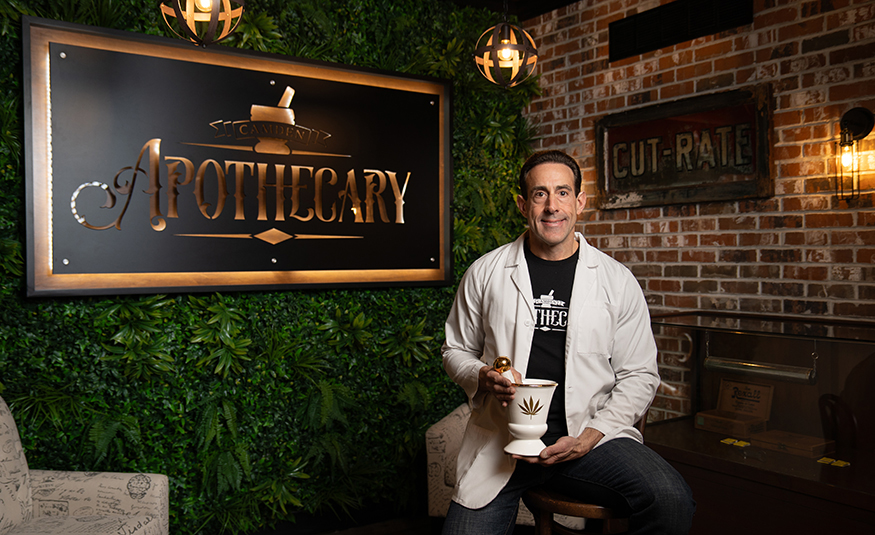
Besides serving as 2024 president of the New Jersey Pharmacists Association, Minniti has several other professional affiliations, including American College of Apothecaries fellow and Independent Pharmacy Alliance board member. He also leads IPARXNJ-PAC, a fundraising and legislative advocacy group for the Independent Pharmacy Alliance.
He went on to say, “And then Amazon came along, and other online marketplaces. With the advent of DoorDash, Uber Eats, etc., and other non-pharmacy retailers like Target and Walmart, or grocers like Shop Rite and Giant all offering free, same-day delivery of many of the same convenience items, that front-end revenue suddenly retracted. Now, the chains needed the pharmacy to actually perform in order to remain profitable.”
“What you’re seeing now with the chains is something we independents dealt with two-plus decades ago, and that’s the reality of the PBMs rendering the operation of a pharmacy completely unviable. Now, most grocery stores have closed their pharmacy departments altogether. Same with retailers like Target. And of course, the chains are closing at rates never seen before,” he said. “Independents, likewise, are continuing to close, but not at the same relative percentages of the chains.”
Bell Pharmacy – the oldest continuously operating independent pharmacy in New Jersey – has been a mainstay in Camden since 1931. It’s also one of 10 pharmacies left in a city of over 80,000 residents. Back in the 1970s, Camden had nearly triple that number of independent retail pharmacies.

“There was a time when all urban neighborhoods had one or more independent pharmacy that served them. The chains moved in and either bought out the independents or competed them out of business. Now that these areas are no longer profitable, the chains simply close their locations in these neighborhoods and that’s the end of it. No pharmacy graduate is willing to take the financial risk – over $1 million to open a pharmacy – when the economics simply can’t justify the investment. Our most at-risk communities, who already face significant hurdles to access, have lost the most convenient and affordable health care professional in the system,” Minniti explained.
He also discussed trying to buck the trend of closures.
“In our case, we pivoted away from the traditional retail pharmacy model back in the 1990s. I’ve always said that chains are no competition to me because we don’t try to compete with them. After all, they’re massive corporations with significant resources. No independent is going to beat them head-to-head. We made a decision to ‘beat’ them by being everything they weren’t,” he said.
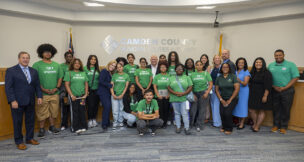
“We dumped out of the ‘convenience grocery’ market and focused on practice models that served unique patient populations. We invested in opening the first and only retail cannabis dispensary to be co-located in the same facility as a retail pharmacy. We’ve developed programs that integrate medical cannabis with traditional pharmacy. We’ve partnered with Camden City School District to offer health services to students and staff, and even developed a mentorship program with them where students can receive credit toward their pharmacy technician’s certificate by working with us,” Minniti continued. “We contract directly with substance abuse recovery groups to provide programs and medication to their patients. We offer our own ‘cost plus’ prescription benefit known as Clear Cost at Bell Pharmacy … [it] is quite simple – we charge our acquisition cost for the drug, plus a small dispensing fee. The fee is reduced if the patient purchases a membership.”
Telehealth also presents a “fantastic opportunity for independent retail pharmacy,” he said. In 2018, Bell Pharmacy became licensed to fill and ship prescriptions to over 30 states. It has also been involved in several national programs for limited distribution drugs and prescription assistance programs, according to Minniti.
During the pandemic, many online prescription services popped up, but, Minniti said, “None of these platforms are actual pharmacies. They connect patients and prescribers for telehealth visits. Once the visit is concluded, a prescription is likely needed and if your pharmacy is affiliated with the platform? There’s a good chance you can acquire new patients for almost no investment.”
“I’ve often referred to Bell Pharmacy as ‘The neighborhood pharmacy of mail order,’ where you have all the convenience and savings of a mail order pharmacy, combined with the ‘old fashioned’ model of speaking directly to the pharmacist and staff who are filling your prescription. Patients are eager to embrace this practice model … the public wants small. Personal service means more to them than convenience,” he explained.
Minniti believes chain drug stores will soon become “a relic from a long era ago.”
“They’re too big to focus on these very specialized areas and opportunities. In essence, they’re little more than dollar stores where you can pick up your prescriptions. Pharmacies like Bell Pharmacy are true medical practices and serve as community health care centers. Will chain drug stores survive? I’m sure some will, but their numbers will continue to dwindle as their model becomes more obsolete. I was once asked if I was worried about Amazon Pharmacy opening. My response was that I was not, but I would be very worried if I was a chain drug store. That observation proved to be prophetic.”
Editor’s note: This story was updated at 1:47 p.m. Feb. 20, 2025, to note that, after filing a Chapter 11 petition in October 2023, Rite Aid has closed more than 500 pharmacies nationwide. The previous tally of 780 included closures before its Chapter 11 filing.