Sign In
Upcoming Event
 Free Newsletter

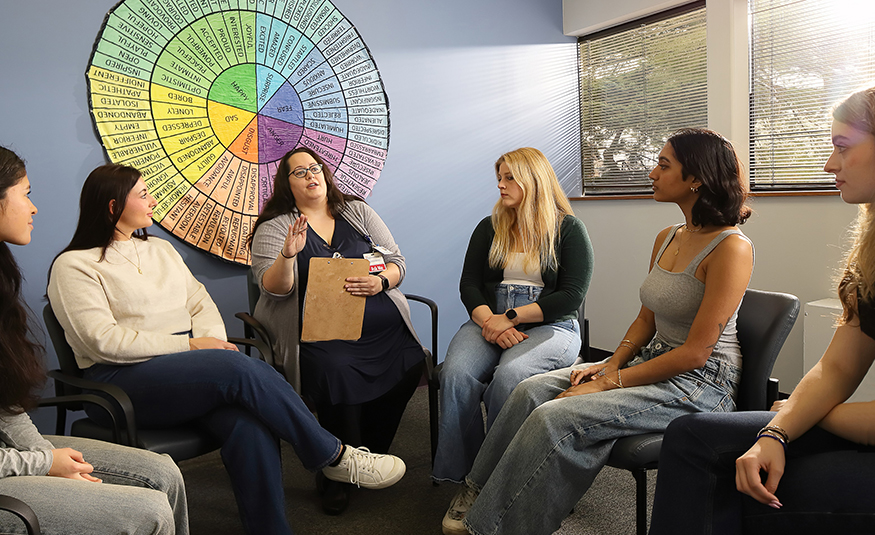
Through a collaboration between Princeton Center for Eating Disorders and the Women’s Program at Princeton House Behavioral Health, a new eating disorders partial hospital and intensive outpatient program is now available in Princeton. - PROVIDED BY PRINCETON HOUSE BEHAVIORIAL HEALTH
Through a collaboration between Princeton Center for Eating Disorders and the Women’s Program at Princeton House Behavioral Health, a new eating disorders partial hospital and intensive outpatient program is now available in Princeton. - PROVIDED BY PRINCETON HOUSE BEHAVIORIAL HEALTH
New eating disorder treatment center opens in Princeton
Dawn Furnas//May 11, 2026//


 Listen to this article
The basics:
- New eating disorder center opens in Princeton
- Program offers outpatient, partial hospital care
- Services include therapy, nutrition, medical support
A new eating disorder facility and outpatient program is now available in Princeton.
Located at 1000 Herrontown Road, the effort is a collaboration between Princeton Center for Eating Disorders and the Women’s Program at Princeton House Behavioral Health.
Support from the Princeton Medical Center Foundation helped develop the initiative.
The program is available for women age 18 and older who:
- Struggle with eating disorder behaviors that interfere with daily life
- Have difficulty achieving goals in a less intensive outpatient setting
- Need step-down treatment after inpatient or residential care
The initiative offers partial hospital treatment (five six-hour days per week) and intensive outpatient care (three four-hour days per week). Treatment is approved by most insurers, including NJ Medicaid, Medicare and TRICARE.
According to a recent announcement, the program is unique in that it integrates various therapeutic techniques to help each patient.
Treatment may include:
- Group and individual therapy
- Personalized goal-setting and monitoring
- Meal planning and nutrition education
- Supervised meals and snacks with coaching available
- Medical monitoring and medication management
- Support for conditions such as OCD and PTSD
The facility also includes “an intentionally designed kitchen” where a dietitian can help patients select foods and choose portion sizes.

“We present these modalities in ways that are tailored to the eating disorders treatment and recovery process,” said Supervising Psychologist Susan Murray, who was instrumental in the curriculum development. “Patients get to learn various approaches for thinking and coping in the group setting, and they can dig deeper using the modality they connect with most during individual therapy.”
By the numbers
Rebecca Boswell is the director of Princeton Center for Eating Disorders and administrative director of psychiatric services at Penn Medicine Princeton Medical Center. She described the program’s setup as “a powerful combination” of services.
Boswell noted the sustainable program addresses “a need that has increased exponentially in recent years.”
Learn more
For more information or to schedule an evaluation, call 888-437-1610, option 3.
According to the National Eating Disorders Association, 9% of the U.S. population will have an eating disorder in their lifetime. That equates to nearly 31 million Americans.
The NEDA also noted that eating disorders increased from 3.5% to 7.8% between 2000 and 2018 globally.
A 2024 report from the Harvard T.H. Chan School of Public Health indicates that more than 780,000 New Jerseyans will have an eating disorder in their lifetime. Additionally, the annual economic cost of these disorders totals $1.8 billion.
“This specialized care will help patients change their behavior as it relates to their emotions and their psychological well-being,” Murray said. “We’re so excited to see the program spread its wings and fly.”