Sign In
Upcoming Event
 Free Newsletter

Telehealth prescribing for medical marijuana patients takes step forward
Daniel J. Munoz//February 11, 2020//
Telehealth prescribing for medical marijuana patients takes step forward
Daniel J. Munoz//February 11, 2020//


 Listen to this article
The state Senate approved a bill that would allow New Jersey’s medical marijuana patients to get prescribed over the phone or video chat – a measure that proponents argue could greatly benefit home-bound patients in the state.
Senate Bill 619 would allow physicians taking part in the medical marijuana program to remotely give prescriptions to patients using “telemedicine” or “telehealth,” which includes sessions via the phone or video chat on a computer.
The measure passed with one opponent: Sen. Michael Doherty, R-23rd District, though it is not immediately clear why he voted against it.
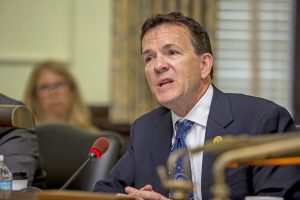
“Those who rely on medical cannabis to treat their conditions will benefit from more convenient and less expensive digital doctors’ appointments,” the bill’s sponsor, Sen. Declan O’Scanlon, R-13th District, said in a Monday statement. “Utilizing available technology is a practical approach that will improve the health and wellness of eligible New Jersey residents.”
The measure marks a push to expand the state’s marijuana program, which has more than 66,000 patients served by seven dispensaries – as well as more than 2,000 caregivers and 1,000 doctors.
S619 would take effect the day it is signed into law. For the first 270 days, only patients who cannot physically travel to a doctor’s office could receive telemedicine prescriptions, including patients at long-term care facilities, hospice care patients, the terminally ill, and those who can show that they are homebound.
After that nine-month window, all other patients could receive a telemedicine prescription, provided they first make an in-person visit to the doctor’s office.
Gov. Phil Murphy signed a measure in July dramatically ramping up the state’s medical marijuana program by offering dozens of new licenses to sell, grow and cultivate, and loosening restrictions for who would qualify as a patient, physician or caregiver in the program.
Two measures are being considered Feb. 13 at the Assembly Financial Institutions and Insurance Committee that aim to further expand the state’s market.
One measure, Assembly Bill 1708, would require workers compensation and personal injury protection to cover medical marijuana. A second measure, Assembly Bill 377, would aim to reduce the legal and bureaucratic risks for insurance companies that cover medical marijuana.